

Shop for Health Insurance the Right Way in 7 Steps
 Written by Dylan Tate Written by Dylan Tate Dylan TateDylan Tate is an insurance content expert for SmartFinancial with over 300 articles about home, auto, business, health a... Read more |  Edited by Dan Marticio Edited by Dan MarticioDan MarticioDan Marticio is the content manager at SmartFinancial and has written 150+ articles across multiple insurance verticals.... Read more |
 Editorial Standards
 SmartFinancial Offers Unbiased, Fact-based Information. Our fact-checked articles are intended to educate insurance shoppers so they can make the right buying decisions. Learn More
There are various steps you should take as you shop for health insurance such as setting a budget, deciding how you want to receive coverage and evaluating which plan best matches your coverage needs. Plans are available through the Affordable Care Act (ACA) Health Insurance Marketplace during open enrollment from November to January each year.
Read on to learn more about how to shop for health insurance including what types of plans are available and how you can sign up for a plan.
|
Key Takeaways
|
When Should I Shop for Health Insurance?
In general, you can only sign up for a Marketplace health plan during a limited window of time known as open enrollment, which lasts from November 1 to January 15 in the majority of states.[1] You should note that your designated sign-up period may differ from your state’s Marketplace open enrollment window if you opt to enroll in a plan through your employer.
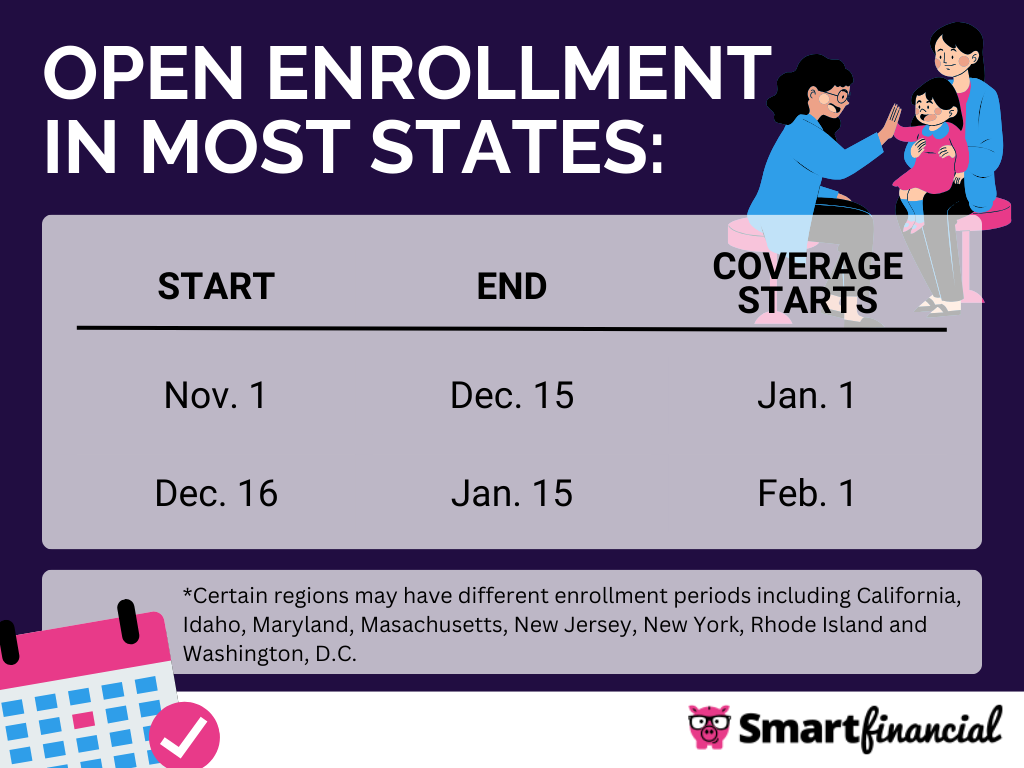
Outside of open enrollment, you can still sign up for health insurance coverage through work or the Marketplace if you are eligible for a special enrollment period. You may qualify for a special enrollment period after a major life event such as a change in residence, the addition or loss of a family member, a loss of existing health coverage or an offer from an employer to help you pay for health care.[2]
How To Shop for a Health Insurance Plan
You should take the following steps when shopping for health insurance to make sure you find the best possible plan for your circumstances.
1. Estimate Your Monthly Expenses
First, you should consider how often you use health care services and how much you are willing to spend on coverage so you can find a plan that best fits within your monthly budget. You shouldn’t necessarily pick the plan with the lowest monthly premium but should instead pick whichever plan is most likely to save you money in the long run.
For example, if you have a chronic condition and expect to need medical care on a regular basis, then a plan with a high premium and low deductible will likely be more cost effective for you than a plan with a low premium and high deductible.
2. Choose Your Health Insurance Marketplace
While most Americans are covered by group health insurance plans through their employers, there are other options for obtaining coverage if you are unemployed, your employer doesn’t provide health insurance or you believe you can get a better deal elsewhere.[3]
Residents of most states can shop for plans in their area through the federal Health Insurance Marketplace at HealthCare.gov. Meanwhile, the District of Columbia and the following 18 states have their own marketplace websites where residents can enroll in health plans:[4]
|
California |
Nevada |
|
Colorado |
New Jersey |
|
Connecticut |
New Mexico |
|
Idaho |
New York |
|
Kentucky |
Pennsylvania |
|
Maine |
Rhode Island |
|
Maryland |
Vermont |
|
Massachusetts |
Virginia |
|
Minnesota |
Washington |
You may also be able to purchase health insurance directly from a private insurance company but you should be aware that off-Marketplace plans sold outside of open enrollment typically don’t meet the ACA’s standards for qualifying health coverage.[5]
3. Select a Type of Health Insurance
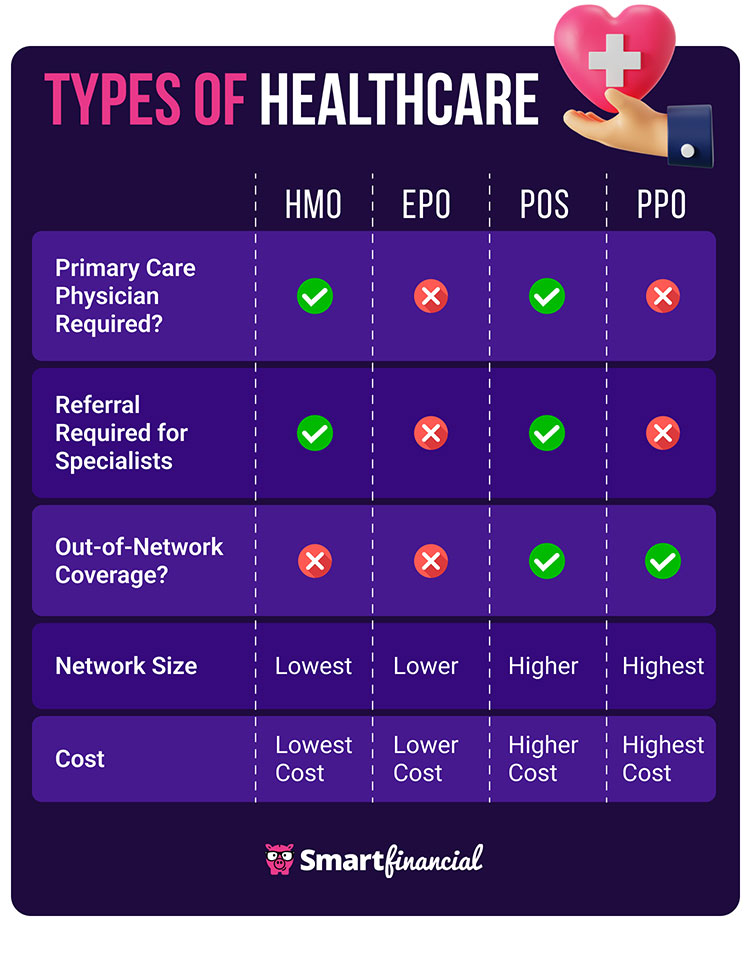
There are four types of health insurance plans that are commonly sold on the Health Insurance Marketplace: health maintenance organization (HMO), exclusive provider organization (EPO), point of service (POS) and preferred provider organization (PPO) plans.[6]
If you opt for an HMO or POS plan, you will need a referral from your primary care physician (PCP) before you can visit a specialist, while EPO and PPO plans allow you to see specialists freely. Meanwhile, POS and PPO plans provide coverage for routine care from out-of-network providers, albeit with more out-of-pocket costs. Conversely, HMO and EPO plans only cover out-of-network care in emergencies.[6]
4. Research Health Plan Networks
Since health plans generally either don’t cover out-of-network routine care at all or require you to pay more out of pocket for non-emergency care you receive from a provider that is outside of your plan’s network, you should take a look at a plan’s network before signing up for that plan.
Be sure to check whether any doctors you want to keep seeing are in the plan’s network and, depending on your circumstances, consider evaluating how large and widespread the network is. For example, if you travel around the county frequently and want to be able to receive routine care in multiple states, then you should make sure you enroll in a plan with a national network rather than a regional one.
5. Compare Out-of-Pocket Costs
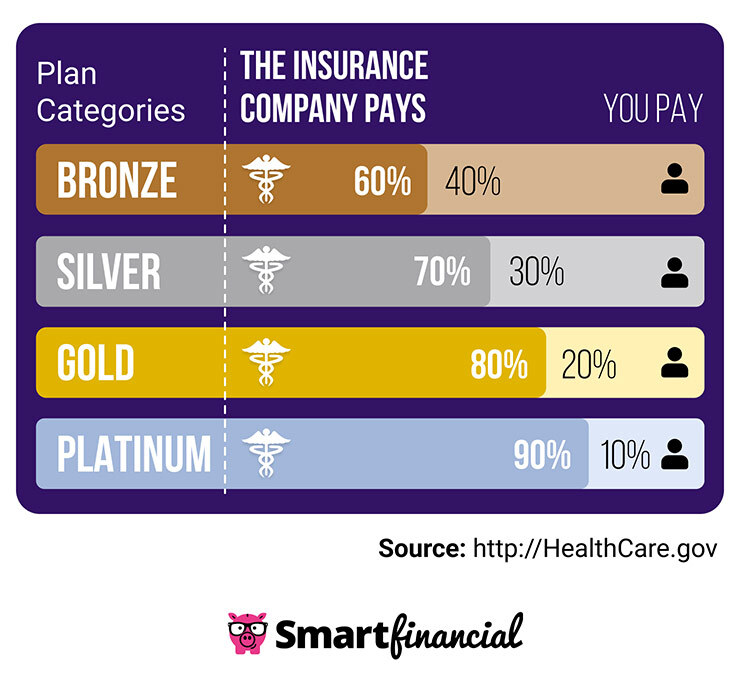
When you shop for health insurance on the Marketplace, you will notice that most plans are split up among four tiers, which indicate how much each plan requires you to pay in out-of-pocket costs such as deductibles, copays and coinsurance.
Bronze and silver plans come with lower premiums and higher out-of-pocket costs, making them ideal for healthy people who don’t expect to regularly need medical attention but want to secure cheap coverage in case of a worst-case scenario.
Conversely, gold and platinum plans come with higher premiums and lower out-of-pocket costs, so they may be beneficial for people who need health care frequently and would rather pay more on a monthly basis than pay more each time they receive a medical service.
6. Look at the Benefits
All Marketplace plans are required to offer coverage for the 12 benefits listed in the table below but, if you want coverage for additional services, you’ll need to check to make sure it’s included before purchasing a plan.[7]
|
Ambulatory patient services |
Rehabilitative and habilitative services and devices |
|
Emergency services |
Laboratory services |
|
Hospitalization |
Preventive and wellness services and chronic disease management |
|
Pregnancy, maternity and newborn care |
Pediatric services |
|
Mental health and substance use disorder services |
Birth control |
|
Prescription drugs |
For example, Marketplace plans aren’t required to include dental coverage for adults.[7] As a result, if you’re interested in dental coverage, you should pay attention to whether it is included in a certain plan or whether that plan is cheap enough that you can add a separate dental insurance plan while still keeping the overall cost of coverage low.
7. Decide Which Plan Works Best for You
Finally, you should compare all of your options based on the above metrics and determine which one makes the most sense given your coverage needs and budget. For example, some plans come with a separate prescription drug deductible in addition to the standard health care deductible but you may want a plan with a single deductible if you take multiple expensive medications.[8]
Once you find the right plan, you should then be able to enroll in it through a government marketplace website, your employer or potentially another method depending on what type of coverage you plan on purchasing.
- Insurance quotes /
- Health /
- How To Shop For Health Insurance
Dylan Tate is an insurance content expert for SmartFinancial with over 300 articles about home, auto, business, health and life insurance under his belt. He has over nine years of experience writing for online publications, primarily about gaming and esports. In the process, he has become an expert in search engine optimization, news reporting, feature writing and copy editing.


Get a Free Health Insurance Quote Online Now.
More on Health Insurance

Looking for Health Insurance?
Compare rates from dozens of companies in less than 3 minutes.