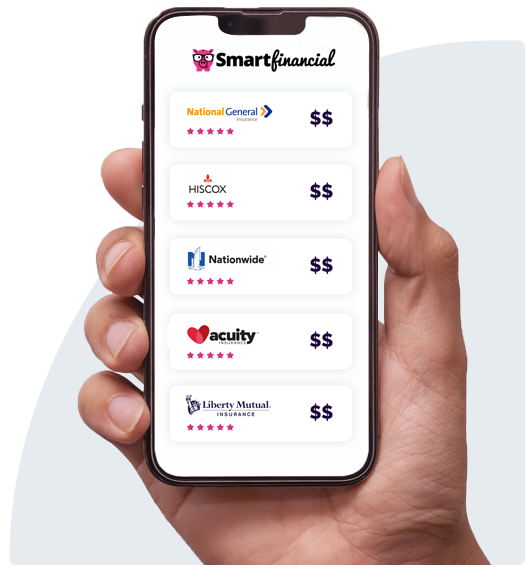
Business owners need to protect their assets and defend against liability issues but they also need to be mindful of their bottom line. However, it’s challenging to know if you’re overpaying for commercial insurance since there are so many variables. Rates are based on industry, business size and even market factors out of your control, like inflation. That's why you need to shop around.
Comparison shopping helps set a benchmark for what insurers charge for the coverage you need so you can choose the cheapest price available.
Comparing Commercial Insurance Rates the Traditional Way
Before we explain how SmartFinancial streamlines the insurance shopping process and helps save you money, let’s look at the steps you’d have to take if you went the usual route.
Step 1: Decide How Much Coverage You Need
Before you buy business insurance, you will need to assess your business’s unique risks so you can determine which types of coverage you need. While general liability insurance is recommended for all businesses, you may need certain coverages unique to your daily operations.
For example, if you operate an accounting business, then you will likely need professional liability insurance for liability risks resulting from one of your employee’s negligence. On the other hand, if you sell mountain climbing equipment, then you may want product liability insurance in case a customer gets injured using your merchandise. Should your business use company vehicles, whether it's for transporting inventory or traveling to client locations, then you will also need commercial auto insurance.
In addition, you will need to decide what coverage limits you should buy. For example, if your business uses expensive equipment, then you may want higher property coverage limits. If you operate a retail store and experience lots of customer traffic, then it is recommended that you increase your general liability limits.
Step 2: Make Sure You Have the Right Information and Documentation
To get the most accurate insurance quote, you will generally need to provide the insurance company with the below information to start. Therefore, you should make sure you have this documentation handy before you start looking through company websites and talking to agents on the phone.
- Business name
- Zip code
- Type of business entity (e.g. LLC, corporation, sole proprietorship)
- Years in operation
- Industry and product or service sold
- Claims history
- What type of coverage you’re seeking
- Annual revenue and/or projected revenue
- Number of employees
- Type of equipment you use
Step 3: Research and Contact Insurance Companies
Next, you will need to get a quote by contacting each insurance company you’re considering and providing them with the information compiled in the last step. Speaking with a representative can be a good idea since they will ask you questions about your business and help ensure your business is adequately insured. It is generally recommended to get quotes from three to five carriers to get an idea of how much it costs to get the coverage you want.
That said, price is just one factor among others that you should consider when choosing a business insurance carrier. Don’t forget to look at customer service ratings and consider asking what providers your fellow business owners are using. You’ll want to strike a good balance between coverage, price and customer service.
After researching and choosing a carrier, you can contact them and discuss the next steps for making your first payment and when you want your coverage to begin.
The SmartFinancial Way To Compare Commercial Insurance
While talking to insurance companies individually can provide a personalized shopping experience, it can get time-consuming — especially if you plan on contacting five or more carriers. Running a business already keeps you busy. Don’t spend more time than you have to shopping for commercial coverage.
Good news for you: SmartFinancial makes shopping for commercial insurance fast and simple.
With SmartFinancial, you get to skip the phone calls and hold times. Instead, you complete one questionnaire about your business, coverage needs and budget and we’ll match you with a tailored insurance policy.
How SmartFinancial Works
1
Complete a Quick Questionnaire We’ll ask you questions about yourself and your business, including its industry, how long it has been in operation, number of employees and annual revenue.
2
Compare Rates We’ll review offers from over 200 insurance companies large and small and then narrow them down based on the answers you provided in the survey.
3
Find Coverage Choose the business insurance plan that best suits your coverage needs and bottom line. Easy, right? Oh, and 100% free, of course.
Factors That Affect How Much You Pay for Commercial Insurance
Below are a list of factors that insurance companies use when calculating your insurance premium:
- Number of employees: Workers’ compensation is required in most states and the more employees there are to insure, the more you’ll have to pay for coverage.
- Industry: Certain industries are more risky than others. For example, it would likely cost more to insure a roofing company with 50 employees than a freelancer who works from home.
- Product or service sold: Some products and services carry certain liability risks. For example, a car manufacturer would need product liability insurance in case customers were injured due to a manufacturing defect and a bar would need liquor liability insurance.
- Zip code: Some types of coverage consider your location, such as commercial property insurance. Since it covers losses resulting from vandalism and theft, a business located in a high-crime area will likely get charged a higher premium than the same business located in a safe area.
- Claims history: If you have a history of filing multiple claims, then you can expect to pay a higher premium.
- Type of equipment being insured: Certain types of equipment cost more to insure than others. For example, expect to pay higher premiums if you want to insure heavy-duty equipment like machinery, industrial ovens and tractors.
- Coverage limits: Choosing a higher limit will increase how much coverage you have in the event a claim but it will also raise your premium.
- Years in business: Seasoned professionals with several years of industry experience under their belt may be considered less risky to insure than a newly-minted entrepreneur and may enjoy lower premiums as a result.
- Annual revenue: Some types of coverage like business interruption insurance pays a portion of your revenue in case your business has to shut down so businesses with higher annual revenue may see higher premiums. In addition, higher revenues may also attract cybercriminals so insurers may charge a higher rate to reflect this increased risk.






 Editorial Standards