

Business Insurance Cost: Averages and Factors That Impact Rates Explained
 Written by Dylan Tate Written by Dylan Tate Dylan TateDylan Tate is an insurance content expert for SmartFinancial with over 300 articles about home, auto, business, health a... Read more |  Edited by Richard Murphy Edited by Richard MurphyRichard MurphyRichard Murphy manages content on SmartFinancial's website. With a strong background in content strategy and copywriting... Read more |
 Editorial Standards
 SmartFinancial Offers Unbiased, Fact-based Information. Our fact-checked articles are intended to educate insurance shoppers so they can make the right buying decisions. Learn More
Small business owners may have to pay anywhere from a few hundred to several thousand dollars per year for commercial insurance, depending on the coverage types they need. Several factors influence these costs, from the specifics of your policy to the level of risk associated with your business.
Continue reading for a more detailed breakdown of how much small business insurance costs, including average rates for several common types of commercial insurance coverage.
|
Key Takeaways
|
On This Page

How Much Does Small Business Insurance Cost on Average?
How Business Insurance Costs Are Calculated
Average Business Insurance Cost by Policy Type
What Factors Impact the Cost of Business Insurance?
How To Lower Your Business Insurance Costs
Business Insurance Cost at a Glance
How To Get Affordable Business Insurance
FAQs

How Much Does Small Business Insurance Cost on Average?
On average, small businesses can expect to pay at least $3,000 per year for a basic business insurance policy that addresses the most common commercial risks and legal requirements.[1] That said, the amount you have to pay for your policy will depend on the coverage types it includes, so you’ll need to evaluate your company’s coverage needs and look into how much each insurance product costs to get a better idea of what your premiums could be.
How Business Insurance Costs Are Calculated
Commercial insurance companies typically consider the following factors when calculating the price of your business insurance policy:[1][2]
- Coverage limits
- Deductibles
- Claims history
- Industry
- Annual revenue
- Employee headcount
- Location
- Payment method
- Loss prevention protocols
- Coverage types
- Public visibility
How these factors affect your rates may vary by the type of coverage you need. For example, workers’ compensation insurance providers may calculate your premiums by starting with a base rate assigned to businesses with your class code — which indicates the level of risk associated with your industry. Then, they may multiply this rate by an experience modifier based on your claims history and an additional rate for every $100 of your company’s payroll.[3]
| Coverage Type | Example of Relevant Cost Factor |
| General liability | Amount of foot traffic at your business location |
| Workers’ compensation |
How many employees you have and how dangerous their work is |
| Professional liability | How many clients you offer consulting or other professional services to |
| Commercial auto | Average annual mileage of the commercial vehicles your employees use |
| Cyber liability | Whether you have implemented strong cybersecurity protections |
Average Business Insurance Cost by Policy Type
In the upcoming sections, you’ll learn about the cost of business insurance for several common commercial insurance products, along with what those products cover and what factors play the biggest role in determining how much they cost.
General Liability Insurance
The average cost of general liability insurance ranges from $500 to $1,200 per year.[1] General liability insurance is a foundational insurance product that can cover many of the most common risks your business is likely to face — making it a great starting point when shopping for commercial insurance coverage.
- Coverage included: If your business is held liable for another person’s injury or damage to their property, general liability insurance can cover their medical treatments or property repairs and your legal expenses. In addition, it can cover legal expenses if you are sued for defamation, copyright infringement or some other type of personal or advertising injury.
- Who needs it: General liability insurance is recommended for all businesses.[4] Coverage may be especially important for businesses that have frequent access to their clients’ property, regularly interact with customers face-to-face or are heavily involved in marketing and advertising — such as plumbers, retail store owners and graphic designers.[5]
- Potential cost factors: Some of the factors that will have the biggest influence on your general liability insurance premiums include your sales numbers, industry and location.[2]
Business Owners Policy (BOP)
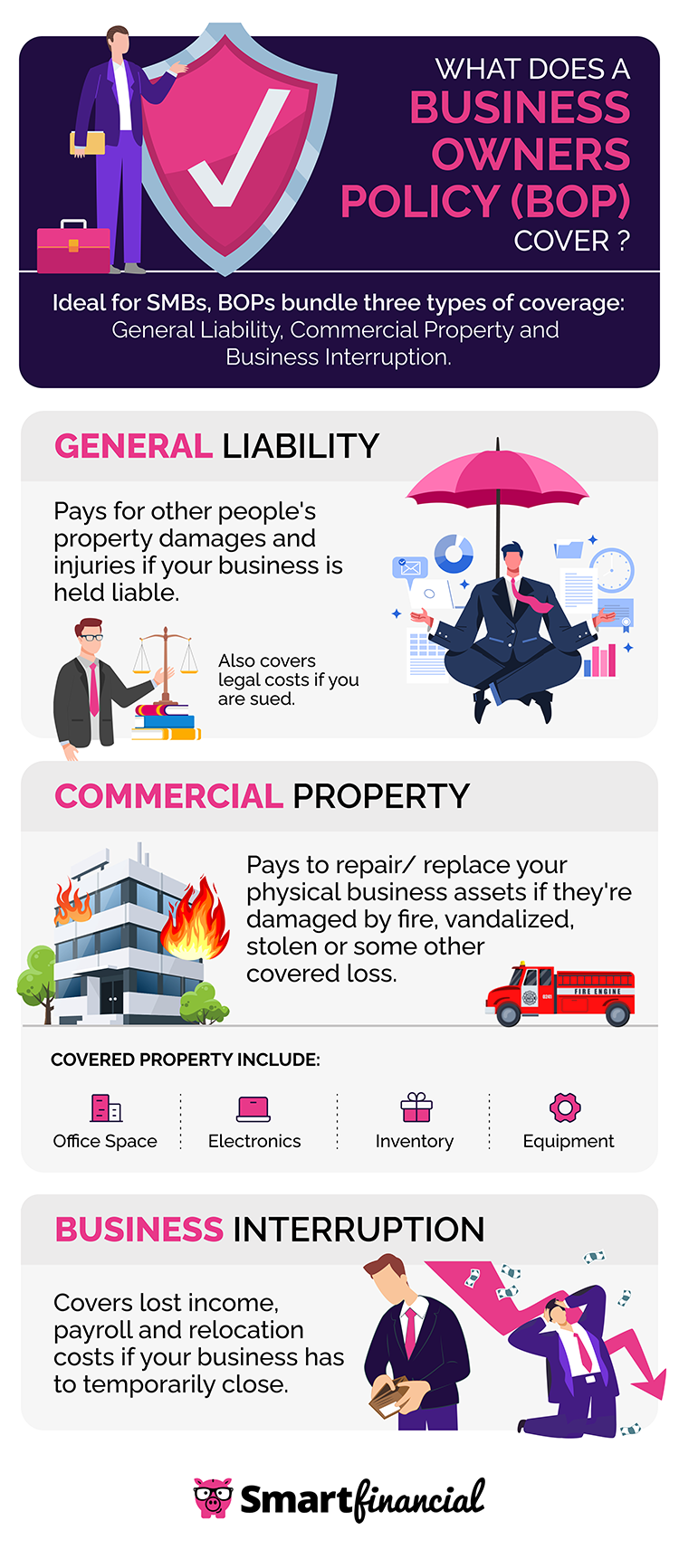
Business owners policies cost an average of $500 to $3,000 per year.[1] This type of insurance package bundles general liability, commercial property and business interruption insurance together at a discounted rate. However, you may not be eligible for a BOP if you run a large or high-risk business.[6]
- Coverage included: Along with general liability losses, BOPs cover sudden damage to your commercial building or business personal property. Your BOP may also cover expenses like payroll, lost revenue, rent payments and temporary relocation costs while you wait for your commercial property to be repaired or replaced.
- Who needs it: BOPs are recommended for low-risk small businesses. To qualify, you may need to have fewer than 100 employees and less than $5 million in annual income.[6]
- Potential cost factors: Since a BOP includes multiple coverage types, several different factors can influence its cost, including your claims history, industry, employee headcount, payroll, location, construction materials, occupancy and fire and threat protection measures.[2]
Workers’ Compensation Insurance
You can expect to spend between $1,000 and $2,500 annually on workers’ compensation insurance premiums on average.[1] In the vast majority of states, workers’ compensation coverage is required by law for most businesses with employees.[7]
- Coverage included: Workers’ compensation insurance can cover medical and rehabilitation costs, lost wages, disability benefits and final expenses for an employee who is injured, becomes sick or dies while working or because of their job.
- Who needs it: Most businesses with employees are required to carry workers’ comp insurance, though exceptions may apply, depending on your state, industry and size.[7]
- Cost factors: Your industry, claims history and payroll are the biggest factors influencing your workers’ compensation insurance premiums.[2]
Professional Liability Insurance
It costs $4,000 to $15,000 per year on average to maintain professional liability insurance.[1] Also known as errors and omissions coverage, this insurance policy can step in to shield you from financial losses if you are accused of committing a mistake or an oversight while providing professional services.
- Coverage included: E&O insurance can cover attorney fees, judgments, settlements and other legal expenses if you are sued over a professional error, such as negligence, misrepresentation, inaccurate advice or breach of contract.
- Who needs it: Professional liability coverage is crucial for businesses that offer expert advice or other professional services rather than products, including accountants, consultants, engineers and software developers. In some states, E&O insurance may even be required for certain professions, like lawyers and physicians.[8]
- Potential cost factors: When setting your E&O insurance premiums, your insurance company will pay especially close attention to your number of employees, risk exposure, size, location and selected coverage limits.[2]
Commercial Auto Insurance
Average annual commercial auto insurance costs range from $1,500 to $7,000.[1] Depending on where you operate, you may be required by law to carry certain types of commercial auto insurance, such as auto liability, uninsured and underinsured motorist and personal injury protection or medical payments coverage.[9]
- Coverage included: Your commercial auto policy must include liability insurance to cover other people’s medical or repair bills in case your business is responsible for a commercial vehicle accident. You should also maintain other coverages, including physical damage insurance to cover your company’s own vehicle repairs or replacements in case of an accident or another external peril, such as theft.
- Who needs it: Commercial auto liability insurance is generally required by law for businesses that use vehicles for commercial purposes, and other coverages may also be mandatory, depending on your state.[9] Additionally, federal law requires for-hire motor carriers and freight forwarders of household goods to purchase cargo insurance.[10]
- Potential cost factors: The factors that will play the biggest role in determining your commercial auto insurance premiums include where and how often your business uses vehicles, the experience and driving records of your employees, the types of vehicles you drive, the amount of coverage you need and the nature of your work.[2]
Cyber Liability Insurance
Cyber insurance policies may cost anywhere from $1,500 to $4,800 each year on average.[1] Cyber liability coverage is becoming increasingly important as businesses shift many of their operations online and digitally store more of their clients’ and customers’ data, opening them up to more severe losses from data breaches and other cybercrimes.
- Coverage included: Cyber insurance often comes with first-party coverage for your company’s expenses after a cybercrime, including legal counsel, crisis management, regulatory fines and recovery or replacement of lost data. It may also include third-party liability coverage that offers direct payments to affected customers and takes care of your legal fees in the event of a lawsuit.
- Who needs it: Any business with online operations may benefit from cyber insurance. Nevertheless, this policy is most important for businesses that store large amounts of sensitive data in digital databases, such as banks and other financial institutions, e-commerce stores and technology companies.
- Potential cost factors: The amount of data your business stores, your annual revenue, your industry and whether you have invested in strong cybersecurity systems or other safety protocols will impact the cost of your cyber insurance policy.[1]
What Factors Impact the Cost of Business Insurance?
Here’s an overview of the most significant commercial insurance cost factors and how they may be used to calculate the cost of business insurance for a small business:[1][2]
- Policy details: If your policy comes with more coverage types, higher coverage limits and lower insurance deductibles, you can generally expect to pay more for small business coverage.
- Claims history: Business owners who have filed many claims in the past are viewed as a higher risk to insure, so you may encounter higher commercial insurance premiums if you have an extensive claims history.
- Industry: Certain industries are more prone to some risks than others, so insurers will heavily consider your industry when establishing your risk profile and assigning your premiums. For example, the cost of commercial auto insurance will be much higher for delivery and trucking businesses, while cyber insurance will be more expensive for e-commerce businesses.
- Size: You may be viewed as a higher risk to insure and may have to pay more for business insurance if you have high annual revenue or a large number of employees.
- Location: There may be unique risks inherent to the region where you operate, meaning insurance companies need to consider various location-based factors to accurately set your rates. For example, you can expect higher commercial flood insurance premiums if your business is located in a high-risk flood zone.
- Visibility: Disgruntled customers may be more likely to sue prominent businesses in the hopes that those businesses will offer large settlements up front to avoid costly public relations controversies. As a result, you may have to pay more for commercial liability insurance if you operate a particularly well-known corporation.
How To Lower Your Business Insurance Costs
The following actions can help you reduce the cost of commercial insurance for your business:[1]
- Bundle policies: Many insurers offer discounted rates to policyholders who opt to bundle — or purchase multiple coverages from the same insurance carrier. BOPs are the most common commercial insurance bundle, and you may be able to customize your BOP by adding extra coverage types you need for your business.[6]
- Pay in full up front: Oftentimes, commercial insurance companies will offer you a discount if you pay your entire premium for the year up front rather than paying in monthly installments.
- Implement risk management solutions: Businesses that are proactive about reducing their chances of experiencing financial losses are less likely to file claims, and they often qualify for lower commercial insurance premiums as a result. For example, you may be able to save money on insurance by revamping your security systems or establishing mandatory training protocols for your employees.
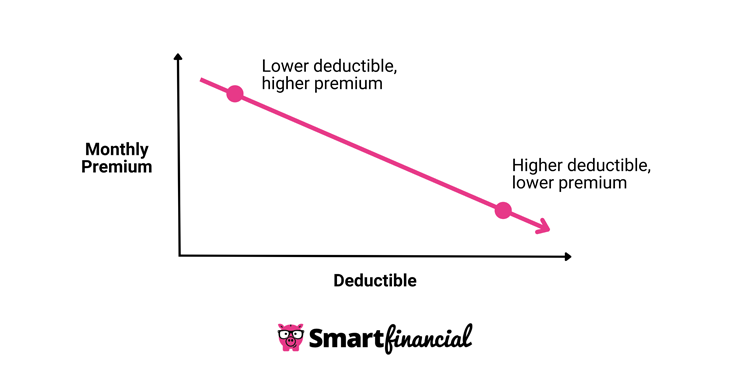
- Pick higher deductibles: Choosing higher deductibles generally lowers your insurance premiums, since your insurer won’t have to pay out as much in the event that you file a business insurance claim. However, you don’t want to set your deductible so high that it would be burdensome to cover out of pocket whenever you need to file a claim.
Business Insurance Cost at a Glance
- Average cost: Small business owners can usually expect to pay at least $3,000 per year for comprehensive commercial insurance protection, though rates can vary significantly based on numerous factors.
- Relevant factors: To calculate your business insurance rates, an insurer will consider factors like your location, industry, size, policy details and claims history.
- Basic coverage: If you run a small business with straightforward coverage needs, you can often secure basic liability and property coverages by purchasing a business owners policy for as little as $500 per year.
- Legal requirements: Businesses that have employees or use commercial vehicles are typically required by law to maintain workers’ compensation and commercial car insurance, respectively — adding to the amount you will need to pay for a minimum level of coverage.
- Other coverage options: Many businesses would also benefit from professional liability and cyber liability insurance — though these coverage types can be more expensive than some other basic business insurance products.
- Savings opportunities: You may be able to secure lower commercial insurance premiums by bundling your policies, paying your full premium through a lump-sum payment, taking steps to lower your exposure to covered losses and raising your deductibles.
How To Get Affordable Business Insurance
Consider comparing quotes from around three to five different insurance carriers to find the lowest possible rate for the business insurance coverage you need. Some of the details you need to be ready to give to each insurance company include the location of your business, how many people you employ and how much money your business makes each year.
Although comparison shopping can be a long-drawn-out process, SmartFinancial is here to help you speed it up. Simply share information about your coverage needs and budget with us, and then we’ll do the legwork of collecting and comparing quotes for you. Click here to speak with an agent about comparing commercial insurance quotes for free today!
- Insurance quotes /
- Commercial /
- How Much Does Business Insurance Cost
Dylan Tate is an insurance content expert for SmartFinancial with over 300 articles about home, auto, business, health and life insurance under his belt. He has over nine years of experience writing for online publications, primarily about gaming and esports. In the process, he has become an expert in search engine optimization, news reporting, feature writing and copy editing.


Get a Free Commercial Insurance Quote.
More on Commercial Insurance

Looking for Commercial Insurance?
Compare rates from dozens of companies in less than 3 minutes.