

General Liability Insurance: Why Your Small Business Needs It To Operate
 Written by Dylan Tate Written by Dylan Tate Dylan TateDylan Tate is an insurance content expert for SmartFinancial with over 300 articles about home, auto, business, health a... Read more |  Edited by Richard Murphy Edited by Richard MurphyRichard MurphyRichard Murphy manages content on SmartFinancial's website. With a strong background in content strategy and copywriting... Read more |
 Editorial Standards
 SmartFinancial Offers Unbiased, Fact-based Information. Our fact-checked articles are intended to educate insurance shoppers so they can make the right buying decisions. Learn More
General liability insurance is an essential commercial insurance coverage type that can pay for medical treatments, property repairs and legal services if your business is held liable for someone else’s loss, such as a bodily injury, damage to their property or reputational harm. Small business owners can often save money by bundling general liability insurance with other important coverages.
Keep reading to learn more about general liability insurance, including what losses typically are and aren’t covered and how much you can expect to pay for coverage.
|
Key Takeaways
|


What Is General Liability Insurance?
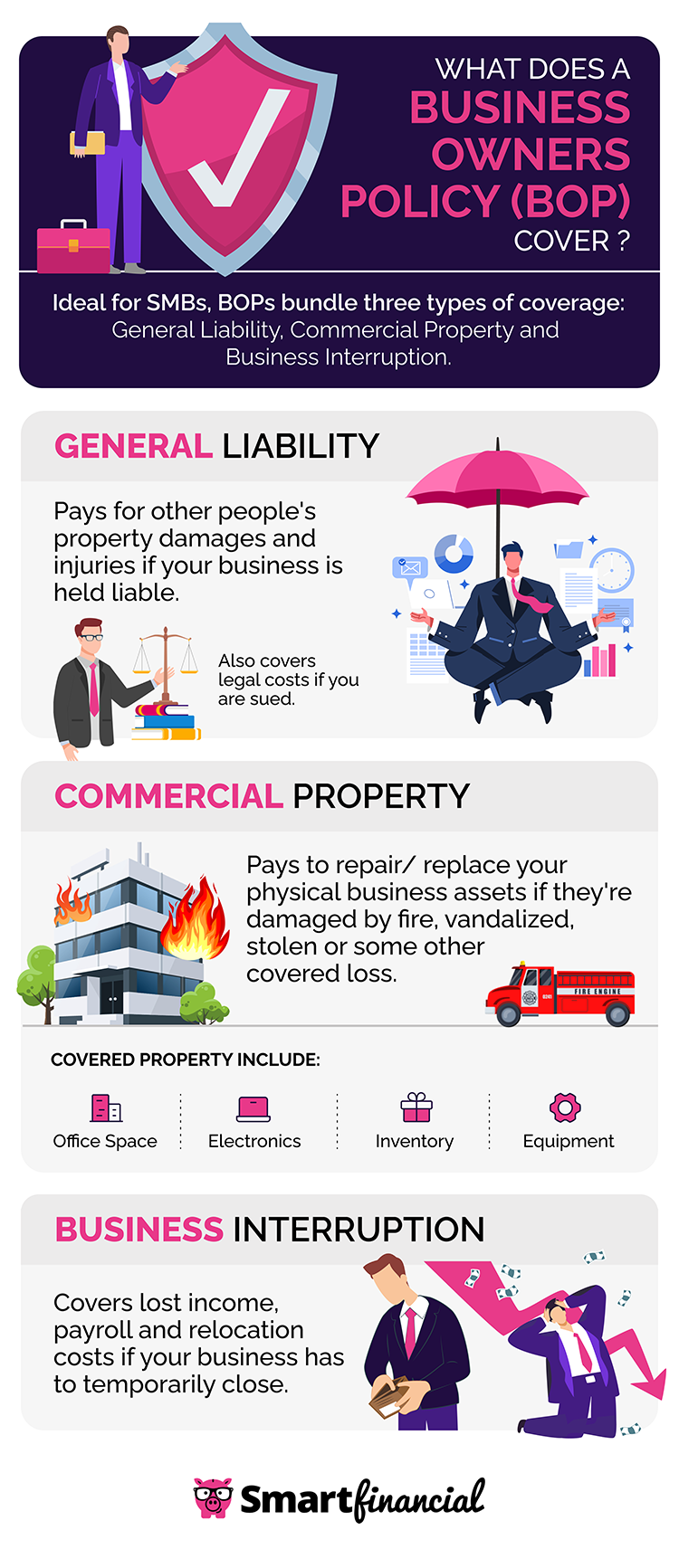
General liability insurance is a type of commercial insurance that covers various expenses that may arise if your business is found to be liable for another person or entity’s losses. It is one of the coverages included in a standard business owners policy, along with commercial property and business interruption insurance. Like many other types of business insurance premiums, general liability coverage costs are usually tax deductible.[1]
Who Needs General Liability Insurance?
General liability insurance is often considered the most fundamental part of a commercial insurance policy, and it is recommended for all businesses as a result.[2] That said, some industries may find it to be especially crucial. For example, general liability insurance is imperative for businesses that have regular contact with customers or access to clients’ property, including retail stores, health care providers and cleaning services.[3]
Is General Liability Insurance Required by Law?
Despite its importance, general liability insurance isn’t required by law. However, you may find that a certificate of liability insurance is necessary to secure a contract with a client, lease property for your company or receive a business license or certification.[4] Regardless of whether it is mandatory for your business, you should still strongly consider obtaining a commercial insurance policy that includes general liability coverage.
What Does General Liability Insurance Cover?
Standard general liability insurance policies include coverage for the following core claims:[5]
- Property damage: If your business is responsible for damaging or destroying someone else’s property, your general liability insurance can pay for repairs or replacements. For example, it may step in if one of your employees hammers through drywall and damages a client’s television while adding a new room to their house.
- Bodily injury: Your general liability insurance can cover hospital bills for someone who is injured because of your commercial activities or on the premises of your business. For example, coverage may apply for a patron at your restaurant who slips on a wet spot and breaks their arm. In addition, your insurer can cover legal defense costs, judgments and settlements if you are sued due to a bodily injury or property damage claim.
- Personal and advertising injury: Legal expense coverage is also available for personal and advertising injury claims, including defamation and copyright infringement. For example, you may be covered if you face a lawsuit because you included copyrighted music in a social media post without obtaining the proper license or accidentally included false information about a competitor in your advertising materials.
Depending on your insurance company, some other types of claims may also be covered by your general liability policy, such as these:[3][5][6]
- Electronic data liability: If you are held liable for damage to your computers that results in the loss of your clients’ electronic data, some general liability insurance policies may cover your legal costs.
- Supplemental costs: Check the details of your policy to determine whether any secondary expenses related to your general liability claim are covered. For example, Hiscox may pay out up to $250 per day to reimburse you for lost revenue and other reasonable expenses incurred in the investigation of your claim, and it may also cover the interest on monetary damages you are ordered to pay, if applicable.
- Product liability: Some general liability insurance policies include product liability coverage, which steps in if a customer is harmed due to an error in the design, manufacturing or marketing of your product. For example, it may cover medical expenses for a customer who has an allergic reaction to an ingredient in your shampoo that you failed to print on the label.
- Product recall: By adding an endorsement to your general liability insurance plan, you may secure coverage for expenses related to a product recall, including the costs of notifying your customers about the recall and collecting and disposing of the defective products.
- Contractual liability: While some insurance companies may exclude coverage for liability claims that you assumed responsibility for in a contract, others may cover these claims under your general liability insurance.
- Completed operations: Similar to product liability coverage, completed operations coverage applies to claims that are caused by your company’s finished projects away from the premises of your business. For example, if you are a construction contractor, coverage may apply if a load-bearing column you installed collapses and damages the rest of the building.
What Isn’t Covered?
In general, your general liability insurance won’t cover any losses that are already covered by other types of commercial insurance. See the table below for examples of excluded losses and what business insurance policy would cover them instead:[3][6]
| General Liability Insurance Exclusion |
Covered By |
|---|---|
|
Damage to your property |
Commercial property insurance |
|
Employee injuries |
|
|
Negligence, errors and omissions in the performance of professional services |
|
|
Mishandling of personally identifiable information |
|
|
Most third-party losses caused by pollutants |
Your general liability insurance may also exclude coverage for damage to your work or products — even when they are involved in otherwise covered claims.[6] For example, if a heating, ventilation and air conditioning system you installed for a client explodes, your general liability insurance may cover the damage to your client’s home, but you may be on the hook for replacing the defective HVAC system.
How Much Does General Liability Insurance Cost?
The cost of general liability insurance may range from around $20 to $100 per month.[7] Factors that will influence your general liability insurance rates include the following:[8]
- Industry: Insurance companies apply standardized general liability class codes to different industries, which indicate the level of risk associated with each industry. The more often businesses in your class code file general liability insurance claims, the more you can expect to pay for your own policy.
- Size: Larger companies with more customers and locations are more likely to experience guest injuries, making them more expensive to insure and necessitating higher general liability insurance premiums.
- Coverage needs: Depending on your risk exposure, you may select higher general liability insurance coverage limits, which will naturally lead to higher premiums.
- Location: If you operate in a heavily populated area, you are likely riskier to insure and can expect to pay more for business insurance coverage.
- Public visibility: Disgruntled customers may be more likely to sue prominent businesses, so you could have to pay higher general liability insurance rates based on how popular your business is.
- Claims history: Business owners who have filed multiple commercial insurance claims before are generally considered more likely to file claims again in the future, meaning they are typically charged more for coverage.
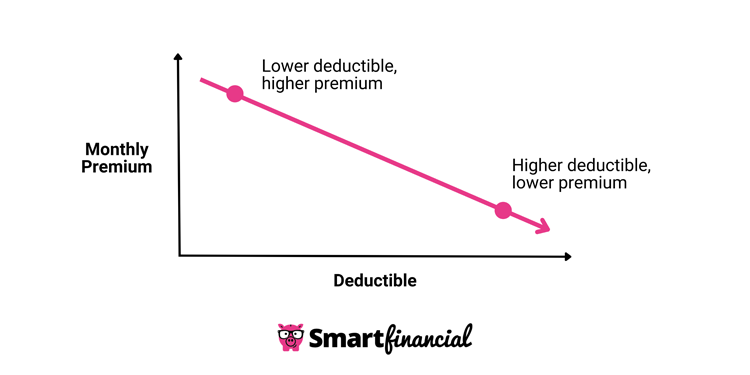
Keep in mind that you can often save money by bundling general liability insurance with other commercial coverage types. For example, The Hartford customers can save an average of more than $700 per year by purchasing a BOP rather than buying general liability and commercial property insurance separately. Discounts may also be available if you pay your entire premium for the year up front, select a higher deductible or implement risk management strategies.[8]
How Much General Liability Coverage Do You Need?
To determine how much general liability coverage you need, consider your liability exposure and the collective value of all your business assets. Businesses in higher-risk industries may be especially apt to select high coverage limits, but any business owner may want to make sure they have enough coverage to protect all of their commercial assets in the event of a particularly costly lawsuit.
Note that general liability policies frequently come with two separate coverage limits. The per-occurrence limit refers to the amount of coverage available for any single claim, while the aggregate limit refers to the maximum amount your insurance company will pay out across all covered general liability claims throughout the duration of the coverage period.[5]
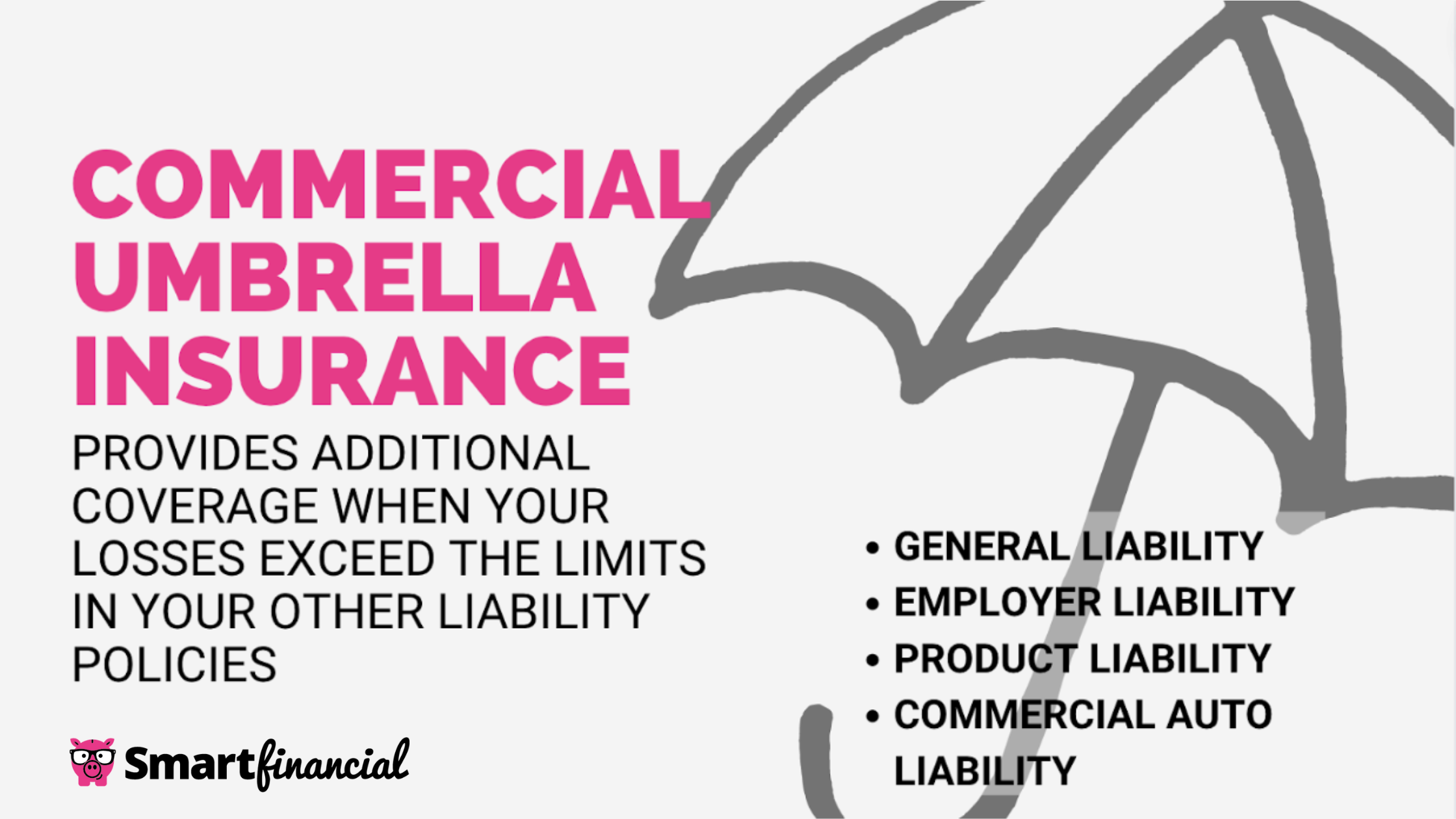
If you own a large, high-risk enterprise and your insurance carrier doesn’t offer high enough general liability coverage limits, you may be able to secure broader protection by purchasing commercial umbrella insurance. This coverage type can step in if a costly claim exceeds the limits of one of your underlying business liability insurance policies. Commercial umbrella insurance may only cost a few hundred dollars annually per $1 million worth of coverage.[9]
How To Get General Liability Insurance
As you shop for general liability insurance, aim to obtain a minimum of three to five quotes from different insurance companies. Insurance providers will likely request information like your location, industry, annual earnings and employee count in order to generate quotes. However, it can be taxing to individually reach out to multiple carriers to give them this information.
Simplify insurance comparison shopping by taking advantage of an insurance marketplace, like SmartFinancial. Once you fill out a single questionnaire about your coverage needs and budget, we’ll connect you with an agent who can help you find the right small business insurance policy for your circumstances. Begin comparing commercial insurance quotes for free today!
- Insurance quotes /
- Commercial /
- General Liability Insurance
Dylan Tate is an insurance content expert for SmartFinancial with over 300 articles about home, auto, business, health and life insurance under his belt. He has over nine years of experience writing for online publications, primarily about gaming and esports. In the process, he has become an expert in search engine optimization, news reporting, feature writing and copy editing.


Get a Free Commercial Insurance Quote.
More on Commercial Insurance

Looking for Commercial Insurance?
Compare rates from dozens of companies in less than 3 minutes.