

Commercial Umbrella Insurance: Coverage, Costs and Benefits Explained
 Written by Preston Micalizio Written by Preston Micalizio Preston MicalizioPreston Micalizio writes insurance content for SmartFinancial. He brings three years of professional experience writing ... Read more |  Edited by Richard Murphy Edited by Richard MurphyRichard MurphyRichard Murphy manages content on SmartFinancial's website. With a strong background in content strategy and copywriting... Read more |
 Editorial Standards
 SmartFinancial Offers Unbiased, Fact-based Information. Our fact-checked articles are intended to educate insurance shoppers so they can make the right buying decisions. Learn More
Commercial umbrella insurance can cover various liability exposures when your other commercial liability policies reach their limits. Designed to protect businesses from financially ruinous liability claims or judgments, commercial umbrella insurance can offer peace of mind, especially for businesses in high-risk industries such as construction and manufacturing.
Keep reading to learn more about commercial umbrella insurance, its benefits, costs and how to get it.
|
Key Takeaways
|
On This Page

What Is Commercial Umbrella Insurance?
How Commercial Umbrella Insurance Works
What Does Commercial Umbrella Insurance Cover?
What Commercial Umbrella Insurance Doesn’t Cover?
Types of Businesses That Might Need Commercial Umbrella Insurance
Commercial Umbrella Insurance vs. Excess Liability Insurance
How Much Does Commercial Umbrella Insurance Cost?
Commercial Umbrella Insurance at a Glance
How To Get Commercial Umbrella Insurance
FAQs

What Is Commercial Umbrella Insurance?
Commercial umbrella insurance covers expenses that exceed the limits of an underlying liability policy.
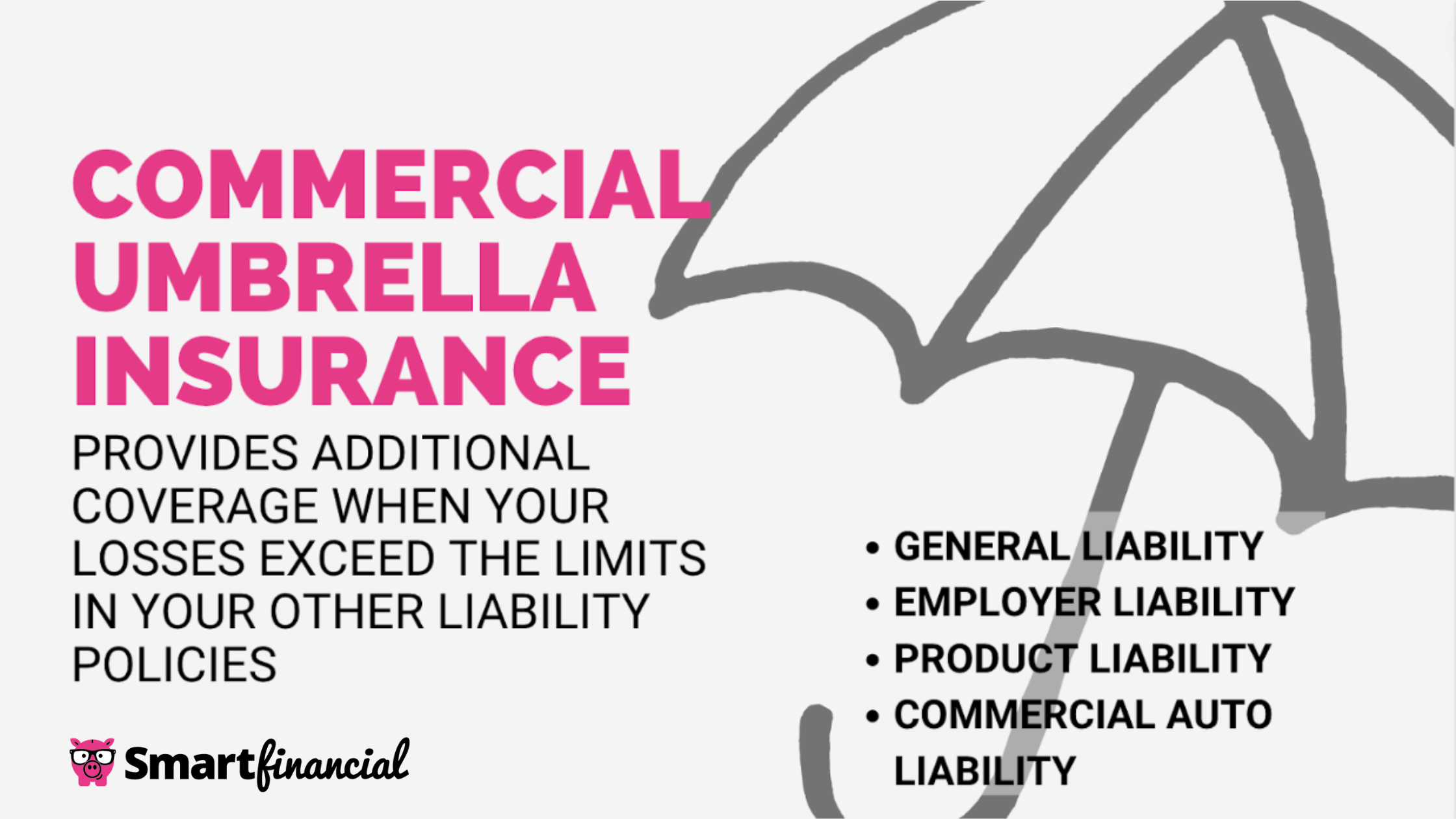
While standard liability insurance covers businesses if they are sued for causing injury or damage to someone else, these policies are subject to coverage limits. When these losses exceed the limits of a standard liability policy, commercial umbrella insurance helps cover the remaining costs. That said, umbrella policies also have limits, often starting at $1 million and potentially reaching $10 million or more, depending on your coverage needs and insurer.[1]
How Commercial Umbrella Insurance Works
Commercial umbrella insurance provides additional coverage when the limits of a covered liability policy are exhausted. For example, say your business is sued, and the settlement awarded to the plaintiff is $1.5 million. In this scenario, if your general liability policy only has a coverage limit of $1 million, your umbrella insurance would help cover the remaining $500,000.
Without an umbrella policy, the business owner would be responsible for paying the difference between their coverage limit and the amount owed. For some businesses, that could be financially devastating, potentially forcing them to close.
What Are the Benefits of Commercial Umbrella Insurance?
Below are a few key benefits of commercial umbrella insurance.
- Increases liability limits: Without umbrella coverage, you’ll need to cover any losses that exceed your liability policy’s limits. Commercial umbrella insurance helps fill that gap and can provide additional financial protection against costly lawsuits and claims.
- Protects against multiple risks: Because commercial umbrella insurance covers multiple types of liability claim limits, it gives you a wider range of protection than an excess liability policy.
- Helps meet contractual requirements: Commercial umbrella insurance can help you meet coverage requirements for contractors, clients and commercial lessors. We’ll discuss requirements like this in greater detail later.
- Provides peace of mind: Commercial umbrella insurance can help protect your business from large liability claims that exceed your standard coverage limits, allowing you to focus on running your business.
What Does Commercial Umbrella Insurance Cover?
Commercial umbrella insurance increases the liability limits of covered underlying policies. While coverage varies by insurer and policy, commercial umbrella insurance may provide additional protection for claims involving:
- Bodily injury or emotional distress caused to a third party
- Damage to a third party’s property
- Claims of defamation, libel or slander resulting from advertising activities
- Wrongful termination or discrimination claims
- Defective or faulty products
- Commercial auto accidents
- Workplace injuries
What Commercial Umbrella Insurance Doesn’t Cover?
Commercial umbrella insurance policies do not cover all types of liability exposures. For example, they generally do not cover claims arising from intentional acts or criminal behavior.
Commercial umbrella liability insurance policies do not cover damage to a business's equipment or property.[2] A commercial property insurance policy typically provides coverage for damage to a business's physical assets, such as buildings, equipment and inventory.
Businesses should carefully review their commercial umbrella insurance policy to understand which exposures are covered and which are excluded. Doing so can help identify potential coverage gaps and determine whether additional insurance may be needed.
Types of Businesses That Might Need Commercial Umbrella Insurance
Commercial umbrella insurance is ideal for businesses in industries with high liability exposure, as it can help cover costs when liability losses exceed their policies. Generally, the more frequently your business works with clients and customers in person or with dangerous machinery, the higher the potential liability risks that umbrella insurance can protect against.
Examples of the types of businesses that should consider commercial umbrella insurance include:
- Construction companies: These businesses often face a higher risk of liability claims due to the nature of their work, which can involve working with heavy machinery and equipment and working at dangerous heights.
- Property management companies: These businesses may be at risk of being sued for property damage or tenant injuries.
- Manufacturing companies: These companies may have high liability exposure because their products can cause customer injuries.
Commercial Umbrella Insurance vs. Excess Liability Insurance
Standard excess liability insurance extends the coverage limits of a single liability policy, although some insurers may allow it to extend limits across multiple policies at once. On the other hand, commercial umbrella insurance increases the limits for multiple types of liability insurance under a single policy.[3][4]
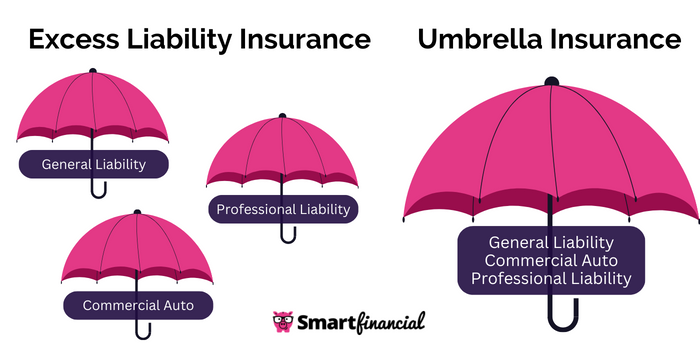
Commercial umbrella insurance can also cover damages that aren’t covered under the primary policy, often referred to as a “drop-down” provision. For example, a commercial umbrella policy can offer protection for non-owned watercraft and aircraft or advertising liability that might be excluded from your general liability coverage.[5] Excess liability insurance doesn’t normally broaden coverage in the same way, with coverage following the form of the base policy.[6]
To account for these added benefits, commercial umbrella insurance policies may include a self-insured retention (SIR), which functions similarly to a deductible and must be paid out of pocket before coverage applies to certain claims. Excess liability insurance policies generally do not require this type of out-of-pocket payment.[7]
We'll break down the differences between excess liability insurance and commercial umbrella insurance below. Keep in mind that coverage, exclusions and policy terms vary by insurer.
|
|
Excess Liability Insurance |
Commercial Umbrella Insurance |
|
Coverage Scope |
Usually, it only extends coverage for one primary policy |
Extends coverage for multiple primary policies |
|
Coverage Gaps |
Normally provides the same coverage as the underlying policy |
Provides the same coverage as the underlying policies, with the potential to expand coverage to fill gaps |
|
Drop-Down Provision |
Typically doesn’t cover any losses excluded by the base policy |
May provide primary coverage for losses excluded by the underlying policies |
|
Out-of-pocket costs |
Generally no self-insured retention requirement |
May require a self-insured retention before coverage applies |
How Much Does Commercial Umbrella Insurance Cost?
Commercial umbrella insurance costs vary based on several factors, including the insurance provider. For example, Nationwide umbrella policies typically cost a few hundred dollars per year for $1 million in additional liability coverage, while NEXT Insurance coverage starts at $25 per month.[8][9]
Factors like your industry, the type of business operations you conduct, your business’s size, your location and your choice of policy limits can all affect costs.
Keep in mind that umbrella insurance must be purchased as a supplement to an existing liability policy. If you do not have general liability, product liability or some other type of liability policy, you won’t be able to buy commercial umbrella insurance.
Commercial Umbrella Insurance at a Glance
We’ll briefly cover the essential information you should know about commercial umbrella insurance:
- Commercial umbrella insurance helps provide coverage for your commercial liability policies after they’ve reached their coverage limits.
- Commercial umbrella insurance can often extend coverage to fill gaps in underlying liability policies, though this can vary by policy.
- Commercial umbrella coverage is ideal for businesses at risk of large claims or lawsuits that could exceed their standard liability coverage limits.
- Some commercial umbrella insurance policies may require a self-insured retention before coverage applies to certain claims.
How To Get Commercial Umbrella Insurance
Since commercial umbrella insurance is designed to supplement underlying liability coverage, start by contacting your current insurance company to determine whether umbrella coverage is available.
You may want to compare quotes from three to five commercial insurance companies if:
- You don’t currently have liability insurance.
- Your current insurer doesn't offer enough commercial umbrella coverage to meet your needs.
- You're considering switching insurance companies.
Keep in mind you’ll need to provide information about your business history, location and industry to each insurance company one by one, which can be a time-consuming and tedious process.
Consider using an insurance marketplace like SmartFinancial to help speed up the process. After completing a brief questionnaire, we’ll connect you with a licensed insurance agent to find the commercial policies that best fit your business needs. Click here for free commercial insurance quotes today!
- Insurance quotes /
- Commercial /
- Commercial Umbrella Insurance
Preston Micalizio writes insurance content for SmartFinancial. He brings three years of professional experience writing in various industries, from higher education to e-commerce. He strives to engage with the audience, provide accurate reporting and make complex subjects easily digestible.


Get a Free Commercial Insurance Quote.
More on Commercial Insurance

Looking for Commercial Insurance?
Compare rates from dozens of companies in less than 3 minutes.