

Commercial Insurance: What It Is, Costs and How It Works
 Written by Preston Micalizio Written by Preston Micalizio Preston MicalizioPreston Micalizio writes insurance content for SmartFinancial. He brings three years of professional experience writing ... Read more |  Edited by Richard Murphy Edited by Richard MurphyRichard MurphyRichard Murphy manages content on SmartFinancial's website. With a strong background in content strategy and copywriting... Read more |
 Editorial Standards
 SmartFinancial Offers Unbiased, Fact-based Information. Our fact-checked articles are intended to educate insurance shoppers so they can make the right buying decisions. Learn More
Commercial insurance helps business owners protect themselves against the financial consequences of unexpected events. Whether it’s damage to company property, liability claims or income loss after a fire, commercial insurance can help businesses recover financially and continue operating.
Keep reading to learn what commercial insurance is, how commercial insurance works and the different types of coverage available for businesses.
|
Key Takeaways
|
On This Page

What Is Commercial Insurance?
How Does Commercial Insurance Work?
What Does Commercial Insurance Cover?
What Isn't Covered by Commercial Insurance?
Types of Commercial Insurance
Who Needs Commercial Insurance?
When Is Commercial Insurance Required?
How Much Does Commercial Insurance Cost?
Commercial Insurance at a Glance
How To Get Commercial Insurance
FAQs

What Is Commercial Insurance?
Commercial insurance, also called business insurance, helps protect companies from financial losses caused by covered risks. Commercial insurance includes several types of policies for businesses, each covering against specific risks. Some of these risks could include:
- Bodily injury of a customer or employee
- Cyberattacks against your business
- Property damage to inventory, equipment or real estate
- Professional liability claims involving business mistakes or errors
How Does Commercial Insurance Work?
Commercial insurance provides businesses with financial protection against the risks they face during their operations. When a company purchases a business insurance policy, a premium is paid to the insurer in exchange for coverage against certain losses (typically after a deductible is met). This may include paying to repair or replace damaged property, covering legal fees and settlements or providing income replacement if the business has to temporarily close.
Commercial insurance typically includes several coverage options for specific types of risks. For example, a commercial property insurance policy can cover the cost of replacing an accounting firm’s desks, computers and furniture if they are lost in an office fire. On the other hand, general liability insurance can cover a restaurant’s legal fees if a customer sues after slipping inside the establishment.
Business owners will need to research the risks specific to their operations. For example, accountants and lawyers may need professional liability insurance, which protects against errors and omissions made while giving services, but an e-commerce store may not.
What Does Commercial Insurance Cover?
Commercial insurance coverage depends on the policies you select, but a comprehensive plan may protect your business from the following:
- Property damage to buildings, equipment, and inventory.
- Liability claims for bodily injury, property damage or personal and advertising injury.
- Business interruption resulting from a covered event that disrupts operations.
- Professional liability for errors, omissions or negligence in professional services.
- Vehicle damage or loss for company-owned or leased vehicles.
- Employee injuries or illnesses sustained on the job.
- Cyber liability for data breaches or cyberattacks.
- Product liability for injuries or damages caused by your products.
- Directors and officers (D&O) liability for actions taken by company leaders.
What Isn't Covered by Commercial Insurance?
Each commercial insurance policy includes exclusions, which are situations or losses the policy will not cover. Commercial insurance coverage exclusions can vary, but will generally include:
- Intentional acts or criminal activities
- War, nuclear accidents or terrorism
- Losses caused by illegal activities
- Failure to maintain or properly repair property
- Normal wear and tear of the property
- Failure to follow government regulations or laws
- Failure to obtain proper permits or licenses
Types of Commercial Insurance
Common types of commercial insurance coverage include general liability, commercial property, workers’ compensation, professional liability and commercial auto. Additionally, you may have the option to combine certain policies through a BOP or commercial package policy (CPP).[1]
General Liability Insurance
General liability insurance covers businesses against claims of bodily injury, property damage and personal and advertising injury. These claims can arise from various situations, such as slip-and-falls on a company's property or even defamation and libel.
One of the main advantages of general liability insurance is that it can help protect a business's financial stability in case of a costly lawsuit. Without this type of insurance, a business may risk losing significant amounts of money if it is found liable for damages.
Commercial Property Insurance
Commercial property insurance helps businesses protect their physical assets, such as buildings, equipment and inventory, from fire, theft, certain natural disasters and other covered perils. This type of insurance is important for businesses that own their own property or lease space for their operations and have expensive equipment.
Workers Compensation Insurance
Workers' compensation insurance provides financial protection for employees who are injured or become ill while performing their job duties. In most states, workers’ compensation is required by law. It covers the costs of medical treatment and rehabilitation, lost wages and other expenses resulting from the workplace injury or illness. An employee may also be eligible for permanent disability benefits if they cannot return to work due to their injury or illness.
Professional Liability Insurance
Professional liability insurance, also known as errors and omissions insurance, provides coverage for professional service providers against claims of errors, omissions or negligent acts. For example, it might cover an accountant who is sued by a client after they made an error in filing their taxes. Professionals such as lawyers, accountants and consultants are examples of businesses that could benefit from this type of coverage.
Commercial Auto Insurance
Commercial auto insurance covers businesses that use vehicles for business use, such as transporting inventory or traveling to client locations. This insurance protects businesses against the financial consequences of accidents, theft and other losses involving company-owned or leased vehicles.
Much of the coverage in a personal auto policy, such as liability, personal injury protection and uninsured motorist insurance, is available in a commercial auto policy. Additionally, more niche types of coverage, such as cargo insurance for transportation businesses, are available.
Business Owners Policy (BOP)
A business owner's policy (BOP) is a type of insurance package that combines general liability insurance, commercial property insurance and business interruption insurance in one policy. If your business has to temporarily shut down because of a covered loss — a fire, for instance — business interruption insurance can cover lost revenue, payroll, relocation and other costs to help your business stay afloat.
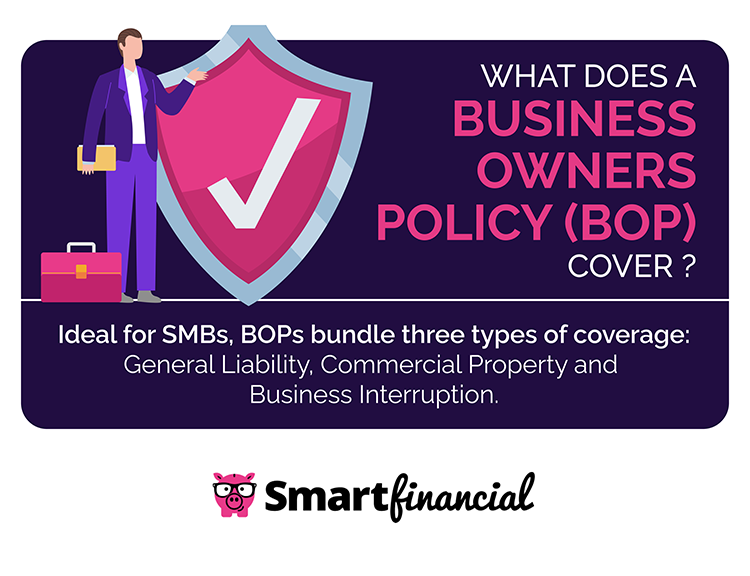
Business owners policies are typically designed for small and medium-sized businesses. Generally, insurers require a business to have fewer than 100 employees or less than $5 million in revenue to be eligible. Additionally, BOPs may be unavailable to some higher-risk businesses, like restaurants.[1][2]
Commercial Package Policy (CPP)
Businesses whose needs exceed a BOP but still wish to bundle commercial insurance policies may want to consider a commercial package policy (CPP). Unlike a BOP, a CPP can bundle even more types of coverage, such as commercial umbrella liability, pollution liability, equipment breakdown, inland marine, fleet insurance and more.[1]
Commercial Health Insurance
Employers can purchase commercial health insurance for their employees, which covers medical expenses, hospital stays, prescription medications and more. Adding health insurance to your employee benefits package can help attract talented workers to your business.
Cyber Liability Insurance
Cyber liability insurance protects against the financial consequences of data breaches and cyber attacks. This can include coverage for legal fees, customer notification costs, credit monitoring services and other expenses related to a cyber incident. Cyber liability coverage can also cover the costs of recovering from a cyber attack, such as hiring an IT firm to restore and repair a company's systems.
Who Needs Commercial Insurance?
Businesses across many industries may benefit from commercial insurance coverage to help protect against financial losses, lawsuits and operational risks. Some of these businesses include:
- Accountants
- Advertising and marketing agencies
- Construction companies and contractors
- Delivery drivers
- Doctors
- Lawyers
- Personal trainers
- Pet groomers
- Real estate agents
- Restaurants
- Retail stores
- Software developers
- Warehouses
The types of commercial insurance needed for each business may vary, so ensure you review the most prevalent risks when determining which policies to purchase. You’ll also want to consider whether commercial insurance may be legally required, based on factors of your business or where you live.
When Is Commercial Insurance Required?
The types of commercial insurance coverage required vary with a business's specific needs and the laws and regulations of the jurisdiction in which it operates. Some common types of commercial insurance coverage that may be required include:
- Workers' compensation insurance: Required by law in most states for businesses with employees, this policy covers employee injuries or illnesses sustained on the job.[3]
- Commercial auto insurance: Required by law for businesses with company vehicles.[4]
- General liability insurance: This insurance is generally not required by law, but it may be required as part of a contract or lease agreement.[5]
- Professional liability insurance: This may be required for certain industries, such as legal or medical businesses.[6]
In addition to these types of insurance, businesses may be required to carry other coverage depending on their operations and the risks they face. Businesses should carefully review their insurance needs and ensure compliance with relevant laws and regulations.
How Much Does Commercial Insurance Cost?
Commercial insurance costs can vary depending on which type of policy your business needs. As an example, here’s a quick breakdown of prices for various types of commercial policies and their potential monthly premiums offered by NEXT Insurance:
|
Type of Coverage |
Cost |
|
General Liability |
$19 to $100+[7] |
|
Workers’ Compensation |
$14 to $150+[8] |
|
Professional Liability |
$19 to $100+[9] |
|
Commercial Auto |
$12.50 to $200+[10] |
|
Commercial Property |
$14 to $100+[11] |
For small and medium businesses, a BOP can be more cost-effective compared to purchasing general liability, commercial property and business interruption individually – often resulting in savings of at least 10%.[12] As an example, a BOP from The Hartford has an average monthly premium of $141.[13]
What Affects the Cost of Commercial Insurance?
Various factors can affect the cost of your commercial insurance premiums, including:
- Types of policies you need
- Location
- Your business’s industry
- Number of employees
- Number of vehicles your business uses
- Claims history
- Company revenue and size
Commercial Insurance at a Glance
Below is the essential information you should know about commercial insurance:
- Commercial insurance includes various policies, such as general liability, commercial property, commercial auto and more, that cover your business against specific risks.
- Each type of commercial insurance policy will cover different types of risks, so it's essential to review your business and see what policies you should most consider.
- Some types of commercial insurance, such as workers’ compensation or commercial auto, may be required, given aspects of your business or other legal requirements.
- The cost of business insurance will vary based on the types of policies you need, but you can often save money by bundling policies together.
How To Get Commercial Insurance
Get quotes from three to five commercial insurance companies to get a range of options. You’ll typically need to provide information about your business and its history, alongside specifics relevant to the coverage you’re looking for, like the type of vehicle for a commercial auto policy quote. You’ll need to provide this information to each insurance company one at a time, which can be tedious depending on how many policies you need.
To speed up this process, consider using an insurance marketplace like SmartFinancial. After you complete a brief questionnaire, we can connect you with a licensed insurance agent to help you find commercial insurance policies that meet your business needs. Click here to get free quotes for commercial insurance today!
- Insurance quotes /
- Commercial /
- What Is Commercial Insurance
Preston Micalizio writes insurance content for SmartFinancial. He brings three years of professional experience writing in various industries, from higher education to e-commerce. He strives to engage with the audience, provide accurate reporting and make complex subjects easily digestible.


Get a Free Commercial Insurance Quote.
More on Commercial Insurance

Looking for Commercial Insurance?
Compare rates from dozens of companies in less than 3 minutes.