

Business Interruption Insurance: When Do You Need It?
 Written by Preston Micalizio Written by Preston Micalizio Preston MicalizioPreston Micalizio writes insurance content for SmartFinancial. He brings three years of professional experience writing ... Read more |  Edited by Richard Murphy Edited by Richard MurphyRichard MurphyRichard Murphy manages content on SmartFinancial's website. With a strong background in content strategy and copywriting... Read more |
 Editorial Standards
 SmartFinancial Offers Unbiased, Fact-based Information. Our fact-checked articles are intended to educate insurance shoppers so they can make the right buying decisions. Learn More
Business interruption insurance is a critical form of coverage that protects against lost income and ongoing expenses after your business is physically damaged and forced to stop operations. Small businesses at risk of becoming inoperable due to events such as fires, vandalism or covered natural disasters should consider business interruption insurance coverage to reimburse lost revenue and help cover expenses like payroll and rent during the recovery process.
Keep reading to learn more about business interruption insurance, which businesses need it, what it covers and factors that can impact your insurance costs.
|
Key Takeaways
|
On This Page

What Is Business Interruption Insurance?
Who Needs Business Interruption Insurance?
What Does Business Interruption Insurance Cover?
What Business Interruption Insurance Does Not Cover
Types of Business Interruption Coverage
How Much Business Interruption Insurance Do You Need?
How Much Does Business Interruption Insurance Cost?
How To Get Business Interruption Insurance
Business Interruption Insurance at a Glance
Compare Business Interruption Insurance To Protect Your Income
FAQs

What Is Business Interruption Insurance?
Business interruption insurance, sometimes called business income insurance or BI insurance, covers lost income after your business faces a disaster that prevents normal operations, such as a fire burning down your warehouse and inventory. A business interruption policy is typically not sold as a standalone policy and is instead usually bundled into a business owners policy (BOP) or added as an endorsement to an existing commercial policy.[1]
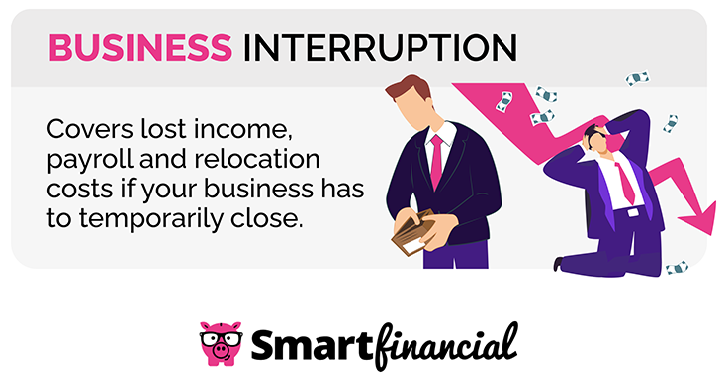
Under a BI insurance policy, operating expenses such as payroll, rent payments, relocation costs, and other aspects of your business will be reimbursed up to your policy’s limits. We’ll discuss these coverages in more detail later on.
Who Needs Business Interruption Insurance?
Businesses that rely on physical locations, equipment or inventory are more likely to need business interruption insurance. Common types of businesses that could benefit from purchasing this policy:
- Brick-and-mortar retail stores
- Restaurants
- Bakeries
- Hair salons
- Barber shops
- Yoga studios
- Dog groomers
- Accountants
- Coffee shops
Below, we’ll detail how business owners protect against income loss with examples of industries that benefit from BI insurance.
Retail Stores and Restaurants
Business interruption insurance is vital for both brick-and-mortar retail stores and restaurants, as they require physical locations to operate, and physical damage that disrupts foot traffic could halt revenue. For example, if fire or storm damage destroyed inventory or made the physical location inaccessible, BI insurance could cover lost revenue while repairs are made and inventory is replaced.
Manufacturing and Warehouse Facilities
Business income insurance can protect manufacturing and warehouse facilities if a covered event damages important equipment and inventory. For example, if a fire destroyed critical manufacturing or inventory-sorting equipment, thereby interrupting business operations, BI insurance could help cover lost revenue.
Professional Service Firms
Professional service firms, including law firms, accounting firms and medical practices, that house client records, computers and other specialized equipment could be protected by business interruption insurance if the equipment is damaged in a covered event. For example, if a fire destroyed several computers that are vital to doing business, BI insurance could cover the lost income while you replace them.
Businesses in High-Risk Locations
Businesses located in areas at high risk of physical damage from covered perils such as hurricanes, wildfires, tornadoes or civil unrest may face a higher likelihood of business interruption. Purchasing insurance for business interruption could help cover you in the event of one of these covered perils.
What Does Business Interruption Insurance Cover?
Below are a few examples of expenses covered by business interruption insurance, including what those coverages pay for:[2]
|
Covered Expense |
What It Pays For |
|
Lost net income |
The revenue the business would have earned |
|
Operating expenses |
Rent and lease payments, alongside other fixed costs |
|
Payroll |
Employee wages during closure |
|
Relocation costs |
Temporary location expenses |
|
Loan payments |
Mortgage or business loan obligations |
Your business interruption insurance will reimburse you for covered expenses and lost income only during the restoration period until your business returns to normal operations, which can usually last up to 12 months following a 48- to 72-hour waiting period after you file your claim. After the restoration period ends, even if your business is still undergoing repairs to become operational, your BI coverage will typically expire without the option to extend.[3]
Lost Revenue and Net Income
Covering lost revenue and net income is a core aspect of standard business interruption insurance. These losses are based on your financial records, so you’ll only be reimbursed for the expected income you can show evidence for.
Operating Expenses and Fixed Costs
Business interruption insurance can help cover various fixed costs you’re still responsible for paying while your operations are halted. For example, your business will likely still need to cover costs like rent for the physical property while repairs are being made in the event of damage to equipment or the property itself, which BI insurance can help cover.
Payroll and Employee Wages
If your business is shut down, you’ll likely need to retain your workforce and pay them until you can be operational again, which BI insurance can help with. For example, if your retail store is shut down due to a covered event, business income insurance can cover payroll costs for your employees until operations resume.
Temporary Relocation Expenses
Business interruption insurance can cover the cost of relocating to a temporary location while repairs are being made. For example, if your restaurant must relocate due to extensive repairs following a kitchen fire, BI insurance can help cover the relocation costs.
Loan and Mortgage Payments
BI insurance can help cover loan and mortgage payments that still need to be made, even if your business operations are shut down. For example, if your retail business is forced to close due to damaged inventory after a break-in, business interruption coverage can reimburse you for these payments during the restoration period.
What Business Interruption Insurance Does Not Cover
Business interruption insurance won’t cover every type of peril. For example, it won't cover losses that don’t involve physical damage, such as voluntary closure for renovations or a reduction in customer foot traffic.[4] Some common exclusions often include:[5]
- Broken items resulting from a covered event or loss
- Flood or earthquake damage
- Undocumented income
- Pandemics, viruses and communicable diseases
- Utilities
Broken Items
Broken items typically aren’t covered by business interruption insurance, such as a smashed window due to a break-in. However, you may be able to get coverage for broken items or equipment through commercial property coverage, which is often bundled with business interruption insurance in a business owners policy (BOP).
Flood and Earthquake Damage
Flood and earthquake damage typically aren’t covered under a standard business interruption policy. However, these coverages can often be obtained through a separate policy.[2]
Undocumented Income Losses
Financial records are utilized to prove how much income you’re not earning while business operations are halted, so if you can’t provide evidence of these finances, you’re unlikely to be reimbursed for them. Financial records needed to prove income can include financial statements, tax returns and accounting records, which you should keep securely stored in the event you need them for a BI claim.
Pandemic and Virus-Related Closures
Communicable diseases, such as COVID-19 outbreaks, typically aren’t covered by business interruption insurance because they don’t constitute physical damage to the business. Even if the business is forced to close due to a government mandate during a pandemic, you’re unlikely to receive BI reimbursement.[6]
Utilities
Utilities, such as electricity, are often excluded from business interruption insurance coverage unless additional endorsements apply, as standard policies typically focus on income loss and operating expenses tied to a covered shutdown.[2]
Types of Business Interruption Coverage
Different types of business interruption coverages or endorsements to an existing policy may be necessary to expand your protection. Some of these types of BI coverage can include:
- Standard business income coverage: Covers direct losses from damage to your property
- Contingent business interruption: Covers losses from damage to a supplier or customer's property
- Extra expense coverage: Pays additional costs to keep operating
- Civil authority coverage: Covers losses when the government orders a forced closure
- Utility services coverage: Covers losses from utility outages
Standard Business Income Coverage
Standard business income coverage will protect you against losses to your income and covered expenses while your business operations are stopped due to physical damage. Typically, these policies protect against only certain perils, such as fire, windstorms and riots.
Contingent Business Interruption Insurance
Contingent business interruption insurance protects your business when an issue with the supply chain disrupts your business, even if your business’s property hasn’t been directly affected by a peril. For example, if your restaurant's food provider suddenly goes out of business, this form of business interruption coverage can help cover your lost income and other expenses.
Property damage to the supply chain may be necessary for contingent business interruption coverage to take effect.[4]
Extra Expense Coverage
Extra expense coverage reimburses your business for expenses necessary during the restoration period that you otherwise would not have had to pay to help your business partially operate. For example, extra expense coverage can help pay for overtime to hire more workers or leasing equipment for a temporary business location while your main property is undergoing repairs.[7]
Civil Authority Coverage
Civil authority coverage can reimburse your business for lost income and covered expenses if you’re forced to halt operations due to a government or civil authority order over physical damage to a nearby property, even if your own business property wasn’t affected. For example, if a hurricane struck your business’s area and forced the closure of businesses, business interruption civil authority coverage could help reimburse you for covered losses.
Utility Service Interruption Coverage
Utility services interruption coverage can reimburse you if your business is forced to close due to utility damage on the property, such as a water main break or gas leak. The restoration period for utility services interruption coverage typically lasts until the utility services are repaired or until a predetermined time is specified in your policy.[8]
How Much Business Interruption Insurance Do You Need?
To ensure you have enough business interruption insurance, check your gross earnings and your expectations for future profits for the full length of an expected restoration period. Check that your coverage limits should be higher than the amount of replacement income and expense coverage you’ll need for this period, as you’ll need to pay additional costs out of pocket.
How Much Does Business Interruption Insurance Cost?
Business interruption insurance policies aren’t typically sold independently, and costs will likely depend on individual business factors regarding an endorsement. Some of these factors can include:
- Industry: Some industries may carry a higher risk of business interruption than others, which can increase your premium.
- Number of employees: The higher your employee count, the more payroll and wages you’ll need to cover in the case of business interruption, which can increase your monthly costs.
- Coverage limits: Higher coverage limits often increase your premium costs.
- Prior loss experience: Making a BI insurance claim previously could hint that you’re at a higher risk for making another claim, which can increase your premium.
The cost of a BOP can vary, with some insurers, like The Hartford, charging an average of $141 per month for coverage.[9]
How To Get Business Interruption Insurance
To get business interruption insurance, you’ll often need to purchase it as an endorsement or as part of a policy bundle. Consider the following steps when looking at purchasing BI coverage:
- Review your current commercial insurance: Check if you already have business income coverage or can add it.
- Assess your coverage needs: Determine how much you’d need to cover lost income and expenses during a potential restoration period.
- Gather financial documentation: Ensure you have documents that prove your projected income in the event you make a claim.
- Compare quotes from multiple insurers: Premiums can vary for similar coverage between insurance companies, so check with several insurers to get the best deal.
- Work with a licensed insurance agent: Use an agent to identify coverage gaps and recommend appropriate limits.
Business Interruption Insurance at a Glance
Below is the essential information you need to know about business interruption insurance:
- Business interruption insurance can help cover lost income and various expenses if your business is forced to close due to physical damage.
- Closures that aren’t due to physical damage, such as a pandemic, or that are excluded from coverage, such as floods and earthquakes, typically aren’t covered under a standard business interruption policy.
- Types of expenses typically covered by BI insurance include temporary relocation, employee payroll, rent and the business’s mortgage.
- There are several types of business income insurance available as separate policies or endorsements, such as civil authority coverage to protect against government-mandated closures due to physical damage in the area or utility service interruption if a vital utility service is damaged off-premises.
- You generally can’t get business interruption insurance on its own – instead, you must purchase it as a commercial insurance endorsement or as part of a BOP.
Compare Business Interruption Insurance To Protect Your Income
Since business income coverage is unlikely to be sold on its own, you’ll need to decide if you can add it as an endorsement in a commercial package policy or purchase it as a business owners policy. If you need to find a new insurer who offers this coverage or are looking to switch, you should gather quotes. Try to get quotes from three to five insurance companies to help you understand your options.
You’ll need to provide information about your business, including your income, industry and location, often to each insurer one at a time. This process may become tedious when gathering quotes from multiple insurers. However, you can help speed up the process using an insurance marketplace like SmartFinancial. After answering our brief questionnaire, we can connect you with a licensed insurance agent to help you find your ideal policy. Click here to get free commercial insurance quotes today!
- Insurance quotes /
- Commercial /
- Business Interruption Insurance
Preston Micalizio writes insurance content for SmartFinancial. He brings three years of professional experience writing in various industries, from higher education to e-commerce. He strives to engage with the audience, provide accurate reporting and make complex subjects easily digestible.


Get a Free Commercial Insurance Quote.
More on Commercial Insurance

Looking for Commercial Insurance?
Compare rates from dozens of companies in less than 3 minutes.