

Employment Practices Liability Insurance (EPLI): Coverage, Cost and Claims Guide
 Written by Preston Micalizio Written by Preston Micalizio Preston MicalizioPreston Micalizio writes insurance content for SmartFinancial. He brings three years of professional experience writing ... Read more |  Edited by Richard Murphy Edited by Richard MurphyRichard MurphyRichard Murphy manages content on SmartFinancial's website. With a strong background in content strategy and copywriting... Read more |
 Editorial Standards
 SmartFinancial Offers Unbiased, Fact-based Information. Our fact-checked articles are intended to educate insurance shoppers so they can make the right buying decisions. Learn More
Employment practices liability insurance (EPLI) is a type of commercial insurance that protects businesses against employee lawsuits, including claims of wrongful termination, discrimination and harassment. It helps cover legal defense costs, settlements and judgments tied to employment-related claims.
Businesses with employees should consider EPLI coverage because even unfounded claims can lead to expensive legal proceedings. EPLI insurance can help cover these costs so businesses don’t have to pay out of pocket or disrupt their operations.
Keep reading to learn what EPLI insurance covers, what it doesn’t cover and how to reduce your risk of employee claims.
|
Key Takeaways
|
On This Page

What Is Employment Practices Liability Insurance?
What Does Employment Practices Liability Insurance Cover?
What Isn’t Covered by EPLI?
Who Needs Employment Practices Liability Insurance?
Common EPLI Claim Examples
EPLI vs. Other Business Policies
Is Employment Practices Liability Insurance Required?
How Much Does Employment Practices Liability Insurance Cost?
How To Reduce EPLI Claims Risk
Employment Practices Liability Insurance at a Glance
How To Get Employment Practices Liability Insurance
FAQs

What Is Employment Practices Liability Insurance?
Employment practices liability insurance (EPLI) can cover legal defense costs, settlements, and judgments arising from employee claims against your business.[1] Businesses can purchase EPLI as an endorsement to an existing general liability insurance policy or business owners policy (BOP), or as standalone coverage.[2]
Without EPLI, the employer would be responsible for paying their own legal fees and any settlements or judgments. For some, the cost of a lawsuit can be extensive and could potentially bankrupt a business without financial reserves.[1]
|
|
Employment Practices Liability Insurance |
|---|---|
|
What Does it Cover? |
Financial losses from lawsuits over accusations of violating an employee’s rights. |
|
What Isn’t Covered? |
Employee injuries, employee property damage, wage and overtime disputes, employee theft and more. |
|
Cost |
Cost could be as low as $216 per year as an endorsement or between $1,500 and $2,500 annually for a standard policy, depending on various underwriting factors. |
What Does Employment Practices Liability Insurance Cover?
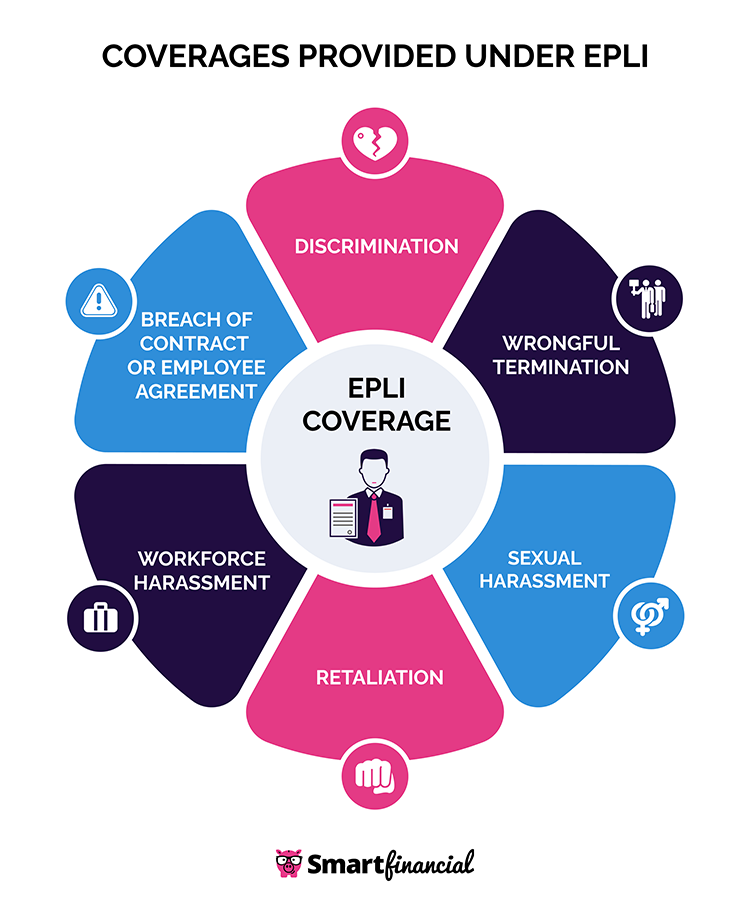
Employment practices liability insurance is recommended for any business that has employees. EPLI can pay for costs incurred as a result of:[1]
- Wrongful termination: Former employees can file allegations against their employer, alleging they were unjustly terminated.
- Discrimination: This can include claims based on race, gender, age, religion and other protected characteristics.
- Harassment: Harassment can take many forms, such as harassment based on sex, disability, age or religious affiliation.
- Retaliation: Employees can file claims if they believe they were punished for reporting discrimination or harassment, such as a demotion or a reduction in hours.
- Breach of employment contract: Employees may file a claim if their employer failed to uphold a contractual obligation, such as providing computer equipment or issuing a paycheck on time.
- Deprivation of career opportunity: Your company is covered if an employee alleges a failure to provide specific types of training that will advance their career.
What Isn’t Covered by EPLI?
EPLI coverage is not an all-encompassing form of business insurance, and doesn’t cover you for certain scenarios. Situations typically not covered can include:
|
Not Covered |
What You Need Instead |
|---|---|
|
An employee’s illness or physical injury |
Workers’ compensation insurance |
|
Employee theft |
|
|
Professional errors |
|
|
Fiduciary breaches or corporate governance mismanagement |
Directors and officers insurance |
|
Employee disputes over hourly wages or unpaid overtime |
Wage and hour insurance coverage (available as an EPLI endorsement)[3] |
|
Independent contractor or 1099 worker disputes |
Additionally, EPLI policies operate on a claims-made basis, meaning insurers will only reimburse for claims made while the policy is active. If you wait until after your EPLI policy has expired without renewing, insurers will likely deny your claim. Even if the event your claim is about occurred during your policy, waiting until after the policy has expired may also result in your EPLI claim being denied.[1]
Who Needs Employment Practices Liability Insurance?
Employment practices liability insurance is particularly important for employers in industries with a higher risk of employment-related claims, such as:[1]
- Restaurants
- E-commerce
- Accountants
- Real estate agents
- Retail
- Business consultants
- Commercial and residential cleaning services
Employers with a high number of employees or a history of employment-related claims may want to consider EPLI, as well.
Small and medium-sized businesses that may not have the resources to handle an employment-related lawsuit should also consider employment practices liability insurance coverage, as it can help to cover attorney fees, settlements, judgments and administrative penalties.
EPLI coverage is generally recommended for any employer, regardless of size or industry. This is because any employer can be at risk of employment-related claims, such as wrongful termination, discrimination or harassment. For example, even if your business hasn’t yet hired employees, you could still potentially be sued for denying employment based on a protected class.
Common EPLI Claim Examples
Some common EPLI claims that are typically covered can include:
- Failure to hire or promote an employee based on a protected disability, such as someone who’s blind or deaf.
- An employee claims they are being discriminated against based on their age by not being included in company decisions or invited to companywide events.
- One or more employees assert that a manager or other employee is sexually harassing them.
- An employee claims they are having their hours reduced at work for raising concerns about a manager selectively enforcing company policy when it benefits them.
EPLI vs. Other Business Policies
Employment practices liability insurance coverage will protect you from costs defending your business from legal disputes over violating an employee’s rights. Still, it won’t protect you from all forms of unexpected business losses. Other types of business policies to consider alongside EPLI coverage can include:
EPLI vs. General Liability Insurance
EPLI and general liability insurance cover entirely different types of claims — one focuses on employee disputes, while the other addresses third-party injuries and property damage.
|
|
Employment Practices Liability Insurance |
|
|---|---|---|
| Purpose | Covers losses when you’re sued for violating employee rights | Covers physical injury or property damage |
| Types of Claims | Sexual harassment or refusing to promote an employee based on a disability | Damage to someone’s property or injuries from a slip and fall |
| Common Industries | Restaurants, real estate agencies, retail stores and accountants | Retail, manufacturing, restaurants, construction and real estate |
| Covers Violations of Employee Rights | Yes | No |
| Covers Third-Party Injuries/Damage | No | Yes |
EPLI vs. Workers Compensation
EPLI and workers compensation insurance both relate to employees, but they cover very different risks — legal claims versus workplace injuries.
|
|
Employment Practices Liability Insurance |
|
|---|---|---|
| Purpose | Covers losses when you’re sued for violating employee rights | Covers employee work-related injuries or illnesses |
| Types of Claims | Sexual harassment or refusing to promote an employee based on a disability | An employee is injured during work hours and needs medical expenses paid |
| Common Industries | Restaurants, real estate agencies, retail stores and accountants | Any industry with employees, since workers compensation is required by law in most states[5] |
| Covers Violations of Employee Rights | Yes | No |
| Covers Employee Injuries/Damage | No | Yes |
EPLI vs. Professional Liability
EPLI and professional liability insurance protect against lawsuits, but the source of risk differs — employee-related claims versus errors in professional services.
|
|
Employment Practices Liability Insurance |
|
|---|---|---|
| Purpose | Covers losses when you’re sued for violating employee rights | Covers financial loss due to an error, omission or professional negligence |
| Types of Claims | Sexual harassment or refusing to promote an employee based on a disability | Incorrect advice, breach of contract or missed deadlines |
| Common Industries | Restaurants, real estate agencies, retail stores and accountants | Accountants, architects, business consultants and medical professionals |
| Covers Violations of Employee Rights | Yes | No |
| Covers Errors and Omissions | No | Yes |
EPLI vs. Directors and Officers Insurance
EPLI and directors and officers (D&O) insurance both deal with legal liability, but they apply to different types of decisions — employment practices versus executive management actions.
|
|
Employment Practices Liability Insurance |
|
|---|---|---|
| Purpose | Covers losses when you’re sued for violating employee rights | Covers losses over alleged mismanagement by a company’s directors and offices |
| Types of Claims | Sexual harassment or refusing to promote an employee based on a disability | A company director uses company funds for personal use or steals intellectual property to sell to another business |
| Common Industries | Restaurants, real estate agencies, retail stores and accountants | Finance, non-profits, healthcare, business consultants, manufacturing and technology |
| Covers Violations of Employee Rights | Yes | No |
| Covers Mismanagement by a Director or Officer | No | Yes |
Is Employment Practices Liability Insurance Required?
Employment practices liability insurance isn’t required by law, meaning you could opt out of this coverage.[6] However, you may be left paying legal defense costs if an employee or potential employee sues you for a covered scenario, such as failure to hire or promote based on a protected class or sexual harassment between employees.
How Much Does Employment Practices Liability Insurance Cost?
The cost of EPLI can be as low as $216 annually when added as an endorsement to an existing general liability policy or business owners policy.[1] Standalone policies tend to be more expensive, with average annual costs between $1,500 and $2,500 for a business with five to 20 employees, although they may offer comparatively higher coverage limits. The actual premium will vary depending on several factors, including:[7]
- Number of employees: The more employees a company has, the higher the risk of a claim being made and the higher the insurance cost.
- Industry: Companies in certain industries, such as finance, healthcare and retail, may be at higher risk of employment-related claims and may pay more for EPLI.
- Claims history: A company with a history of employment-related claims will typically pay more for EPLI than a company without such claims.
- Coverage limits: The higher the coverage limits, the more expensive the policy will be.
- Deductibles: A higher deductible means you will pay a lower premium, and vice versa.
How To Reduce EPLI Claims Risk
You can help reduce the risk of EPLI claims by treating your employees well, respecting their rights and avoiding unprofessionalism in both your record-keeping and employee management. The following tips can help ensure you stay compliant with good employment practices.
- Pay employees fairly. Ensure employees are paid for all hours worked, including overtime. This helps maintain morale and reduces the risk of legal claims.
- Keep a comfortable work environment. Be proactive in addressing employee concerns, especially those related to workplace harassment claims.
- Create a process for terminating employees. Depending on the type of worker, you should have steps leading up to an employee's termination. This can include a series of disciplinary actions, such as a verbal warning, written write-up and then termination. Employers should also have documentation if they are terminating an employee for performance.
- Hire qualified HR professionals. Effective human resources professionals can help develop workplace safety policies and ensure the company complies with federal and state labor laws, reducing instances of employee rights violations.
Employment Practices Liability Insurance at a Glance
Here’s a brief breakdown of everything you need to know about employment practices liability insurance:
| Category |
Summary |
|---|---|
|
Coverage |
Protects businesses when an employee claims that their legal rights have been violated by their employer. |
|
Best for |
Companies with many workers or those who may struggle to cover legal expenses if sued for employment practices. |
|
Not covered |
You typically won’t be covered for wage disputes, workers’ compensation claims, claims made by independent contractors or instances of employee theft. |
|
Cost factors |
EPLI coverage cost will generally factor in your business’s size, industry, claims history, deductible and coverage limits. |
How To Get Employment Practices Liability Insurance
You’ll want to compare employment practices liability insurance quotes from at least three to five different commercial insurance companies to find the best possible deal on coverage. Getting quotes will require providing information about your business, such as your industry, location, annual revenue and number of employees. However, you’ll likely need to gather quotes from each insurer one at a time.
Reaching out to insurance companies individually can become tedious, but you can speed up this process by using SmartFinancial. After filling out our online questionnaire, we’ll help you find the commercial insurance policies that meet your business’s needs. Click here to start comparing commercial insurance quotes for free.
- Insurance quotes /
- Commercial /
- Employment Practices Liability Insurance
Preston Micalizio writes insurance content for SmartFinancial. He brings three years of professional experience writing in various industries, from higher education to e-commerce. He strives to engage with the audience, provide accurate reporting and make complex subjects easily digestible.


Get a Free Commercial Insurance Quote.
More on Commercial Insurance

Looking for Commercial Insurance?
Compare rates from dozens of companies in less than 3 minutes.