

Fall Fire Safety: How To Protect Your Home and Prevent Costly Fire Damage
 Written by Preston Micalizio Written by Preston Micalizio Preston MicalizioPreston Micalizio writes insurance content for SmartFinancial. He brings three years of professional experience writing ... Read more |  Edited by Richard Murphy Edited by Richard MurphyRichard MurphyRichard Murphy manages content on SmartFinancial's website. With a strong background in content strategy and copywriting... Read more |
 Editorial Standards
 SmartFinancial Offers Unbiased, Fact-based Information. Our fact-checked articles are intended to educate insurance shoppers so they can make the right buying decisions. Learn More
Fall fire safety is essential to reduce the risk of a house fire and prevent high home repair costs. Colder temperatures in fall and winter often lead to the use of various tools, appliances or home features, like furnaces or space heaters, that could result in a house fire if not used carefully or maintained properly.
Homeowners concerned about the risk of potential fires should read on to learn the importance of fall fire safety tasks and how homeowners insurance can protect them in the event of a house fire.
|
Key Takeaways
|
On This Page

Why Is Fall a Good Time To Prepare Your Home for Potential Fires?
What Are the Most Common Fire Risks Around the Home During Fall?
Fall Fire Safety Checklist for Homeowners
Does Homeowners Insurance Cover Fire Damage?
Does Homeowners Insurance Cover Wildfires?
How To Prevent Fall Fires
Fall Fire Safety at a Glance
How To Review Your Insurance Policy To Prepare for Fall
Frequently Asked Questions

Why Is Fall a Good Time To Prepare Your Home for Potential Fires?
Fall is an ideal time to prepare your home for potential fires, as it gives you a chance to do maintenance before colder weather makes it more difficult. For example, as temperatures drop during autumn and winter, you may be more inclined to use your heating equipment, which could be at risk of catching fire without proper cleaning or filter replacement. Similarly, fall brings environmental changes that can increase fire risk, such as falling leaves in your yard and gutters that should be removed.
What Are the Most Common Fire Risks Around the Home During Fall?
Below, we’ll cover some of the most common fall risks for starting a house fire that homeowners should be aware of.
Cooking Fires
Many fall and winter months include holidays known for family meals, like Thanksgiving and Christmas, which can increase fire risk. Kitchen fires are one of the most common causes of U.S. residential fires, often because nearby food, cooking materials or clothing catches fire.[1] Many home cooks may leave their cooking equipment unattended, such as by walking away from the stovetop while it’s on, which results in a quarter of all home cooking fires.[2]
Heating Equipment and Space Heaters
You might be inclined to break out the heating equipment when fall temperatures start to drop, but poor maintenance can make it a leading cause of house fires. Similarly, space heaters can accidentally catch fire or overheat nearby flammable materials.
Fireplaces and Chimneys
You’ll likely be tempted to use the fireplace during cold fall weather. However, fireplaces and chimneys can build up a thick layer of soot that could potentially catch fire if lit after months without regular cleaning and maintenance. Objects around your fireplace could also easily catch fire due to a stray spark.
Candles and Open Flames
Candles and other open flames increase the risk of stray sparks or a toppled candle accidentally starting a house fire, especially as nights get colder and darken earlier. Fire pits and outdoor campfires can also easily spread flames if they aren’t properly set up or lit on a windy day.
Electrical Hazards
Colder seasons may have you spending more time indoors using electrical equipment to keep warm, cook and entertain your family, which could strain your system and cause a fire. This may be especially true in older homes, where electrical wiring issues could start a house fire. For households that use the fall to set up holiday decorations, frayed lights could also cause a fire.
Fall Fire Safety Checklist for Homeowners
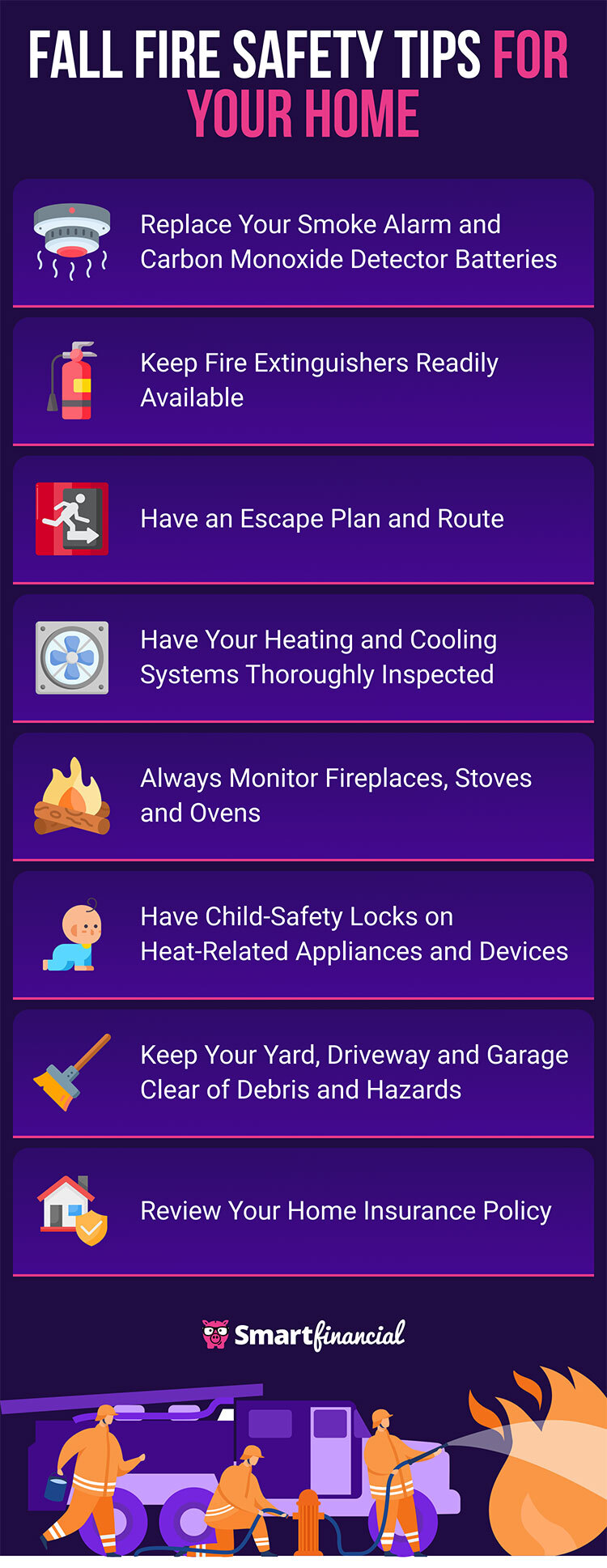
You can help reduce the risk of a house fire this fall by doing necessary maintenance and keeping certain safety tips in mind. Below is a checklist to help you keep your home fire-free and reduce the risk of a house fire claim this fall:
- Replace the batteries in your smoke alarms and carbon monoxide detectors at least once every six months to a year.[3][4]
- Smoke detector sensors wear down over time and should be replaced every 10 years for smoke alarms, while carbon monoxide detectors should be replaced every five years.[3][5]
- Test smoke alarms and carbon monoxide detectors at least once a month, typically by pressing the test button and holding it for a few seconds.[3][6] If you notice frequent false alarms in certain spots in your house, relocate them to another area.[7]
- You should be able to locate fire extinguishers on every floor of the house, with each easily accessible to smother small fires before they grow out of control.
- Clean out your furnace and other heating appliances before use in the fall. If the filters in your heating equipment, such as your HVAC unit, have become too clogged, they can make your heating and cooling systems less effective and increase the risk of a fire.
- If you must step away from your kitchen due to an emergency, ask another household member to watch your cooking while you’re away or turn off all active appliances and burners until you can return.
- If you’re lighting the fireplace, use a fireplace screen and do not leave it unattended.
- Prevent children from accessing heat-related appliances or devices. Consider installing a barrier around outdoor HVAC units and installing a thermostat lock.
- Regularly clear dead leaves and tree branches from your yard and keep trees trimmed so they don't get too close to your home.
- Store any potential fuel, such as flammable liquids like gasoline, away from your home. For example, keep firewood at least 30 feet away from your home or other structures.[8]
- Never burn yard waste on windy days when flames or sparks could light nearby flammable materials or buildings. Always check your local regulations for any outdoor burning.
- Practice fire drills with your entire household, ensuring everyone understands the evacuation plan and can account for unforeseen difficulties in escaping. Ensure all household members have a clear escape plan by knowing at least two exits from each room.[9]
- Create a home inventory of your personal belongings, such as furniture, major appliances, electronics, clothing, jewelry and other possessions that you’d need home insurance to help cover the cost of replacing in the event of a fire. Document each item with its description, purchase cost, date of purchase and other details to support the claims process.[10]
- Review your home insurance policy to ensure your coverage meets your needs in the event of a house fire.
Does Homeowners Insurance Cover Fire Damage?
Most homeowners insurance policies typically cover fire damage, provided an accidental source causes it and it wasn’t preventable. However, not all causes of house fire damage are covered, such as fires in vacant homes or those set intentionally.[11] Additionally, how much coverage you have depends on your coverage limits and what portion of your home or belongings is damaged.
Dwelling Coverage
Dwelling coverage (Coverage A) is the portion of your homeowners insurance policy that covers house fire damage to your home’s foundation, walls, floors and attached structures. Your homeowners insurance will cover up to your dwelling coverage limit, after accounting for your deductible.
Other Structures Coverage
Other structures coverage (Coverage B) is the portion of your homeowners insurance policy that covers house fire damage to buildings or structures on your property that aren’t directly connected to your home, such as a shed, gazebo or fence. However, the coverage limit for other structures is typically only 10% of your dwelling coverage limits.[12]
Personal Property Coverage
Your household items damaged or lost in a house fire are covered under the personal property coverage (Coverage C) of your home insurance policy. These can include furniture, electronics, clothing, sports equipment and other personal belongings. Coverage for personal property will typically extend up to 50% to 70% of your dwelling coverage limit.[12]
Additionally, well-maintained trees and shrubbery lost due to house fires are also typically covered, although coverage may be capped at up to $500 per item.[12]
Additional Living Expenses
Loss of use (Coverage D) in your homeowners insurance policy covers additional living expenses while your home is being repaired or rebuilt following a fire. This can reimburse you for the cost of hotels, meals, laundry and other costs beyond your normal expenditures while you’ve lost the use of your home. However, coverage typically lasts only up to 12 months.[11]
Smoke Damage
Alongside damage from a house fire itself, homeowners insurance will typically cover damage to your dwelling, detached structures and personal belongings from smoke.[13] This may even extend to smoke damage to your home resulting from a neighboring fire that never touches your property. Insurance will typically cover the cost of cleaning smoke damage, deodorization, structural damage and additional living expenses if the process leaves your home uninhabitable during repairs.[14]
Does Homeowners Insurance Cover Wildfires?
Homeowners insurance will typically cover losses due to wildfires. However, standard home insurance may exclude or limit wildfire coverage in certain areas, such as California, where wildfires are more common. Additionally, some policies may have a separate deductible for wildfire claims that could be higher than your standard deductible.[15]
How To Prevent Fall Fires
Below are a few tips to help prevent house fires this fall:
- Check your heating systems at least once a year to help prevent accidents.[7]
- To help avoid a space heater fire, never leave it running unattended or for long periods and keep it at least three feet away from curtains, bedding materials and other flammable objects.[1] Inspect it for damage before each use.[7]
- Try to clean out your chimney at least three times a year, ideally before you plan to use it, including before colder fall and winter weather.[7]
- Installing a barrier or spark guard around the fireplace can help prevent an accidental fire, but keep flammable materials at least three feet away from your fireplace.[16]
- Keep candles at least one foot away from flammable materials to reduce the risk of a fire spreading.[17] If you want to keep the aesthetic look of candles throughout your home, consider using battery-operated options as a safer alternative to real candles.
- If you plan to set up holiday decorations over the fall season, inspect lights for frayed wires before use.
- Try to reduce how long it takes to fully evacuate your home. Quick evacuations give more time to contact the fire department, which can help prevent the fire from spreading and reduce potential damage to your property.
Fall Fire Safety at a Glance
Below is the essential information you should know about fall fire safety:
- Ensuring that fall appliances are cleaned and maintained before use, disposing of flammable debris on the property and using caution around any flames in and around the house are essential parts of fall fire safety.
- House fires most commonly start in the kitchen, but electrical hazards, improper candle use and a lack of furnace and fireplace maintenance can also cause them.
- Homeowners insurance will typically cover fire damage to your home, although the amount covered can vary based on your dwelling coverage limit and what portion was damaged.
- Smoke and wildfire damage are often covered by home insurance, although wildfire coverage can vary by location.
- Practicing fire safety through fire drills can help you evacuate safely and call for help, reducing potential damage.
- Taking precautions around flame use, verifying smoke alarms are functioning and inspecting heating appliances in the home can help prevent fires.
How To Review Your Insurance Policy To Prepare for Fall
When reviewing your insurance policy to ensure you’re covered for fires and other fall perils, you should:
- Ensure you have enough coverage to protect yourself from out-of-pocket costs when making a claim.
- Perform a home inventory to understand how much personal property coverage you need.
- Consider scheduling high-value items to increase your coverage.
- Shop around to find the most affordable coverage that meets your needs.
- Verify you’re taking advantage of discounts, such as bundling home and auto insurance.
- Insurance quotes /
- Home /
- Fall Fire Safety
Preston Micalizio writes insurance content for SmartFinancial. He brings three years of professional experience writing in various industries, from higher education to e-commerce. He strives to engage with the audience, provide accurate reporting and make complex subjects easily digestible.


Get a Free Home Insurance Quote Online Now.
More on Home Insurance

Looking for Home Insurance?
Compare rates from dozens of companies in less than 3 minutes.