

Common Electrical Hazards: How Much Does it Cost To Rewire a Home?
 Written & Edited by Fran Majidi Written & Edited by Fran Majidi Fran MajidiFran Majidi manages content on SmartFinancial's website. She's had nearly a decade's worth of experience writing about i... Read more |
 Editorial Standards
 SmartFinancial Offers Unbiased, Fact-based Information. Our fact-checked articles are intended to educate insurance shoppers so they can make the right buying decisions. Learn More
Electrical hazards can cause devastation, and rewiring a home can be expensive. Rewiring costs are an average of $2 to $4 per square foot or $600 to $2,600, depending on the size of the home. The hourly labor fee is $50 to $100, so more complex rewiring projects will take longer and cost more. An older and larger house can therefore be much more expensive at around $6,200 as an average cost. [2] Even before asking how much does it cost to rewire a home, however, first ask yourself, what will it cost if you don’t? Each year, there are an estimated 51,000 house fires, more than 500 deaths, over 1,400 injuries and $1.3 billion in property damage due to electrical hazards that turn into blazes. [1] Let’s look at some common electrical hazards and rewiring essentials.
|
7 Most Common Electrical Hazards
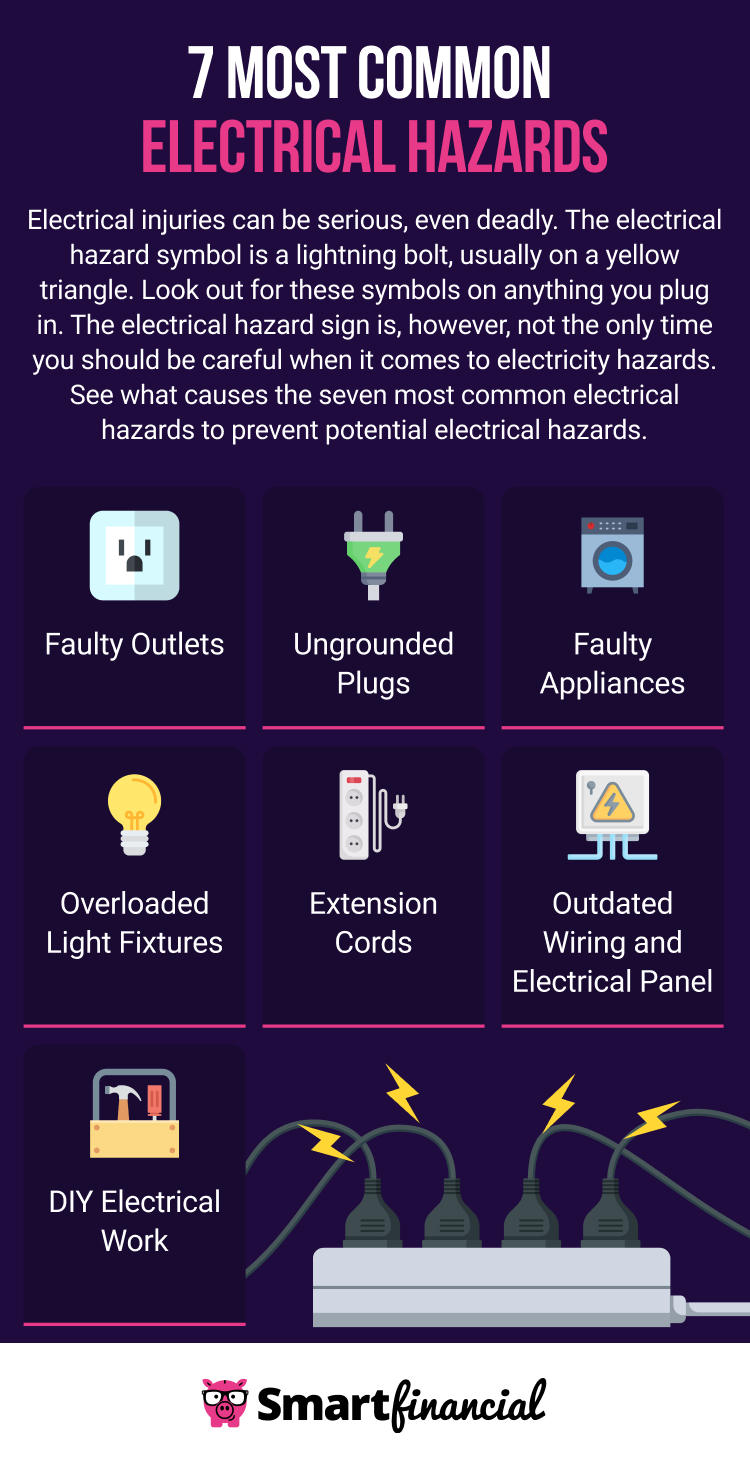
Electrical injuries can be serious, even deadly. The electrical hazard symbol is a lightning bolt, usually on a yellow triangle. Look out for these symbols on anything you plug in. The electrical hazard sign is, however, not the only time you should be careful when it comes to electricity hazards. See what causes the seven most common electrical hazards to prevent potential electrical hazards.
-
Faulty Outlets
If an outlet is hot to the touch or sparks fly from it when using, it’s time to replace it. A burning smell or an outlet that doesn’t stay in place and hangs with loose wires is an electrical fire hazard.
-
Ungrounded Plugs
If your plug has only two plugs, it is ungrounded. Ungrounded plugs do not prevent electric shock because they only have connections for a hot and neutral wire. They are also more prone to damaging devices and causing fires.
-
Faulty Appliances
Faulty appliances with internal components that are not functioning properly can be hazardous. They can cause electrical shocks and house fires. Avoid plugging in major appliances to a two-prong ungrounded plug, which is an electrical fire hazard.
-
Overloaded Light Fixtures
Using light bulbs with a higher wattage can overload a light fixture and cause electrical hazards.
-
Extension Cords
Damaged extension cords and overloaded extension cords are electrical hazards. If your cord is hot to the touch or looks cracked, it’s time to throw it away.
-
Outdated Wiring and Electrical Panel
An old electrical panel and outdated wiring, especially that is overloaded and has loose connections, can cause electrical shock, device and electrical equipment damage as well as a house fire. As the panels age, so do the wires. If they look frayed, it’s time to replace the wiring and panel.
-
DIY Electrical Work
If you’re not an experienced electrician, don’t upgrade your own electrical work or try to avoid all the necessary permits. Prevent electrical accidents by hiring a licensed electrician to work on repairs, if you keep blowing fuses, smell smoke or see sparks. Even a small mistake with electric work can have expensive and deadly consequences. [5] A trained technician will do the job while following electrical safety procedures.
Underground Electrical Faults: Fire Hazards Worth Investigating
Do you know what’s lurking beneath your home or investment property? It’s a good idea to find out because a break or damage in the electrical wires or insulation of wires can cause home fires. This is because a fault, or break, will lead to the flow of electrical currents. Every day wear and tear and physical damage during construction or earthquake are often the causes of breaks and damage to underground wiring.
An earthquake insurance policy, not a homeowners insurance policy, would cover the cost of fixing the faults, if they occurred due to an earthquake. Otherwise, wear and tear is not covered by homeowners insurance, and you may need builder’s risk coverage to cover damages caused by construction.
Breaks in electrical wiring can cause electrocution, if the ground or surrounding areas become energized. Or, they can create heat and friction – and fires. At best, the consistent flow of electricity will degrade the surrounding materials and cause further damage. Or, you’ll have high electricity bills without knowing why. [4]
Why Are Electrical Fires Especially Hazardous?
Most homes are made of combustible stuff, and electric fires can spread very rapidly. Standard firefighting measures also may only cause the fire to grow uncontrollable. Smothering and throwing water, for instance, may only make the fires spread and increase the risk of electrocution for those trying to put out the flames.
The first thing a homeowner should do in the case of an electrical fire is to figure out the source of the fire and turn off the power immediately, all without making contact with the electrified elements.
An electrical fire can smolder in the walls for hours, even more than a day. It’s important to wear protective gear when turning off the power and to evacuate and call the fire department immediately. [5]
Cost of Rewiring a Home and How To Do It Cheaply But Safely
So you should know roughly where your home falls between an overall $600 to $6,000+ cost for rewiring based on the complexity of the wiring, its location, age and size. There are incremental costs aside from the $50 to $100 an hour for labor for rewriting a home. Here they are. [2]
Cables and Wires
These essential parts of rewiring a home range from 25 cents to over $1.60 per linear foot.
Permits
The number of permits and how much each one costs will vary depending on location. Average prices range from $75 to $150 per permit.
Inspections
You will need a preliminary inspection and a post-inspection. In the preliminary inspection, you’ll see what needs to be done. The post-inspection is when you make sure the job was done right. You’ll then require regular electrical inspections every five to 10 years. Inspections cost $100 to $125.
Safety Codes
Safety codes have their own specific permits which are more expensive than other permits, and often cost between $200 and $900.
Opening and Repairing Walls and Floors
Whether the wires are in the walls and ceilings or on the floors, it’ll cost anywhere between $4 to $8 per square foot of entering and sealing the area back up..
Upgrading the Wiring System
It’ll cost anywhere from $200 to $2,300 to upgrade a wiring system. The more complicated the rewiring and the size of the home, the higher the cost.
Upgrading the Circuit Breaker Box
The heavy cost of upgrading the circuit breaker is $700 to $4,220. Again, the complexity and size of the project determines the cost.
Replacing Electrical Outlets
It costs $125 to $200 to replace electrical outlets affected by the rewiring.
Cleanup
Your contractor will charge around $500 to clean up the area after the work is completed.
Are There Grants To Rewire a Home?
There are grants and loans available from state and local governments, nonprofits, and other organizations. A good place to start is to visit your local government website, the USDA website. There are also several federal assistance programs for home improvements offered by The Department of Housing and Urban Development (HUD). Eligibility may be dependent on age, location, income and the type of property you plan to repair.
Will Home Insurance Cover the Cost of Rewiring a Home?
Homeowners insurance policies cover most claims for damaged electrical wiring and replacement electrical panels, if they are damaged due to a covered peril, such as a house fire, wind storm or another sudden and accidental loss. Eligible claims would be covered under Part A of your policy, also called dwelling coverage.
Home insurance will not cover faulty wiring which results from poor workmanship, especially a DIY project. Some homeowners insurance policies also will not cover homes with aluminum or knob-and-tube wiring or they may charge higher rates for coverage. Both aluminum and knob-and-tube are older types of wiring that are more prone to fraying, hence leaving the home vulnerable to fire hazards.
Home insurance also does not cover circuit overloads (common with light fixtures), lightning strikes, power surges and power failures. [6]
A home warranty may be more suited for coverage of wear-and-tear related issues, like needing new circuit breakers, fuses or even a light fixture. Home insurance will not pay for maintenance upkeep.
What Is Ordinance or Law Coverage: Will It Cover Rewiring?
If you add ordinance or law coverage to your homeowners insurance policy, it will pay for rewiring if a home is damaged, destroyed or needs an upgrade to meet the building codes, but only after a covered loss. [7]
Buying fire-resistant wiring or smart home components to reduce electrical hazards may cost more but may earn you a lower home insurance rate.;
- Insurance quotes /
- Home /
- How Much Does It Cost To Rewire A Home
Fran Majidi manages content on SmartFinancial's website. She's had nearly a decade's worth of experience writing about insurance-related topics. Prior, she was an arts and entertainment editor in New York City. She has a B.A. from Barnard College and an M.F.A. in writing from The New School.


Get a Free Home Insurance Quote Online Now.
More on Home Insurance

Looking for Home Insurance?
Compare rates from dozens of companies in less than 3 minutes.