

Protect Your Sweetest Christmas Creation With Gingerbread House Insurance
 Written by Preston Micalizio Written by Preston Micalizio Preston MicalizioPreston Micalizio writes insurance content for SmartFinancial. He brings three years of professional experience writing ... Read more |  Edited by Richard Murphy Edited by Richard MurphyRichard MurphyRichard Murphy manages content on SmartFinancial's website. With a strong background in content strategy and copywriting... Read more |
 Editorial Standards
 SmartFinancial Offers Unbiased, Fact-based Information. Our fact-checked articles are intended to educate insurance shoppers so they can make the right buying decisions. Learn More
Gingerbread houses, made from cookies, candy, frosting, and other sugar treats, are a delightful Christmas tradition to display, but they are at risk of damage if not properly cared for. However, if the gingerbread people who reside in these cookie houses were brought to life through the power of Christmas magic, they might protect their homes from the many perils they face by purchasing a fantastical gingerbread house insurance policy.
Read on to learn more about this imaginary insurance option and how it can help protect these delightfully delicious gingerbread dwellings.
|
Key Takeaways
|


What Is Gingerbread House Insurance?
Gingerbread house insurance is a fun fantasy coverage for gingerbread people to help protect their cookie home from potential damage while displayed in your home. Gingerbread houses face several risks, including hazards that could damage or destroy them, leading to significant out-of-pocket costs for replacement gumdrops. However, gingerbread house insurance may help provide coverage that can reduce these imaginary costs and give some peace of mind this holiday season.
What Does Gingerbread House Insurance Cover?
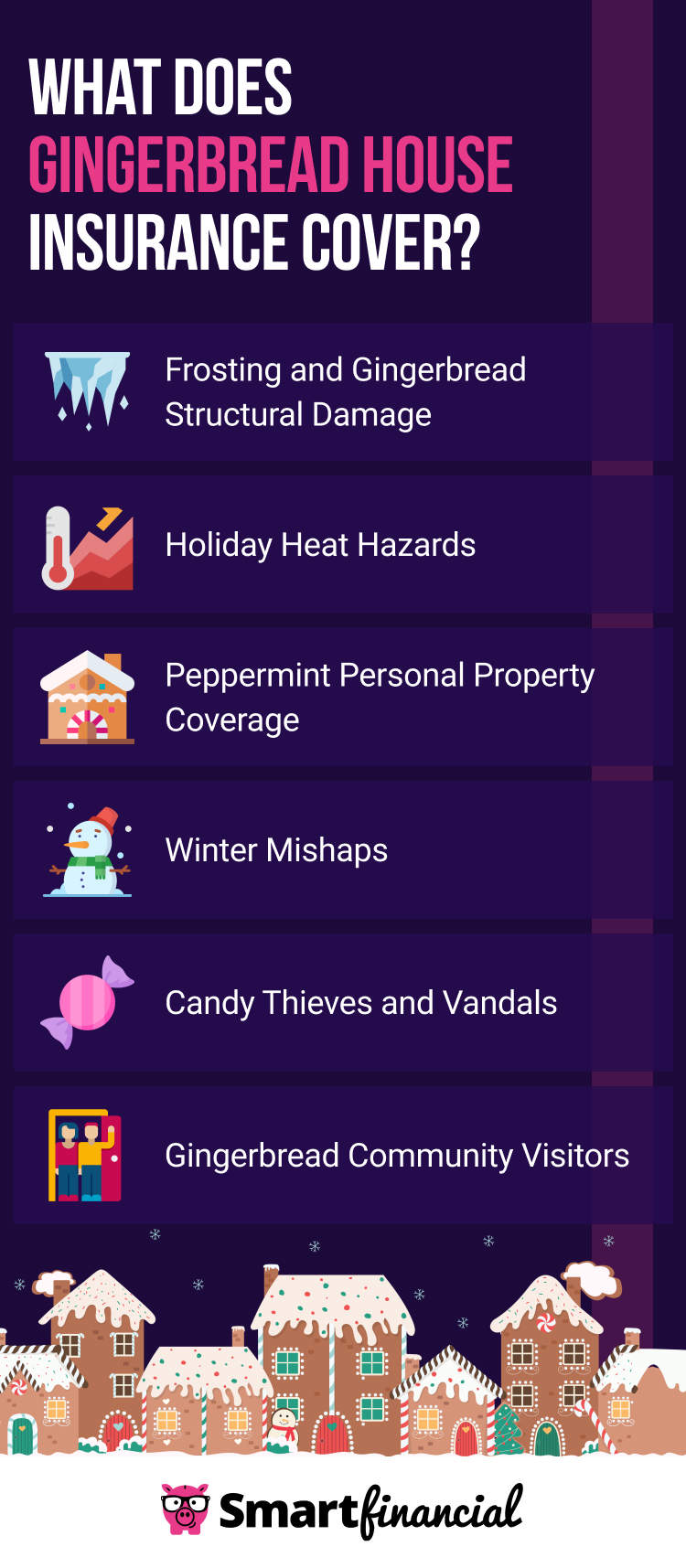
Below, we’ll go over some of the fantastical scenarios that gingerbread house insurance may cover:
Frosting and Gingerbread Structural Damage
The dwelling coverage portion of your gingerbread house insurance may help protect your home and any cookie or candy structures attached to it in the event it gets damaged. This generally includes detached structures, such as a gingerbread shed or candy cane fence, although these may only be covered up to a portion of your gingerbread dwelling coverage limit.
If the structural damage to your gingerbread house leaves it uninhabitable, such as a caved-in cookie roof from a heavy powdered sugar snowfall, you’ll likely be covered for loss of use. This can help reimburse you for additional living expenses while your gingerbread home is being repaired.
Holiday Heat Hazards
Gingerbread houses are typically covered from fires, whether caused by a stray spark from a roaring Christmas fire or an unattended kitchen that catches flame from something burning in the oven. Additionally, if someone turns the heat up too high to counteract the winter cold, resulting in a melted gingerbread house, you’ll likely be covered for the repair costs.
Peppermint Personal Property Coverage
Gingerbread house insurance may cover losses of personal property, such as peppermint buttons, toffee top hats, electronic toys and more. Personal property is typically only insured for its actual gumdrop value (AGV), similar to actual cash value (ACV), meaning your claim amount will take an item’s depreciation into account.
Winter Mishaps
Your gingerbread house insurance will typically cover you for accidents and surprise damages that are more common in winter. For example, a heavy drizzling of frosting that causes a candy cane to fall into your gingerbread home’s foundation will typically be covered.
A blustery winter wind from an open window that suddenly freezes your gingerbread pipes will also likely be covered.
Candy Thieves and Vandals
Gingerbread houses are often victims of hungry delinquents who can’t avoid taking a nibble from a chocolate bar roof or peppermint bark door. Gingerbread house insurance may protect your home against these peckish burglars, reimbursing you for the cost of replacing damaged cookies and stolen candy pieces.
Gingerbread Community Visitors
Your insurance will also typically cover you for accidents and injuries to guests on your property. For example, the personal liability portion of your coverage helps pay for medical bills or lost wages if a gingerbread neighbor slips and falls on your frosting-covered driveway while visiting you and breaks off their leg.
What Isn't Covered by Gingerbread House Insurance?
Even though it isn’t real, gingerbread house insurance still doesn’t cover everything. For example, much like regular home insurance, gingerbread house coverage won’t protect you against damages that were caused intentionally. If you get hungry for sweets and eat your own gingerbread house, your claim for damages will likely be denied.
You likely also won’t be covered for wear and tear, as gingerbread houses can degrade quickly without proper care. Damage caused by a lack of maintenance, such as allowing your gingerbread house to take on too much moisture and collapse or become riddled with mold, also likely won’t be covered. The prevention and removal of pests, such as ants, roaches and mice, is also considered your responsibility, meaning you won’t be reimbursed for pest control.
Flooding from an overfilled faucet or spilled bottle of eggnog likely won’t be covered without a separate flood policy. Similarly, earthquakes caused by someone bumping the display table that cause your gingerbread house to collapse won’t be covered without a separate policy.
Optional Whimsical Gingerbread House Add-Ons
Gingerbread home insurance isn’t limited to the coverages listed above, although some options will likely add a few gumdrops to your monthly premium. Some of these whimsical gingerbread house insurance endorsements include:
- Scheduled Peppermint Property Coverage: Many claims for higher-valued items, such as antique hard candy or candy necklaces, are subject to sublimits, so your payout may not be for their full value. This endorsement may insure these items for their full replacement gumdrop value, although you’ll likely need to schedule each high-value item individually.
- Whipped Cream Backup Coverage: This endorsement will cover you if your gingerbread plumbing gets backed up with whipped cream.
- Gingerbread Home-based Business Coverage: A standard gingerbread house policy only covers damaged business equipment for up to a limited amount, but this endorsement will allow you to operate your cookie business out of your gingerbread home safely.
- Spilled Milk Flood Coverage: Available as either a gingerbread house add-on or a separate policy, this coverage protects your home if it's damaged by large volumes of spilled liquid.
- Cookie Identity Theft Protection: If someone impersonates your gingerbread cookie likeness, which could be used to steal and misuse your personal or financial information to apply for gumdrop loans or engage in other illegal activities, this coverage will help cover legal fees, fraud detection, and more.
How Much Does Gingerbread House Insurance Cost?
Gingerbread house insurance may cost as little as a handful of gumdrops per month, but it will largely depend on factors like your gingerbread house’s location, size and age. Some factors that gingerbread house insurance companies consider when determining your rates can include:
- Age: Older gingerbread houses may be more expensive to insure compared to newer ones, as they may be more prone to falling apart, becoming inedible or rotting after enough time has passed. This can increase your odds of making a claim, which generally leads to higher rates.
- Location: Some areas may have a higher risk of having claims made, which could increase your premium expenses. For example, gingerbread houses located on Confectionery Corner have a higher rate of burglary and vandalism from hungry children looking for candy snacks than those on Lollipop Lane, which would likely result in increased rates to compensate for this risk.
- Size: Larger houses are often more expensive to insure due to higher repair or replacement costs. For example, the largest gingerbread house on record, at 2,520 square feet, will likely have higher rates than a standard-sized gingerbread house, which can often be as small as one to two square feet, because it is more expensive to repair after damage.[1]
- Amenities: Some gingerbread house amenities, like taffy trampolines or eggnog swimming pools, are attractive nuisances that could result in higher monthly rates, as they increase the risk of injury on your property.
- Coverage limits: You should only have enough coverage on your gingerbread house as you need. For example, while regular homeowners should generally have between $300,000 and $500,000 of coverage on home insurance, gingerbread homeowners will likely need significantly lower coverage limits since a gingerbread house costs much less to repair or replace.[2]
- Deductible: Raising your deductible can help lower your monthly premium, as you agree to cover more of the costs when making a claim. However, ensure you don’t set your deductible too high, or you may risk paying out of pocket entirely, as many gingerbread houses can be replaced entirely for the price of a bag of groceries and a few hours of labor.
- Discounts: Taking advantage of discounts can help lower your monthly rates. For example, you may be able to bundle your gingerbread house and toy car insurance policies to earn a discount on your premium.
Tips To Keep Your Gingerbread House Safe This Christmas
While some gingerbread houses only last a few weeks at best, others can be displayed for up to five years or longer if they’re stored properly and well cared for.[3][4] Below are a few tips to consider to help you continue enjoying your delightful gingerbread home for the whole holiday season and beyond:
- Create a transparent security shield, such as a Tupperware dome or plastic wrap, to cover your gingerbread house when it's not on display. This can help prevent moisture, dust and pests from getting access to it.[5]
- While there are many different types of frostings, chocolates and caramels to use for bonding your gingerbread house, royal icing becomes notably hard when dry, making it exceptional for creating long-lasting, sturdy gingerbread houses.[6][7]
- Don’t utilize too many heavy candy accents or dollops of frosting unless your gingerbread house’s foundation can support the weight; otherwise, it could cause your cookie roof to cave in.
- Give your frosting time to dry when building your home, as rushing it could cause your gingerbread house to fall apart during construction.[8]
- Keep your gingerbread house out of direct sunlight, as the heat can cause parts of your sugary home to melt.
- Consider using a few coats of a clear lacquer to encase your gingerbread house, which can preserve it for much longer, though it will make it inedible.[5]
- Insurance quotes /
- Home /
- Gingerbread House Insurance
Preston Micalizio writes insurance content for SmartFinancial. He brings three years of professional experience writing in various industries, from higher education to e-commerce. He strives to engage with the audience, provide accurate reporting and make complex subjects easily digestible.


Get a Free Home Insurance Quote Online Now.
More on Home Insurance
Looking for Home Insurance?
Compare rates from dozens of companies in less than 3 minutes.