

Swimming Pool Insurance Requirements for Homeowners
 Written by Preston Micalizio Written by Preston Micalizio Preston MicalizioPreston Micalizio writes insurance content for SmartFinancial. He brings three years of professional experience writing ... Read more |  Edited by Richard Murphy Edited by Richard MurphyRichard MurphyRichard Murphy manages content on SmartFinancial's website. With a strong background in content strategy and copywriting... Read more |
 Editorial Standards
 SmartFinancial Offers Unbiased, Fact-based Information. Our fact-checked articles are intended to educate insurance shoppers so they can make the right buying decisions. Learn More
Swimming pool insurance requirements typically include safety features such as fencing or self-latching gates, proper pool maintenance and sufficient liability coverage to protect against pool-related claims. While swimming pools can be a fun addition to your home, these attractive nuisances carry a high risk of injury, prompting insurers to require you to take proactive steps to prevent personal liability claims.
Homeowners with pools, or those considering installing one, should read on to learn more about swimming pool insurance requirements, how your insurer may cover swimming pools for both damage and liability and why pool safety should be a top priority.
|
Key Takeaways
|
On This Page

What Are Swimming Pool Insurance Requirements?
Does Homeowners Insurance Cover Swimming Pools?
Why Swimming Pools Increase Insurance Risk
Common Swimming Pool Insurance Requirements
What Swimming Pool Safety Measures Lower My Insurance Risk?
Tips for Meeting Swimming Pool Insurance Requirements
Swimming Pool Insurance Requirements at a Glance
How To Get Swimming Pool Coverage
Frequently Asked Questions

What Are Swimming Pool Insurance Requirements?
Swimming pool insurance requirements are the proactive steps homeowners need to take to obtain coverage for their pool. While specific requirements vary by insurer, they often include the following:[1][2]
- Regular maintenance and upkeep of the pool
- Installing safety measures to reduce the risk of accidents and injuries
- Informing your insurer that you have a pool when enrolling for coverage or installing a pool
Swimming pool claims can be incredibly costly, with liability claims potentially reaching millions of dollars if someone dies in a pool-related accident. Additionally, failing to perform regular maintenance can make your pool more hazardous and increase the risk of property damage. Ignoring these requirements could have consequences for your coverage, including the denial of a claim.[3][4]
How Much Does It Cost To Insure a Swimming Pool?
Installing a swimming pool usually increases your annual home insurance premium by $50 to $75, often because higher liability coverage is recommended for pool owners and the added risk of a claim for repairs or replacement. However, premium increases due to pools may vary by location. For example, in some areas where insurers expect pools to be included with homes, such as Houston, the increase may be lower.[5]
You're also likely to pay higher homeowners insurance costs if you increase your liability coverage to account for the added risks a pool can pose.[6]
Does Homeowners Insurance Cover Swimming Pools?
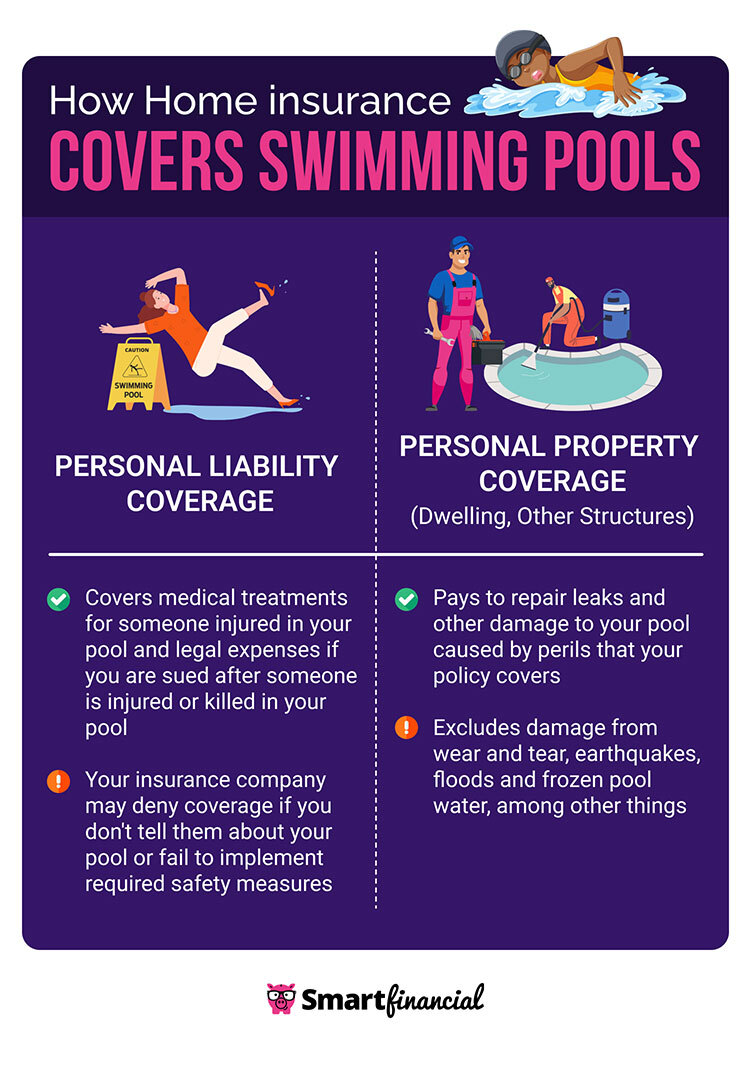
Homeowners insurance typically covers two different types of swimming pool claims:
- Damage by a covered peril to your pool that necessitates repair or replacement
- Injuries or deaths for non-household members in or around your pool
Review your limits for each pool-related coverage type in your policy to ensure you have enough protection. Below, we’ll discuss the different forms of coverage related to swimming pool claims.
Property Damage to Your Swimming Pool
Homeowners insurance will cover damage to your pool caused by a covered peril. However, the portion of your home insurance that covers your pool may vary based on the kind of pool you have and your insurer:[7]
- In-ground pools: May be covered by your dwelling or other structures insurance. These pools are built into the ground of your property, and the edges remain level with the yard.
- Above-ground pools: May be covered under your dwelling, other structures or personal property coverage, depending on whether they’re permanent or temporary. These pools sit atop your property, often directly on the yard or a concrete slab level to the ground.
Understanding what type of coverage applies to physical damage to your pool is important because your coverage limits may vary. For example, an above-ground pool classified as personal property may be covered for 50% to 70% of your dwelling coverage. However, a pool covered under the other structures portion of your policy is typically insured for up to 10% of your dwelling coverage, so you may want to increase your limits to help cover the cost of repairing or replacing your pool after a covered loss.[8]
Liability Coverage for Your Swimming Pool
Your homeowners insurance typically covers medical expenses, legal costs or both if a non-household member is injured or killed in or around your swimming pool and you're found legally responsible. For example, personal liability coverage may apply if a guest is injured while swimming or after slipping and falling on your pool deck. Your insurer may also require you to install specific safety features to reduce risk and maintain coverage for your pool.[2]
Why Swimming Pools Increase Insurance Risk
Swimming pools increase your insurance risk for the following two reasons:
- Swimming pools can be damaged by various issues, leading to property damage claims.
- Swimming pools can increase the risk of a non-household member’s injury or wrongful death, resulting in personal liability claims.
Below, we’ll cover some of the insurance risks involving swimming pools.
Injury Risks
Some of the most common injury risks involving swimming pools include:[9]
- Drowning
- Slip and fall injuries
- Exposure to toxic chemicals or bacteria
- Head and neck injuries from diving
- Electrocution
Property Damage
Common property damage claims involving swimming pools include:[10][11]
- Cracks and leaks
- Broken pool lights or other electrical issues
- Pool collapse
- Uneven water levels
- Damaged pool equipment
- Broken swimming pool safety features
Legal Liability
You're legally liable for injuries to non-household members that occur in or around your swimming pool if you're found legally responsible under applicable law. Swimming pools are generally considered attractive nuisances because they can attract children onto your property and expose them to a risk of injury. Most states recognize the attractive nuisance doctrine, meaning you may be held liable if a trespassing child is injured after you fail to take reasonable steps to limit access to an attractive nuisance on your property.[12][13]
Common Swimming Pool Insurance Requirements
Insurers often require households with swimming pools to meet certain requirements to get coverage for property damage and liability claims involving their pools. We’ll cover some common swimming pool requirements below, but be sure to check with your insurer for any specific requirements, as they can vary between insurance companies.
Pool Fencing
Insurance companies may require your pool to be enclosed by a fence that meets specific height requirements, such as at least 4 feet tall, and includes a self-latching or self-closing gate to help prevent unsupervised access. In some cases, your existing backyard fence may satisfy this requirement.[1] Additionally, many states require residential swimming pools to be enclosed by a fence that meets minimum safety standards.[14]
Safety Covers
Your insurer may require a safety cover to prevent anyone from entering your pool or accidentally falling into it. Look for pool safety covers that can handle the weight of a small child, who has a significant risk of drowning after accidentally falling into your swimming pool.[11][15]
Pool Alarms
Your insurer may require a pool alarm that notifies you of water activity or when someone enters the pool deck area. These alarms can notify you if someone is attempting to enter your pool unsupervised, such as a roaming child during a busy house party where you might not be paying attention.[11]
Proper Maintenance
Insurance companies typically exclude claims arising from negligence, so staying on top of maintenance is essential to maintaining coverage. For example, it’s your responsibility to prevent your pool from becoming contaminated with bacteria or to use the wrong chemicals that could make someone sick or injured. Additionally, property damage resulting from a lack of maintenance, such as cracks in the pool, failing equipment or pest infestations, likely won’t be covered for repairs.[16][17]
What Swimming Pool Safety Measures Lower My Insurance Risk?
Keeping guests safe and being proactive with safety can help reduce the risk of accidents and liability claims. Some safety measures to consider include:[19]
- Ensure all guests know how to swim or are accompanied by strong swimmers at all times
- Don’t allow unsupervised pool access to children
- Don’t allow children to swim near pool filters, which could entrap them via suction
- Don’t let toys and floats remain in the pool after use, as children may be tempted to play with them and fall in
- Watch for bad weather, such as heat, rain or lightning
- Ensure depth and rules are posted if you have a diving board or slide
- Don’t allow those who are drinking or otherwise inebriated to swim or hang out around the pool, as their swimming ability may be impacted
- Check for pool hazards regularly, such as broken glass
Tips for Meeting Swimming Pool Insurance Requirements
A few tips for ensuring you meet swimming pool insurance requirements include:
- Talk with your insurance provider to understand all swimming pool requirements when purchasing a policy.
- Measure your fence in advance to ensure it meets height requirements, and make sure the latching gate is childproof.
- Keep a schedule of regular maintenance tasks to ensure you don’t forget anything or put something off.
- Ensure all lights, alarms and electrical systems have working batteries or are otherwise functioning properly
- Check your pool cover for any cracks, fraying or tears that might allow someone to slip through it and become trapped.
Swimming Pool Insurance Requirements at a Glance
Below, we’ll cover the essential information you should understand about swimming pool insurance requirements:
- Insurers may have different requirements for coverage of your swimming pool, so check to ensure you’ve met their requirements to avoid a denied claim.
- Insurers may require you to have a fence of a specific size, safety covers or alarms to help reduce the risk of a swimming pool accident.
- You’ll likely be held liable for injuries or damages even if someone sneaks into your pool without your knowledge.
- Depending on the type of pool you have, property damage to your pool may be covered with different limits, so ensure you check with your insurer.
- Regular maintenance of your pool is your responsibility, and neglecting its upkeep could increase the risk of accidents or damage and lead to an insurance claim denial.
How To Get Swimming Pool Coverage
Typically, you will want to compare quotes from three to five different insurance companies before settling on a homeowners insurance policy with swimming pool coverage. Remember to mention up front that you have a pool or plan to install one, since not all insurance companies will cover you if you have one, based on the type of pool and whether you meet swimming pool insurance requirements.[7]
Simplify the home insurance shopping process by using SmartFinancial. After completing a brief questionnaire, we’ll connect you with a licensed insurance agent to help you get affordable coverage for your home’s swimming pool. Click here for free home insurance quotes today!
- Insurance quotes /
- Home /
- Swimming Pool Insurance Requirements
Preston Micalizio writes insurance content for SmartFinancial. He brings three years of professional experience writing in various industries, from higher education to e-commerce. He strives to engage with the audience, provide accurate reporting and make complex subjects easily digestible.


Get a Free Home Insurance Quote Online Now.
More on Home Insurance

Looking for Home Insurance?
Compare rates from dozens of companies in less than 3 minutes.