

Does Car Insurance Cover Catalytic Converter Theft?
 Written by Preston Micalizio Written by Preston Micalizio Preston MicalizioPreston Micalizio writes insurance content for SmartFinancial. He brings three years of professional experience writing ... Read more |  Edited by Dan Marticio Edited by Dan MarticioDan MarticioDan Marticio is the content manager at SmartFinancial and has written 150+ articles across multiple insurance verticals.... Read more |
 Editorial Standards
 SmartFinancial Offers Unbiased, Fact-based Information. Our fact-checked articles are intended to educate insurance shoppers so they can make the right buying decisions. Learn More
After paying your deductible, comprehensive car insurance should cover you if you’re the victim of catalytic converter theft. Adding this optional coverage type to your auto policy can save you headaches and financial hardship, as replacing a catalytic converter can set you back hundreds of dollars.
Keep reading to learn about catalytic converter theft, how and why they're stolen and how to protect your converter.
|
Key Takeaways
|
On This Page

What Is a Catalytic Converter?
Why Do People Steal Catalytic Converters?
Does Car Insurance Cover Catalytic Converter Theft?
How Are Catalytic Converters Stolen?
Which Cars Are the Most Targeted for Catalytic Converters?
Where Are Catalytic Converters Most Commonly Stolen?
How To Prevent Catalytic Converter Theft
FAQs

What Is a Catalytic Converter?
A catalytic converter is a metal honeycomb-looking device in your exhaust system, usually between the engine and the muffler. It is composed of precious metals, including platinum, palladium and rhodium, that help filter your exhaust system’s toxic fumes into safer gas. All cars made after 1974 have a catalytic converter due to an eco-friendly initiative to reduce vehicular pollutant output.[1]
Why Do People Steal Catalytic Converters?
The precious metals inside catalytic converters make them high-value targets for car thieves because the converters can often be sold to recyclers for $25 and $300. Catalytic converters with a higher percentage of these metals, such as those installed onto hybrid cars, could be sold for up to $1,400.[2]
Additionally, stolen catalytic converters can be sold to recyclers and scrap yards with little investigation because they are sometimes not branded or identifiable after removal.
Are Catalytic Converter Thefts on a Decline?
State Farm reported that catalytic converter theft claims dropped by 74% in the first half of 2024 compared to the same period in 2023. This downward trend is a welcome interruption to the theft claims that increased dramatically from 2020 to 2022. However, the number of theft claims has still not deflated to 2019 levels, with at least 52% more claims in the first half of 2024 in comparison.[3]
Does Car Insurance Cover Catalytic Converter Theft?
If your auto policy includes comprehensive coverage, your insurance should cover catalytic converter theft. Comprehensive coverage will cover the costs of replacing a stolen catalytic converter and any damages the theft incurred, such as broken windows if the vandal also broke into your car. However, you’ll still need to cover your deductible before your insurance reimburses you for the converter’s repair or replacement.
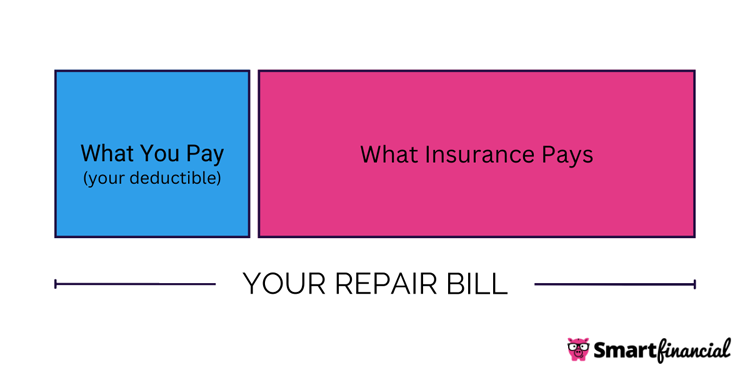
Depending on your deductible, it may not be worth filing a claim. For example, on the low end, a new converter could cost around $900 on average, but if your deductible is $1,000, it would not make any sense to file a claim.[4]
Does Insurance Cover Catalytic Converter Damage?
Whether your insurance will cover catalytic converter damage largely depends on the cause, as different insurance types cover different events. For example, if a thief attempts to steal your converter but only damages it instead of stealing it, that vandalism is typically covered under comprehensive coverage. However, you'll need collision coverage if your converter was damaged in a collision with another vehicle or in a single-car rollover.
In addition, if your engine’s performance is affected and it can be traced to an issue with your catalytic converter, you may be covered if you have mechanical breakdown insurance (MBI). This type of coverage insures your vehicle's mechanical parts and electrical systems against sudden and unexpected internal failure. Keep in mind that if your catalytic converter was damaged due to normal wear and tear, it likely won’t be covered by insurance.
How Much Does It Cost To Replace a Stolen Catalytic Converter?
Your car's make and model will determine how much it costs to replace its catalytic converter, but a new one can typically cost between $900 and $4,500 on average.[4]
How Are Catalytic Converters Stolen?
Thieves can get under the car while it’s parked and saw through the exhaust system or remove the bolts holding the converter to your car. With easily acquired tools, theft can occur in just under two minutes.[5] Thieves then sell the converter to a recycler or scrap yard that wants it for their valuable precious metals.
Which Cars Are the Most Targeted for Catalytic Converters?
Vehicles with a higher ride height that makes the exhaust system more easily reachable, such as trucks,SUVs and some hybrid vehicles, are ideal targets for stealing a catalytic converter. Additionally, their converters can fetch higher prices than regular models if their converters contain a higher percentage of valuable metals.[6] While thieves may target any car with a catalytic converter, below is a list of specific models most commonly targeted by converter thieves nationwide:[2]
|
Ford F-150 |
Ford Explorer |
|
Honda Accord |
Toyota Prius |
|
Honda CR-V |
Chevrolet Equinox |
|
Toyota Tacoma |
Kia Soul |
|
Chevrolet Traverse |
Chevrolet Cruze |
Where Are Catalytic Converters Most Commonly Stolen?
Catalytic converters are most commonly stolen in California, with nearly four times as many converter theft claims in the first half of 2024 compared to the second-ranked state on the list, Illinois. According to 2024 claims data from State Farm, here’s a breakdown of the states with the most frequent converter thefts:[3]
- California
- Illinois
- New York
- Texas
- Florida
- Pennsylvania
- Ohio
- New Jersey
- Minnesota
-
Colorado
Thieves may be more likely to target areas with minimal foot or vehicle traffic, such as large parking lots or garages. This can be especially true at night when lower visibility makes it easier for thieves to access cars without being seen. Converters may even be stolen when your car is parked in your driveway.
How To Prevent Catalytic Converter Theft
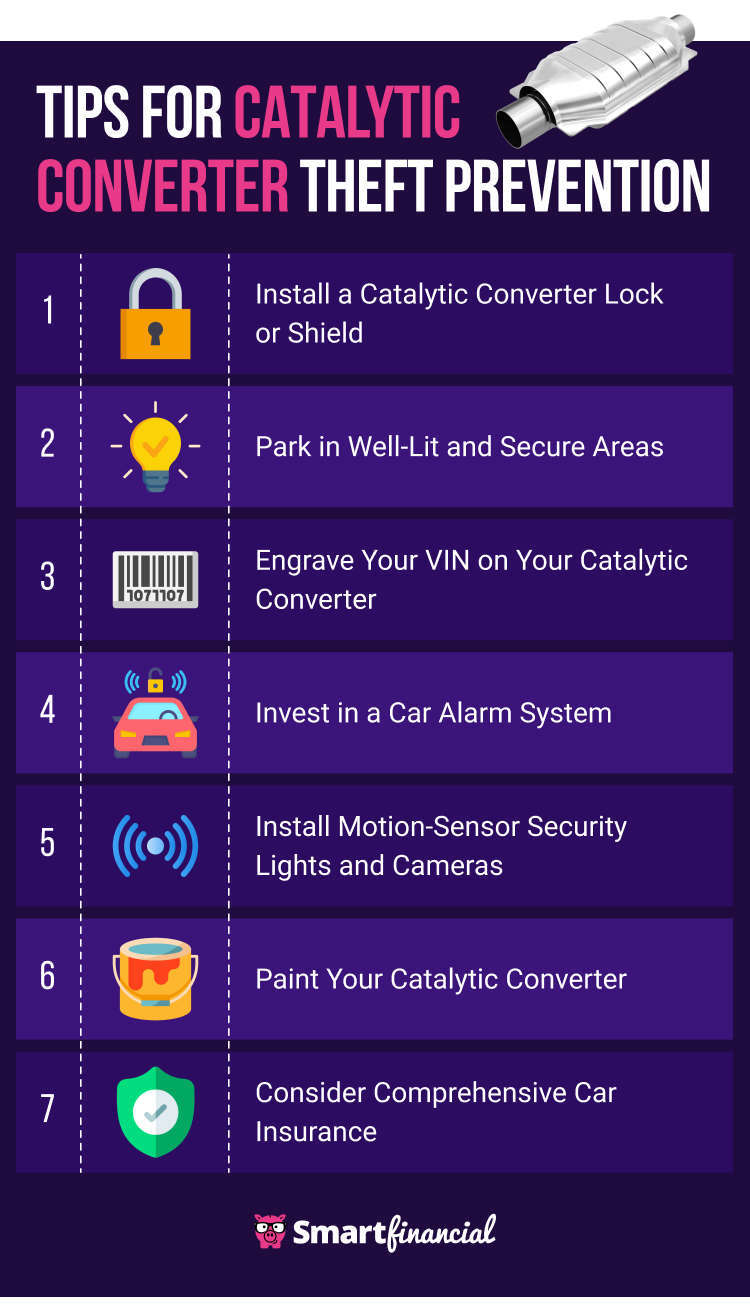
Here are some ways to protect yourself and prevent catalytic converter theft:
- Paint your catalytic converter orange to make it more visible, or place a cage around it, which can prompt a recycler or law enforcement to inspect the converter for signs of criminal activity.
- Park in a well-lit area with the exhaust pipe as close to a wall as possible to make it less accessible.
- Engrave your VIN (vehicle identification number) or license plate number on the catalytic converter.
- Ensure that your alarm or anti-theft device is set to respond to vibrations.
- Install motion-sensitive sensors and cameras in your driveway if you park there.
- Insurance quotes /
- Auto /
- Catalytic Converter Theft
Preston Micalizio writes insurance content for SmartFinancial. He brings three years of professional experience writing in various industries, from higher education to e-commerce. He strives to engage with the audience, provide accurate reporting and make complex subjects easily digestible.


Get a Free Auto Insurance Quote Online Now.
More on Auto Insurance

Looking for Auto Insurance?
Compare rates from dozens of companies in less than 3 minutes.