

Will Homeowners Insurance Cover My Child While They’re at College?
 Written by Preston Micalizio Written by Preston Micalizio Preston MicalizioPreston Micalizio writes insurance content for SmartFinancial. He brings three years of professional experience writing ... Read more |  Edited by Richard Murphy Edited by Richard MurphyRichard MurphyRichard Murphy manages content on SmartFinancial's website. With a strong background in content strategy and copywriting... Read more |
 Editorial Standards
 SmartFinancial Offers Unbiased, Fact-based Information. Our fact-checked articles are intended to educate insurance shoppers so they can make the right buying decisions. Learn More
Your homeowners insurance may cover college students while they live on campus in a dormitory, but the coverage is usually limited. However, if your child plans to live off campus in an apartment, they will likely need to buy their own renters insurance.
Keep reading to learn more about coverage for college students that may be available in your home insurance policy.
|
Key Takeaways
|
On This Page

Are College Students Covered by Homeowners Insurance?
How Does Homeowners Insurance Cover College Students?
What Amount of Coverage Do Students Have?
Home Insurance Exclusions for College Students
Should College Students Buy Renters Insurance?
Should College Students Consider Dorm Insurance?
How To Get Home Insurance for You and Your Children in College
FAQs

Are College Students Covered by Homeowners Insurance?
Generally, students away at college may be covered by their parents’ standard homeowners insurance, including liability and property damage coverage. This means if a new expensive laptop is stolen from a dorm room or the student accidentally injures someone playing ultimate frisbee, they’ll likely be covered under their parents’ policy.
However, coverage may be more limited on personal property that is stolen or damaged away from your home – including while living in a dorm room. We’ll discuss more about when students might not be covered under their parents’ homeowners policy, along with the increased limitations students may face in their coverage while living on campus, later on.
When Doesn’t Homeowners Insurance Cover College Students?
If your college student lives off-campus — renting an apartment from a landlord, for instance — then your homeowners insurance policy may not provide them with coverage. In this case, they will most likely need to buy renters insurance, as it is usually required as part of a tenant agreement.
For example, if your child lives on campus year-round, even through the summer, and only visits for two weeks of the year for the holiday, they will likely need to buy their own policy for coverage.
How Does Homeowners Insurance Cover College Students?
A homeowners insurance policy typically extends liability and personal property protection to college students, plus medical payments coverage if it’s on your plan.
- Personal property: Your student’s belongings may be insured if stolen or damaged in a covered event, such as fire, windstorm or vandalism. Covered losses often include electronics, furniture and clothes.
- Personal liability: Personal liability coverage may pay when your child is responsible for another person’s injuries or property damage inside their dorm room. Covered expenses often include replacing or repairing damaged property, other people’s medical expenses and legal defense fees.
- Medical payments: Your homeowners policy may pay for another person’s medical bills if injuries are sustained while in your child’s dorm room. This coverage is typically for minor injuries that cost up to $1,000 to treat, although higher limits may be available.[1]
What Amount of Coverage Do Students Have?
Homeowners insurance may cover college students but often carries several limitations, such as lower limits on personal property, sublimits on specific items and age caps.
Limited Coverage for Personal Belongings
Off-premises coverage extends to the college student’s personal belongings and is typically about 10% of your personal property coverage.[2] For example, if your homeowners policy has $100,000 in personal property coverage and your off-premises coverage is 10% of that amount, your college student would have $10,000 in personal property coverage.
Sublimits on Specific Valuables
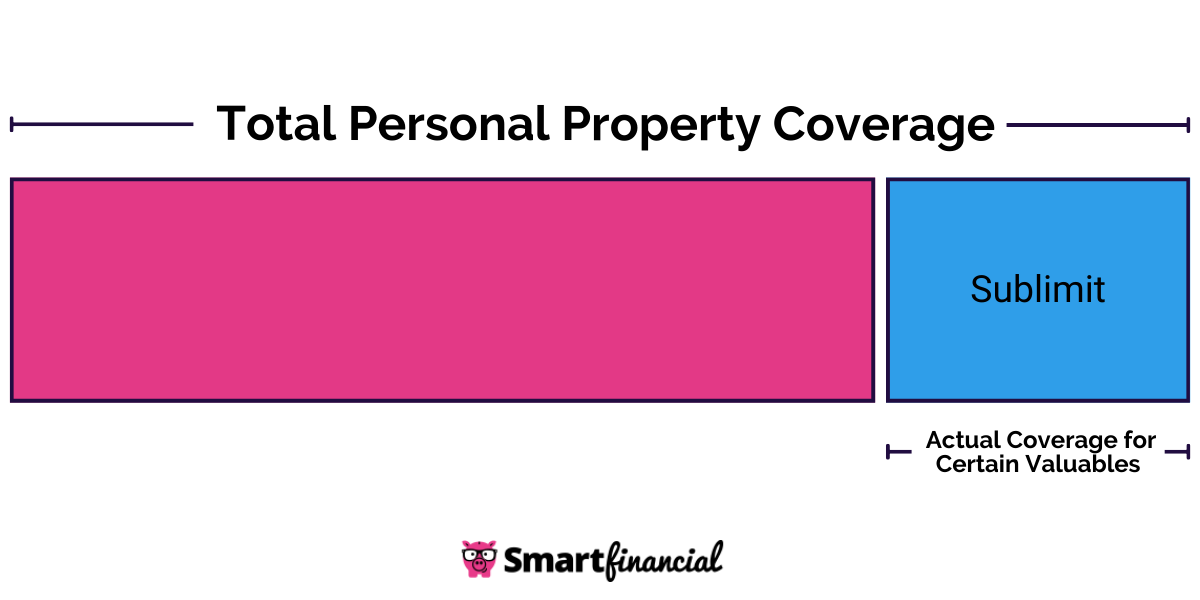
Certain items, like cash, jewelry, furs and silverware, are subject to a sublimit — meaning you will only be reimbursed up to each item’s sublimit and not the total off-premise coverage in your home insurance policy. We recommend that college students leave valuables at home or consider increasing your limits by purchasing scheduled property coverage.
Age Caps
Your home insurance company may insure your child while living on campus, but only up to a certain age. For example, an insurer may only insure a college student up to age 26.[3]
Home Insurance Exclusions for College Students
Standard homeowners insurance coverage may apply to college students but often carries coverage exclusions, such as:
- Accidental damage: Insurers will usually deny personal property claims if the insured unintentionally caused the damage, such as dropping a tablet down a stairwell or spilling coffee on a laptop.
- Data loss: Standard homeowners insurance can reimburse you for covered electronics claims, but that coverage may not extend to data recovery.
- Additional living expenses: Insurers will not classify your child’s college dorm as their primary residence and will not cover alternative living accommodations (e.g., hotel bills, meals) if the dorm room experiences a fire, flood, collapse or some other event.
- Identity theft: Standard homeowners insurance usually will not pay for identity recovery and credit repair costs, and those that do may limit how much they cover. Many national insurance carriers sell identity theft protection as an add-on to your policy.[4]
Should College Students Buy Renters Insurance?
Renters insurance policies can also cover dorms and are an affordable alternative to homeowners insurance, with an average premium of around $14 per month. Keep in mind that renters insurance rates can vary based on your location. For example, premiums while attending college in California average about $14.75 per month, while renters coverage in Mississippi averages about $21.50 per month.[5]
Renters insurance can offer higher limits than the off-premises coverage in a homeowners policy, plus loss of use coverage. Loss of use coverage pays for your child’s daily living expenses if their residence becomes uninhabitable — for instance, if their apartment unit is being repaired after a fire.
Filing an insurance claim under the renters insurance policy will not increase your home insurance premium. Filing a homeowners insurance claim, however, can increase your premium by up to 20%.[6]
Which Is Better for College Students: Homeowners or Renters Insurance?
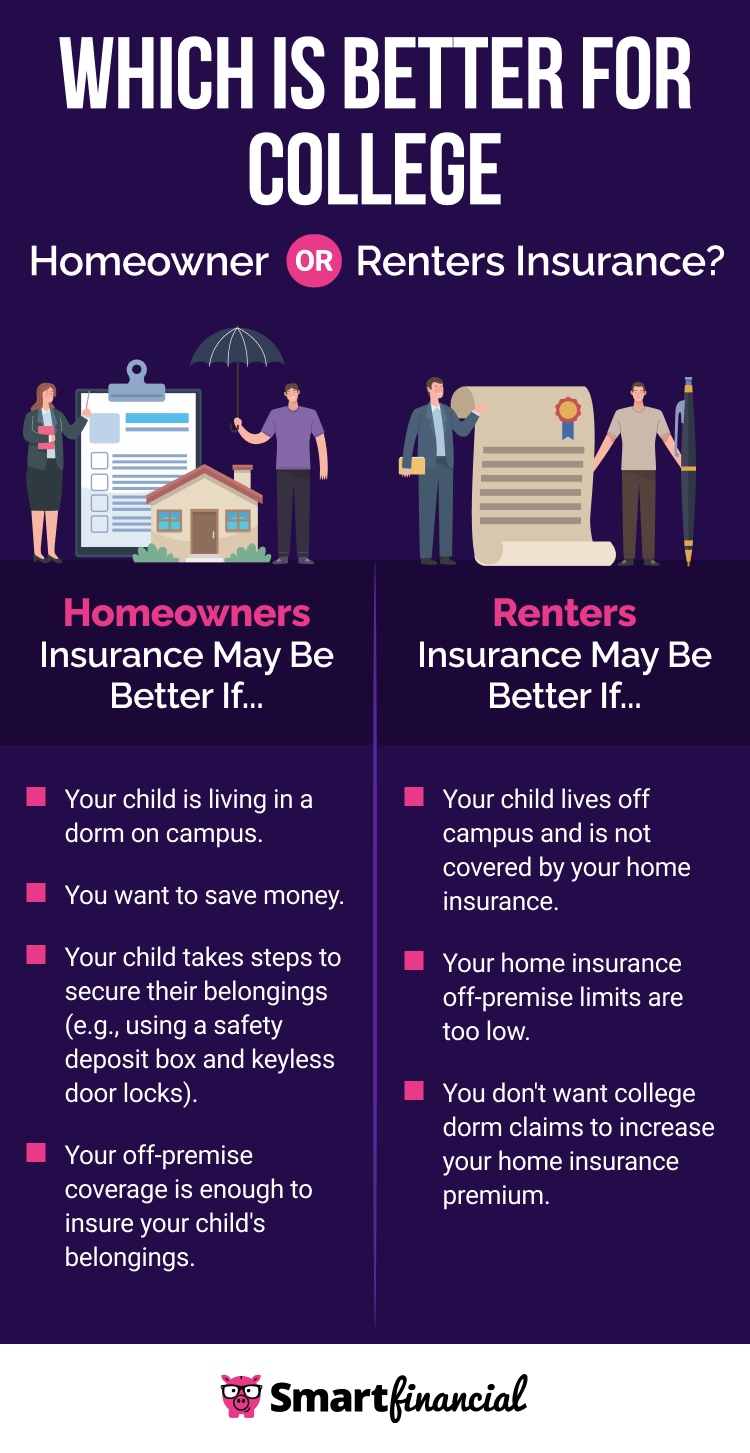
Below, we’ve highlighted the benefits and drawbacks of both homeowners and renters insurance to help you decide which option is more suitable for you and your child.
|
Policy |
Recommended for: |
|---|---|
| Homeowners Insurance |
|
|
Renters Insurance |
|
Should College Students Consider Dorm Insurance?
Dorm insurance is a type of insurance policy specifically for college students. Costs are relatively affordable, with some premiums as low as $160 annually and deductibles as low as $25.[7]
For example, National Student Services, Inc. provides worldwide property coverage to college students, insuring their belongings against theft, fire, flood, natural disasters and lightning strikes. Another advantage of dorm insurance — usually not covered by renters or homeowners insurance — is that property can be insured against accidental damage, such as spilling a drink on electronic devices or dropping them.[8]
Below, we’ve listed sample rates for renters insurance based on the desired coverage amount:[8]
|
Coverage Amount |
Annual Premium With $50 Deductible |
|---|---|
|
$2,000 |
$90 |
|
$4,000 |
$128 |
|
$6,000 |
$191 |
|
$8,000 |
$248 |
|
$10,000 |
$293 |
How To Get Home Insurance for You and Your Children in College
You want to ensure you have sufficient homeowners coverage and enough coverage for off-premises personal property that your child is taking to college. You’ll likely want to shop around and gather quotes to compare different insurance companies, including any limitations and benefits in their coverage. Try to get quotes from three to five different insurers to get a range of options.
You’ll likely need to provide information on your home’s size, cost and other factors used in underwriting. Keep in mind that this process can become tedious, as you’ll likely need to provide this information to each insurance company individually when gathering quotes.
You can speed things up by using an insurance marketplace like SmartFinancial. After answering a brief questionnaire, we can connect you with a licensed insurance agent to help you get the coverage you and your college-bound student need. Click here for free home insurance quotes today!
- Insurance quotes /
- Home /
- Does My Homeowners Insurance Cover College Students
Preston Micalizio writes insurance content for SmartFinancial. He brings three years of professional experience writing in various industries, from higher education to e-commerce. He strives to engage with the audience, provide accurate reporting and make complex subjects easily digestible.


Get a Free Home Insurance Quote Online Now.
More on Home Insurance

Looking for Home Insurance?
Compare rates from dozens of companies in less than 3 minutes.