

The State of Business Insurance 2026
 Written by Dylan Tate Written by Dylan Tate Dylan TateDylan Tate is an insurance content expert for SmartFinancial with over 300 articles about home, auto, business, health a... Read more |  Edited by Richard Murphy Edited by Richard MurphyRichard MurphyRichard Murphy manages content on SmartFinancial's website. With a strong background in content strategy and copywriting... Read more |
 Editorial Standards
 SmartFinancial Offers Unbiased, Fact-based Information. Our fact-checked articles are intended to educate insurance shoppers so they can make the right buying decisions. Learn More
Amid rising inflation, costly natural disaster losses and the continual threat of retail theft and cybercrime, commercial insurance premiums may be on the rise. To keep costs manageable while still maintaining an appropriate amount of coverage, business owners should shop around, look into discount opportunities and implement risk management solutions to lower their odds of filing claims in 2026.
Learn more about the state of business insurance in 2026 below, including what factors are driving higher costs and what coverage types you need to adequately protect your enterprise.
|
Key Takeaways
|
On This Page

How Much Did Business Insurance Rates Rise in 2025?
Factors That Affect Business Insurance Costs
Inflation and the Cost of Business Insurance
Property Losses Due to Natural Disasters
Cyber Attacks and Cyber Liability Insights
Organized Retail Crime
Loss Prevention Tips for Businesses
What Are Your Commercial Insurance Needs in 2026?
What’s the Best Way To Combat Rising Business Insurance Rates?
State of Business Insurance 2026 FAQs

How Much Did Business Insurance Rates Rise in 2025?
On the whole, average commercial insurance rates modestly rose by around 3% in the first half of 2025. However, rate hikes have been more significant for some types of commercial insurance than for others. See the following table for an overview of how much the cost for specific business insurance products went up during the second quarter of 2025 on average.[1]
|
Coverage Type |
Average Price Increase |
|---|---|
|
Commercial property |
3.6% |
|
Business interruption |
2.3% |
|
Business owners policy |
2.6% |
|
1.3% |
|
|
General liability |
3.7% |
|
5% |
|
|
Commercial auto |
6.7% |
Factors That Affect Business Insurance Costs
Several factors can influence the amount your company has to pay for commercial insurance, including the following:[2]
- Industry: Businesses in higher-risk industries may have to pay more for coverage than those in lower-risk industries. For example, construction companies can expect to pay higher workers’ compensation insurance premiums than consulting firms because their employees have a greater risk of experiencing an on-the-job accident.
- Size: In general, the larger your business is, the more employees you have and the higher your payroll is, the more you’ll have to pay for commercial insurance coverage.
- Coverage needs: Naturally, your insurance premiums will be higher if you need more coverage types and/or higher coverage limits than the average business. Prices may be especially high for companies in specialized industries with unique risks. Similarly, companies with a history of filing multiple insurance claims can expect higher insurance rates.
- Location: Various location-based factors can influence your premiums, including state laws and local crime rates.
- Visibility: People may be more likely to take legal action against well-known businesses, so you could have to pay higher liability insurance premiums if your corporation is regularly in the public eye.
Inflation and the Cost of Business Insurance
Overall, the inflation rate for consumer goods and services rose by 2.7% from November 2024 to November 2025.[3] Inflation can lead to higher business insurance premiums because it causes the cost of each claim to go up, meaning insurance companies have to pay out more to their policyholders — even if the rate of claims stays the same.[4]
To get a better idea of how inflation can impact commercial insurance costs, view the following table, which includes inflation rates for specific services that may be covered by your business insurance policy:[3]
|
Service |
Inflation Rate |
Example of When Business Insurance May Cover It |
|---|---|---|
|
Energy services |
7.4% |
Your business interruption coverage helps you keep paying your utility bills while your retail store is temporarily closed because your inventory was destroyed by a windstorm |
|
Tools, hardware, outdoor equipment and supplies |
3.7% |
Your commercial property coverage replaces thousands of dollars’ worth of tools and equipment for your construction business after they are destroyed during a crane accident on a jobsite |
|
Hospital services |
5.7% |
Your general liability insurance covers the medical bills for a customer who slips and breaks their arm at your restaurant |
|
Motor vehicle repair |
9.7% |
Your commercial auto insurance pays for repairs to one of your delivery trucks after a commercial vehicle accident |
Property Losses Due to Natural Disasters
A 2025 survey of commercial property owners found that one-third of respondents experienced property damage from natural disasters in the past five years — those numbers rose to around one-half and two-thirds in wildfire-prone and hurricane-prone states, respectively.[5] As climate change makes natural disasters more common and inflation drives up the cost of insurance payouts, business owners can expect to pay more for commercial property coverage.
Cyber Attacks and Cyber Liability Insights
The United States is a hotspot for cybersecurity risks, accounting for roughly a quarter of the world’s cyberattacks in 2025. Throughout the globe, 80% of attacks were primarily related to electronic data theft, while 44% of breaches involved ransomware — a sizable increase compared to the previous year. In addition, the increasing adoption of artificial intelligence could impact cybersecurity, with 65% of organizations believing AI will raise their security risk.[6]
Cyber liability losses have the potential to be substantial, with an average claim cost of $79,000 for small businesses and $228,000 for large businesses. Fortunately, cyber insurance premiums dropped or remained stable throughout most of the world in 2025, so business owners should be able to protect themselves from potentially catastrophic financial losses related to cyberattacks at a fairly affordable rate.[7]
Organized Retail Crime
Businesses face significant financial risk due to organized retail crime, which refers to extensive robberies carried out by fraudsters intending to resell stolen goods or return them for cash, gift cards or store credit without having bought them in the first place.[8] American retailers lose an estimated $45 billion worth of inventory to organized retail crime syndicates each year.[9]
Loss Prevention Tips for Businesses
Following these tips can help you avoid costly business insurance claims and potentially save money on coverage:
- Install security cameras and sprinkler systems.
- Maintain your electrical systems, furnaces and water systems.
- Implement fire safety inspections.
- Create severe weather procedures.
- Write up escape plans in case of a fire.
- Clean floors and hallways to prevent slips and falls by customers or employees.
- Require licenses and certifications for contractors.
- Teach your employees about phishing scams and other common cybersecurity breaches so they can avoid them.
- Utilize technology that can help prevent losses, such as security tags to prevent retail theft.
- Train employees on how to respond to organized retail crime.
- Buy an adequate amount of business insurance to mitigate your financial losses in the event of a claim.
- Make sure your employees use unique passwords for company accounts and don’t share those passwords with anyone outside of the organization.
- Keep an eye out for software updates that may include security patches for your company’s devices.
- Review invoices to ensure all payments made are legitimate.
What Are Your Commercial Insurance Needs in 2026?
Not every business needs every type of commercial insurance, but it’s important to thoroughly evaluate the risks your company faces to ensure you are adequately protected. Keep reading for an overview of some of the most common types of business insurance that you may want to consider.
General Liability Insurance
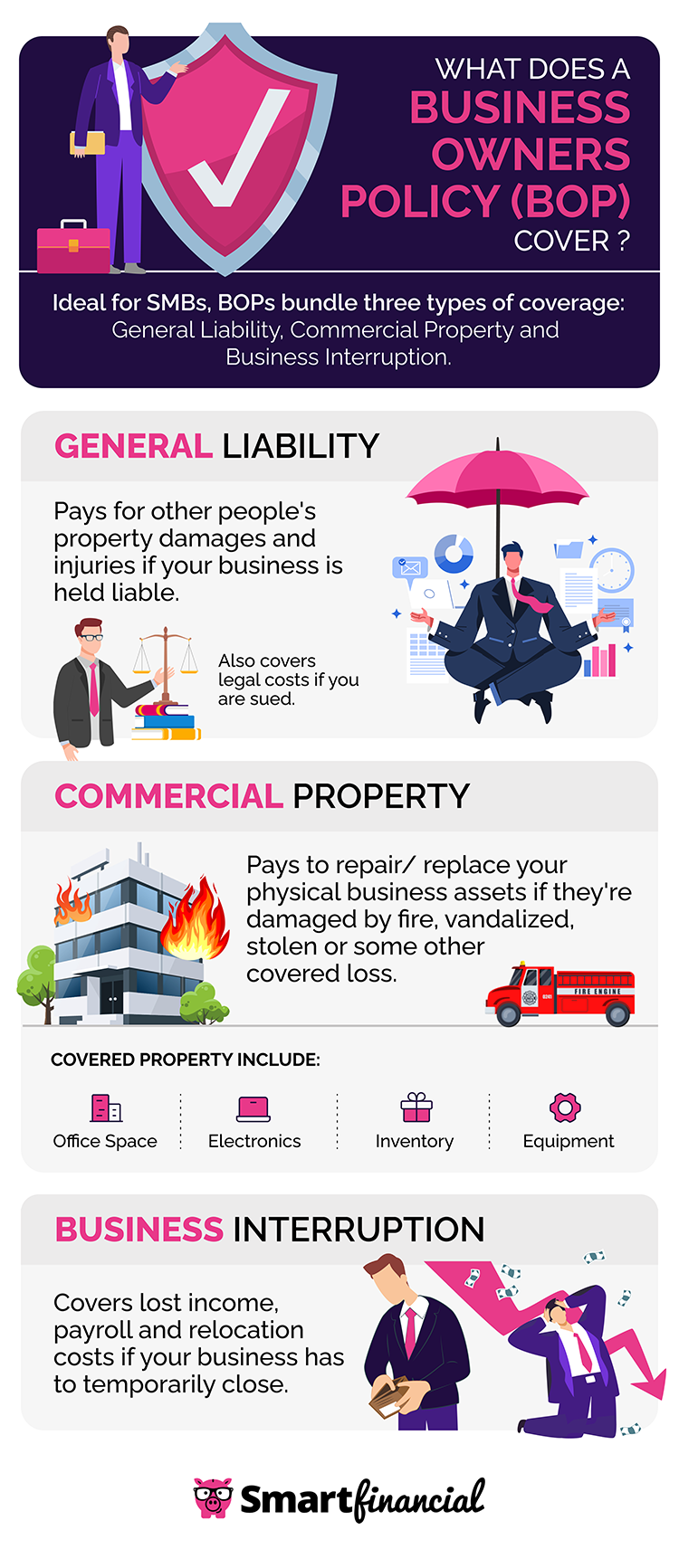
General liability insurance is one of the most foundational business insurance coverage types, providing coverage for medical expenses or property repairs if your business is held liable for someone’s injury or damage to their belongings. If a bodily injury or property damage claim leads to a lawsuit, your general liability insurance can also cover attorney fees, settlements and other legal expenses.
In addition, general liability insurance covers legal costs related to personal and advertising injury claims. For example, your general liability coverage may protect you if you are sued for defaming another business or stealing its copyrighted materials. This coverage type typically isn’t required by law, but it will likely be necessary if you need to be licensed or want to secure a contract for your business.[11]
Commercial Property Insurance
Commercial property insurance covers unexpected damage to your commercial building, along with repairs or replacements of items your company owns that are suddenly stolen, damaged, or destroyed. While commercial property insurance covers most natural disasters and other types of sudden perils, it generally doesn’t cover floods or earthquakes, so you may need to purchase separate commercial flood or earthquake insurance.
Many small and midsize businesses bundle general liability and commercial property insurance together by purchasing a business owners policy. BOPs also commonly include business interruption insurance, which can cover lost revenue, ongoing operational expenses and temporary relocation costs if a covered peril prevents you from operating your business normally.
Commercial Auto Insurance
Commercial auto insurance is a multifaceted policy that includes many coverage types that can step in if there is an accident or other loss involving one of your company’s vehicles — including liability coverage for losses your drivers are responsible for inflicting on others and physical damage coverage for damage to your own vehicles. In most states, businesses that use vehicles are required by law to carry commercial auto liability insurance.[13]
Workers' Compensation Insurance
If one of your employees becomes sick or injured because of their work, workers’ compensation insurance can cover lost wages, medical bills and disability payments for the employee — along with funeral expenses for their beneficiaries, if necessary. Generally, businesses with multiple employees are required by law to purchase workers’ compensation insurance, though there may be exceptions based on your state, your industry and the size of your business.[14]
Professional Liability Insurance
Businesses that offer professional services need to maintain professional liability insurance in case they are sued for failures in the performance of their duties. Also known as errors and omissions insurance, this coverage type can step in for claims involving misrepresentation, negligence, breach of contract and more. E&O coverage isn’t universally required, but it may be mandatory in some states for certain professions, such as physicians or lawyers.[15]
Cyber Insurance
Cyber insurance can shield your company from major financial losses if you are the target of a data breach or similar cybercrime. Your policy may include cyber liability coverage for other entities’ expenses that you are held liable for and first-party coverage for your company’s own expenses, such as legal counsel, crisis management and recovery of lost data.
Coverage for Executive Risks
Various types of coverage may help you fully insure the members of your company’s C-suite. For example, directors and officers liability insurance can cover legal expenses for an executive who is accused of corporate mismanagement, such as misuse of business funds, poor performance of the company’s stock or noncompliance with state regulations.
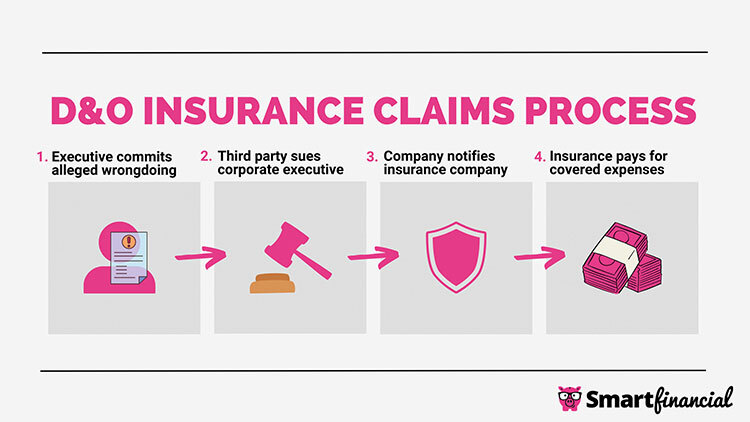
Another coverage to consider is employment practices liability insurance, which applies to executives who are accused of violating an employee’s rights. For example, EPLI may fund a legal defense related to allegations of wrongful termination, discrimination or harassment. Finally, commercial crime insurance may cover losses caused by lower-level managers who commit forgery, fraud, embezzlement or similar crimes.
What’s the Best Way To Combat Rising Business Insurance Rates?
Taking steps like these may help you qualify for discounts on your commercial insurance premiums:[2]
- Bundle your policies by purchasing multiple insurance products from the same carrier.
- Pay your premium for the entire year up front through a lump-sum payment.
- Raise the deductible you agree to pay out of pocket before your insurance takes effect for covered claims.
- Implement a risk management plan to lower the odds that you will need to file a business insurance claim.
Additionally, you need to compare quotes from multiple insurance companies to make sure you’re getting the best possible deal on the coverage your business needs. When you shop through SmartFinancial, you can collect quotes for personalized commercial insurance policies for free — sometimes in just a few minutes. Get started on comparing commercial insurance rates today!
- Insurance quotes /
- Commercial /
- State Of Business Insurance
Dylan Tate is an insurance content expert for SmartFinancial with over 300 articles about home, auto, business, health and life insurance under his belt. He has over nine years of experience writing for online publications, primarily about gaming and esports. In the process, he has become an expert in search engine optimization, news reporting, feature writing and copy editing.


Get a Free Commercial Insurance Quote.
More on Commercial Insurance

Looking for Commercial Insurance?
Compare rates from dozens of companies in less than 3 minutes.