

Food Delivery Insurance: What Drivers Need To Know
 Written by Preston Micalizio Written by Preston Micalizio Preston MicalizioPreston Micalizio writes insurance content for SmartFinancial. He brings three years of professional experience writing ... Read more |  Edited by Richard Murphy Edited by Richard MurphyRichard MurphyRichard Murphy manages content on SmartFinancial's website. With a strong background in content strategy and copywriting... Read more |
 Editorial Standards
 SmartFinancial Offers Unbiased, Fact-based Information. Our fact-checked articles are intended to educate insurance shoppers so they can make the right buying decisions. Learn More
Food delivery insurance is essential for preventing coverage gaps when driving for delivery apps like Uber Eats, DoorDash and others. While these services often provide some level of coverage while drivers are en route to pick up or deliver an order, you may not have the coverage you need at all times while on the clock without additional protection from food delivery insurance.
Read on to learn more about food delivery insurance, including when you might need it, what food delivery coverage may include and which factors contribute to premiums.
|
Key Takeaways
|
On This Page

What Is Food Delivery Insurance?
How Does Food Delivery Insurance Work?
Who Needs Food Delivery Insurance?
Types of Food Delivery Insurance
How Much Does Food Delivery Insurance Cost?
Which Food Delivery Companies Offer Insurance for Free?
Food Delivery Insurance at a Glance
How To Get Food Delivery Insurance
FAQs

What Is Food Delivery Insurance?
Food delivery car insurance provides auto insurance coverage for a driver who works for a food delivery company such as Uber Eats or DoorDash. These policies provide protection similar to a personal auto policy, including liability, physical damage and uninsured motorist coverage.
In many cases, these companies already provide liability coverage and sometimes physical damage coverage for the driver’s vehicle during an active order, but this coverage may be more limited at certain points in the delivery process, such as when waiting to receive an order. If the company does not provide insurance for its drivers or leaves gaps in coverage, you will need to purchase food delivery insurance as an endorsement or a commercial auto policy to ensure coverage.
Does Standard Car Insurance Cover Food Delivery?
Most standard car insurance policies exclude coverage for business use, including driving for food delivery services. This is because business vehicles tend to have a higher risk of accidents, as they spend more time on the road, often during peak business hours.[1]
Is Commercial Auto Insurance Required for Food Deliveries?
If you operate a more sophisticated business that also involves delivering food, such as a catering business, then you will likely need a formal commercial auto insurance policy. However, if you use your personal vehicle for food deliveries, you may be able to get an endorsement to your personal auto policy. Check with an insurance agent to clarify which type of policy you’ll need based on your work.
How Does Food Delivery Insurance Work?
Food delivery insurance works similarly to standard auto insurance, except it covers you while driving for a food delivery company such as Uber Eats or DoorDash. This coverage applies anytime you’re logged into your delivery app, helping fill coverage gaps between a personal auto policy and the coverage provided by the food delivery company.
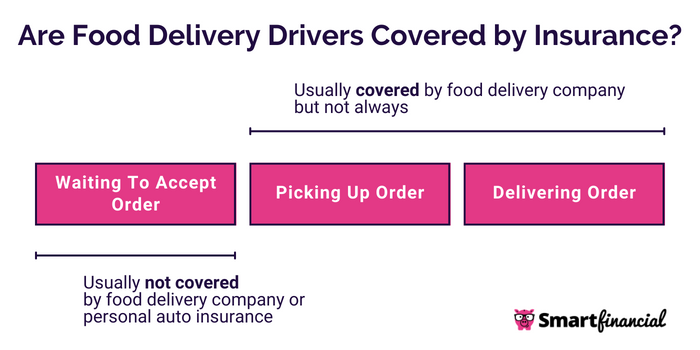
Below, we’ll break down the different stages of coverage during the delivery process:[2]
| Delivery Status | Primary Coverage |
| Delivery app off | Personal auto insurance |
| Delivery app on, waiting for an order | Food delivery insurance (Coverage may be excluded by your personal auto policy and platform insurance at this stage) |
| En route to pick up an order | Platform insurance |
| En route to delivering an order | Platform insurance |
Can I Deliver Food Without Food Delivery Insurance?
It is possible to deliver food without buying a specific endorsement for food delivery coverage. In some cases, a driver may be comfortable with the limited coverage provided by the food delivery company. However, be cautious if the food delivery company excludes coverage when you’re online but not on an active delivery, as losses that occur during this time will have to be paid out of pocket.
Who Needs Food Delivery Insurance?
Anyone who delivers food as part of their job should consider food delivery insurance to cover them, including:
- Food delivery app drivers
- Restaurant delivery drivers
- Food truck delivery drivers
- Catering business driver
Depending on the company you work for, you may need more extensive coverage. For example, while Uber Eats offers limited coverage for its drivers that increases when accepting or making a delivery, Instacart offers none.[2][3]
Types of Food Delivery Insurance
Below, we cover a few types of coverage that may be included with food delivery insurance:
Liability Insurance
If you’re responsible for causing a car accident while delivering food, liability coverage helps pay for the other party’s medical bills if they were injured. This coverage also helps pay for repair or replacement costs if the other party’s vehicle or personal property was damaged.
For example, if you get into a collision with another driver while waiting to receive a delivery order, your liability coverage could help pay for the other driver’s medical bills and vehicle repairs.
Physical Damage Coverage
Collision and comprehensive coverage help pay for repairs to your vehicle if it suffers physical damage while you’re on the clock for food delivery. Collision insurance covers damage from striking another object, such as another vehicle or a guardrail, while comprehensive insurance covers other physical losses, such as break-ins, fire and theft.
Uninsured/Underinsured Motorist Coverage
Uninsured/underinsured motorist (UM/UIM) coverage protects you after a car accident in which the other driver was at fault but did not have enough insurance coverage to pay for your losses.
For example, if your parked or idling vehicle is struck by an uninsured or underinsured driver while you’re waiting to receive your next delivery order, this coverage could help pay for medical bills and repair costs.
Additional Coverage To Consider for Food Delivery
Other coverage options that may be available with food delivery insurance include:
- Medical payments (MedPay)
- Personal injury protection (PIP)
- Roadside assistance
- Gap coverage
How Much Does Food Delivery Insurance Cost?
The cost of food delivery insurance will typically depend on whether you purchase a standalone commercial car policy or an endorsement to your personal auto policy. For example, commercial car insurance for a delivery driver typically costs $147 per month. However, adding food delivery insurance as an endorsement to your personal car insurance can increase your premium by $5 to $46 per month.[5]
Other factors, such as how often and how far you drive, may also influence your costs.
What Factors Affect Food Delivery Insurance?
Factors that could affect your food delivery insurance premiums can include:
- Location
- Type of car you drive
- Mileage while working
- Age
- Driving history
- Claims history
- Types of coverages purchased
- Coverage limits
- Deductible
Which Food Delivery Companies Offer Insurance for Free?
Some food delivery companies offer limited coverage while clocked in with their service, with coverage limits typically increasing during an active delivery, which is when you’re picking up or delivering an order. Some of these companies include:[6]
- DoorDash: Provides limited third-party liability coverage, but only during an active delivery.[7] Additionally, DoorDash requires you to first go through your personal car insurance and will cover you only if they’ve denied your claim.
- Uber Eats: Provides limited coverage while clocked into the app that increases during an active delivery period.[8] It also offers contingent comprehensive and collision coverage during the active delivery period, but only if you have these optional policies alongside your personal car insurance.
- Postmates: Offers liability coverage, but only during the active delivery period and after you’ve utilized your personal car insurance or had a claim denied.
- Amazon Flex: Offers liability and UM/UIM coverage during active deliveries, with contingent physical damage coverage if they are a part of your personal auto policy.
Coverage provided by food delivery companies may vary by state. For example, Amazon Flex offers no coverage to drivers in New York. Additionally, some food delivery companies, such as Grubhub and Instacart, offer no coverage.[6]
Food Delivery Insurance at a Glance
Below is a brief overview of the essential information you should know about food delivery insurance:
- Food delivery insurance is a business policy or endorsement to protect you while driving for a food delivery company.
- While many food delivery companies offer limited coverage, you may experience coverage gaps between active delivery periods without business use coverage through food delivery insurance.
- Generally, a food delivery endorsement is less costly than a standalone commercial insurance policy, although its coverage limits may be lower.
- Food delivery insurance typically includes some form of liability coverage to meet legal driving requirements, but may also include coverages such as physical damage protection, medical payments coverage, UM/UIM and other insurance options.
- Coverage provided by food delivery companies may vary based on your state, so ensure you review what additional coverages you may need to purchase to verify you’re protected in an accident.
How To Get Food Delivery Insurance
You’ll want to gather quotes from three to five different insurance companies to understand your options and find the most affordable rates. You’ll need to provide information about your car, how frequently you drive and other factors that will determine your monthly premium. However, this process can become tedious, as you’ll typically need to get quotes from each insurer individually.
Speed up the process by using an insurance marketplace like SmartFinancial. After answering a brief questionnaire, we’ll connect you with a licensed insurance agent to help you get the commercial car insurance you need. Click here for free commercial quotes today!
- Insurance quotes /
- Commercial /
- Food Delivery Insurance
Preston Micalizio writes insurance content for SmartFinancial. He brings three years of professional experience writing in various industries, from higher education to e-commerce. He strives to engage with the audience, provide accurate reporting and make complex subjects easily digestible.


Get a Free Commercial Insurance Quote.
More on Commercial Insurance

Looking for Commercial Insurance?
Compare rates from dozens of companies in less than 3 minutes.