

When Is It Illegal To Sleep in My Car?
 Written by Preston Micalizio Written by Preston Micalizio Preston MicalizioPreston Micalizio writes insurance content for SmartFinancial. He brings three years of professional experience writing ... Read more |  Edited by Dan Marticio Edited by Dan MarticioDan MarticioDan Marticio is the content manager at SmartFinancial and has written 150+ articles across multiple insurance verticals.... Read more |
 Editorial Standards
 SmartFinancial Offers Unbiased, Fact-based Information. Our fact-checked articles are intended to educate insurance shoppers so they can make the right buying decisions. Learn More
There is no federal law that bans sleeping in your car, but depending on local and state laws, it could result in a ticket or fine depending on when and where you do it. Whether you're planning a road trip or driving long distances for work, ensure you know where to find a safe spot to catch some sleep, or you risk facing penalties.
Keep reading to learn when and where it is illegal to sleep in your car, the potential consequences of doing so and how you can do so without breaking the law.
|
Key Takeaways
|


Is It Illegal To Sleep in Your Car Everywhere?
Sleeping in your car isn’t an automatic crime, especially if you do so at a designated rest stop, campground or some other location that permits you to get some shut-eye inside your car. While no specific laws prevent you from sleeping in your car in general, some laws may exist at the state and local level, and they can dictate where and when you can legally sleep in your vehicle.[1]
Why Is It Illegal To Sleep in Your Car in Some Places?
Some areas make it illegal to sleep in your car, and it could be for a variety of reasons, with public safety concerns being one of them. Local residents and business owners may believe that permitting this behavior may attract crime over the long term. In addition, it can lead to some drivers trespassing on private property if they do not choose an appropriate place to sleep.
Where Is It Illegal To Sleep in Your Car?
The locations where sleeping in your car is illegal will depend largely on state and local laws. Most places that would typically allow you to sleep in your car, such as campgrounds or rest stops, will have signage indicating whether resting is allowed and for how long. For example, in Texas, sleeping in your car at a rest stop is illegal if you have been parked for over 24 hours, while, in Virginia, sleeping at rest stops at any time is prohibited.[1][2] Meanwhile, in Florida, the general public is allowed to stay at a designated rest stop for only up to three hours.[3]
Keep in mind that sleeping on private property when you haven’t received permission from the property owner can be illegal, and you could face trespassing charges. Also, the permission must come from the property owner, so if someone is only renting, then the renter's permission may not be enough.
In addition, avoid parking on the side of the road, which should be kept clear for emergency response vehicles and drivers who need to pull off after getting in an accident or having car failure.
When Is It Always Illegal To Sleep in My Car?
Regardless of where you’re parked, you may face a DUI conviction if you are found in the driver's seat of a vehicle while intoxicated, even if you’re asleep and the vehicle is not running. Even if you had no intent to drive, an officer can’t distinguish between trying to sleep off a night of drinking versus falling asleep attempting to start your car.
However, in some states, it may be possible to avoid this charge if you take certain steps. For example, in Nevada, for you to be charged with a DUI, you must be in “actual physical control” of the vehicle. This means it may be possible to avoid a DUI offense if your vehicle is legally parked and turned off, you put your keys on the dashboard and you climb into the backseat before falling asleep.[4][5]
Where Can I Legally Sleep in My Car?
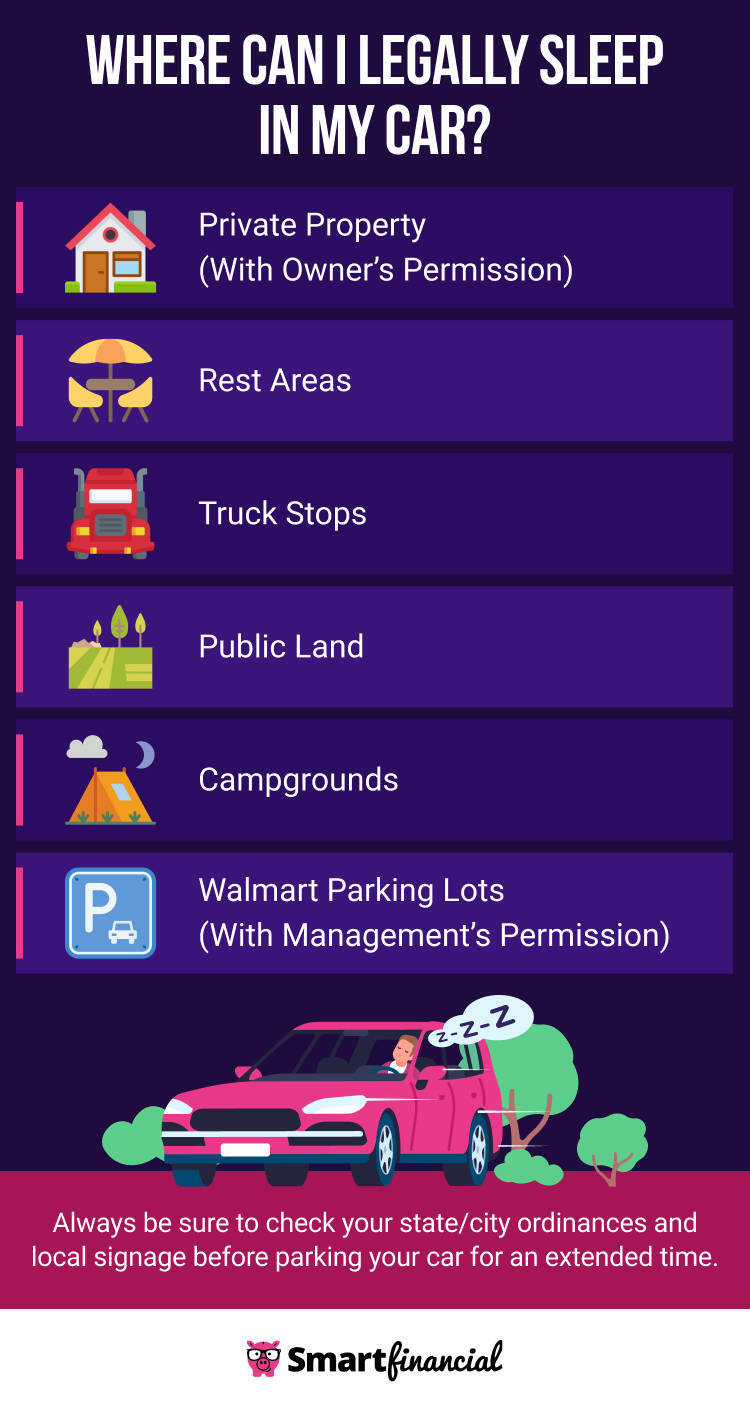
Provided you have express permission from the property owner, private property can be an excellent and legal place to camp out for the night. Whether that’s a friend hosting a party or a kindly stranger with space in their driveway, you’re in the clear to rest as long as you have the owner's okay. Public property can also be a solution, with truck stops and designated rest areas off many roads and highways allowing drivers to sleep for specific lengths depending on the location.
Some public lands and parks have designated campgrounds that might require a small fee to park overnight. Additionally, certain big box stores, such as Walmart parking lots, have allowed drivers to park overnight in their lots, although this can vary between locations and based on the store manager’s discretion.[6]
Unfortunately, the legality of sleeping in your car is not a one-size-fits-all scenario. Always ensure you research local laws ahead of time and get express permission from any private property or business owner if you suspect you need to sleep before making it to your home or another residence you can sleep in; otherwise, you could face penalties.
What Happens if I’m Caught Sleeping in My Car?
The fallout from sleeping in your car will vary depending on your location and the area's laws and could result in consequences. Some locations may simply ask you to move your vehicle with a verbal warning. Even if you’re sleeping legally, a police officer may simply tap on your window to ensure you're okay.
Are There Fines for Sleeping in My Car?
Depending on local laws, the officer’s discretion and whether you’re intoxicated, you can face tickets and related fines if you’re caught illegally sleeping in your car. For example, in Los Angeles, fines for sleeping in your car can range from $25 to $75.[7] Now, if you were also caught sleeping while intoxicated in Los Angeles, you could face a DUI conviction that could carry up to $1,000 in fines and jail time.[8]
In some cases, you may be able to avoid a DUI conviction by indicating you had no intent to drive while intoxicated and weren’t doing so at the time you passed out, such as removing the keys from the ignition and placing them on the dash alongside moving to the backseat of the car. Keep in mind that laws will vary between states and could be left up to a court’s interpretation, such as in Arizona, where even being within reach of the steering wheel while intoxicated could still result in a conviction.[9]
Can I Legally Live and Sleep Out of My Vehicle?
If you’d like to switch to the nomad's life and live out of your vehicle, you should be able to do so legally — provided you continue following local laws regarding where you can park and sleep. Keep in mind that some locations allow you to park for extended periods but don’t allow overnight camping. If you’d prefer to expand your living space outside your immediate vehicle, you may need to find specific campsites or RV parks that will allow you to do so.
However, keep in mind that car insurance companies require a permanent physical residence for policy enrollment to accurately rate you, which you might not have if you live entirely out of your car. Providing another address with the resident’s permission, such as a friend’s house, may allow you to get a policy, but you’ll need to park your vehicle or RV at the address when it is not in use or it may lead to your policy getting dropped.
Types of Car Insurance To Consider When Living in Your Vehicle
Nearly every state requires drivers to carry liability insurance and sometimes additional coverage such as personal injury protection and uninsured motorist coverage depending on where you live. Here are a few other types of insurance worth considering if you’re looking to live and camp out of your vehicle:
- Collision insurance: This coverage insures your car against physical damages if you strike another vehicle or physical object. You likely already have this coverage if you’re still paying off your car loan.
- Comprehensive coverage: Comprehensive insurance covers your car against non-collision-type damages, including fire, hail and vandalism. Similar to collision insurance, you likely have this car if you have an outstanding car loan.
- Emergency roadside assistance: Roadside assistance covers services like changing a flat tire, towing to a nearby repair station and jumpstarting a dead battery.
- Mechanical breakdown insurance: This type of insurance covers the cost of mechanical and electrical repairs for your vehicle, such as replacing broken parts caused by internal failure and not from regular wear and tear. This insurance may be limited to newer vehicles and could overlap with your car’s warranty.
- RV insurance: Full-time RV insurance for those who live out of their RV for six months or more can help provide liability coverage, medical payments coverage for guests and property coverage.[10]
- Insurance quotes /
- Auto /
- Is It Illegal To Sleep In Your Car
Preston Micalizio writes insurance content for SmartFinancial. He brings three years of professional experience writing in various industries, from higher education to e-commerce. He strives to engage with the audience, provide accurate reporting and make complex subjects easily digestible.


Get a Free Auto Insurance Quote Online Now.
More on Auto Insurance
Looking for Auto Insurance?
Compare rates from dozens of companies in less than 3 minutes.