

Is My Child Eligible for CHIP?
 Written by Preston Micalizio Written by Preston Micalizio Preston MicalizioPreston Micalizio writes insurance content for SmartFinancial. He brings three years of professional experience writing ... Read more |  Edited by Richard Murphy Edited by Richard MurphyRichard MurphyRichard Murphy manages content on SmartFinancial's website. With a strong background in content strategy and copywriting... Read more |
 Editorial Standards
 SmartFinancial Offers Unbiased, Fact-based Information. Our fact-checked articles are intended to educate insurance shoppers so they can make the right buying decisions. Learn More
Your child may be eligible for the Children's Health Insurance Program (CHIP insurance) depending on the state you live in, your child's citizenship status and your household income. CHIP health coverage can include crucial health care services — such as vaccinations and doctor visits — at little to no cost, which uninsured children might not otherwise receive.
Learn more about CHIP benefits, CHIP eligibility criteria and how to apply for this government program.
|
Key Takeaways
|


What Is CHIP Insurance?
The Children’s Health Insurance Program (CHIP) provides federal funding to states, allowing them to offer health care coverage for children whose household income is too high to qualify for Medicaid but too low to afford private health insurance.[1] While each state can modify its version of the CHIP program to suit its population’s needs, the program is available in all states to varying degrees, as mandated by federal law.[2]
Created in 1997 as part of the Balanced Budget Act, CHIP was reauthorized in 2009 and has been renewed successively since, as the program requires extension by U.S. Congress every few years to continue receiving funding. Currently, funding for CHIP is set to last through 2027.[1]
How Does CHIP Work?
CHIP is available only to those who meet specific eligibility requirements that vary by state, including income limits, age and citizenship status.[3] Once enrolled, individuals can receive covered care at little to no cost, depending on state laws and the type of health service.[2]
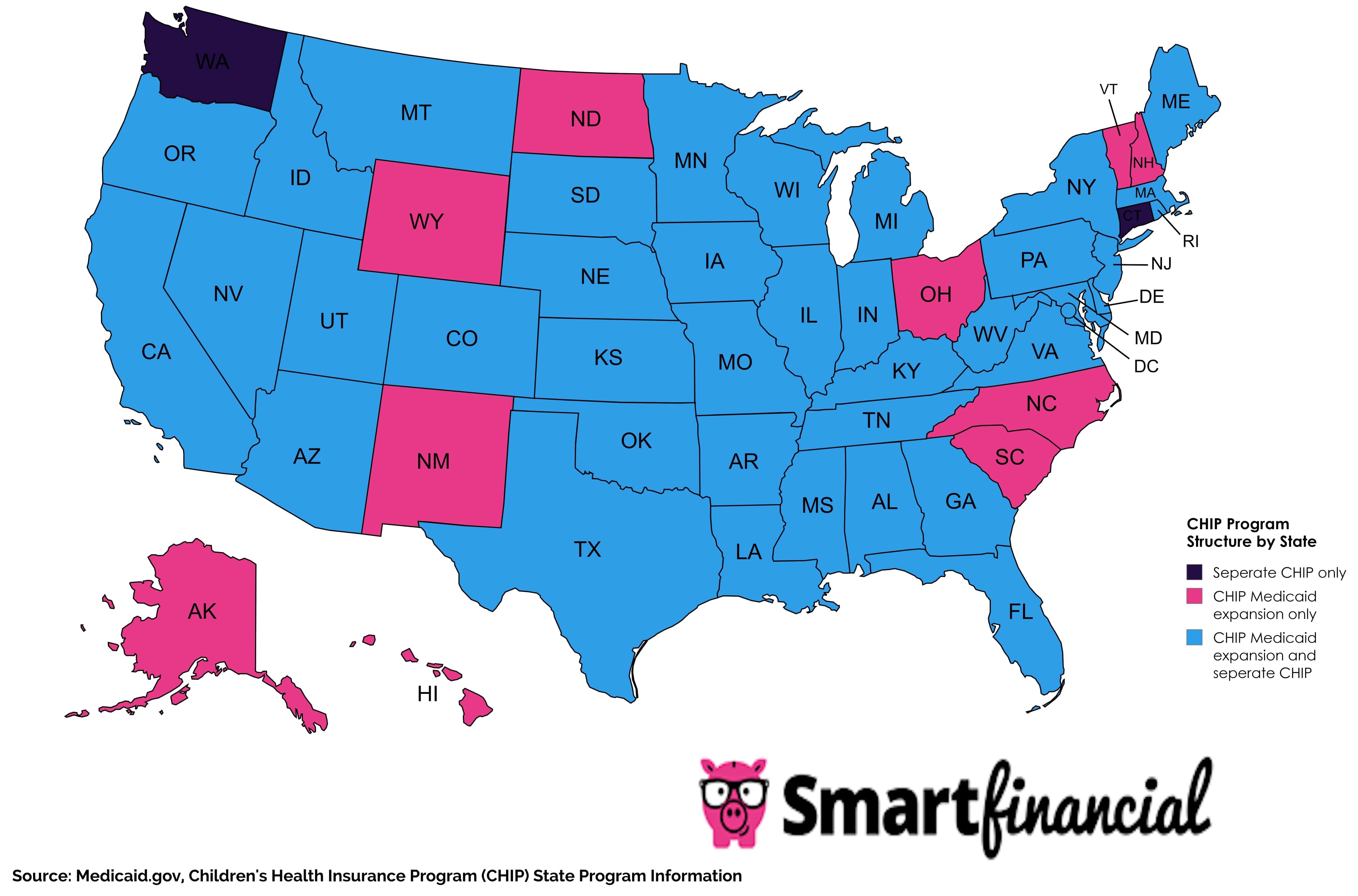
While often compared to Medicaid, CHIP is a separate program. Some states operate a stand-alone CHIP program, while others expand Medicaid coverage to increase eligibility and offer CHIP benefits through their Medicaid system. However, most states have opted to both expand Medicaid eligibility and maintain a separate CHIP program.[4]
How Does CHIP Calculate Income?
Income is calculated using the Modified Adjusted Gross Income (MAGI), which includes adjusted gross income, non-taxed Social Security benefits, tax-exempt interest and any foreign income. Like Medicaid, this calculated income must fall below a percentage of the federal poverty level, which varies by state. However, a 5% income disregard may apply after the calculations are made.[3]
Below are the current maximum incomes compared to the federal poverty level by state for CHIP eligibility, whether that comes through a separate CHIP program or expanded Medicaid:[3]
|
State |
CHIP Eligibility for Children |
CHIP Eligibility for Pregnant Women |
|---|---|---|
|
Alabama |
312% |
N/A |
|
Alaska |
203% |
N/A |
|
Arizona |
200% |
N/A |
|
Arkansas |
211% |
N/A |
|
California |
317% |
N/A |
|
Colorado |
260% |
260% |
|
Connecticut |
318% |
N/A |
|
Delaware |
212% |
N/A |
|
District of Columbia |
319% |
N/A |
|
Florida |
206% (Age 0) 210% (Ages 1-18) |
N/A |
|
Georgia |
247% |
N/A |
|
Hawaii |
308% |
N/A |
|
Idaho |
185% |
N/A |
|
Illinois |
313% |
N/A |
|
Indiana |
250% |
N/A |
|
Iowa |
375% (Age 0-1) 302% (Ages 2-18) |
N/A |
|
Kansas |
250% |
N/A |
|
Kentucky |
213% |
213% |
|
Louisiana |
250% |
N/A |
|
Maine |
300% |
N/A |
|
Maryland |
317% |
N/A |
|
Massachusetts |
300% |
N/A |
|
Michigan |
212% |
N/A |
|
Minnesota |
283% (Ages 0-2) 275% (Ages 3-18) |
N/A |
|
Mississippi |
209% |
N/A |
|
Missouri |
300% |
300% |
|
Montana |
261% |
N/A |
|
Nebraska |
213% |
N/A |
|
Nevada |
200% |
N/A |
|
New Hampshire |
318% |
N/A |
|
New Jersey |
350% |
200% |
|
New Mexico |
300% (Ages 0-5) 240% (Ages 6-18) |
N/A |
|
New York |
400% |
N/A |
|
North Carolina |
211% |
N/A |
|
North Dakota |
170% |
N/A |
|
Ohio |
206% |
N/A |
|
Oklahoma |
205% |
N/A |
|
Oregon |
300% |
N/A |
|
Pennsylvania |
314% |
N/A |
|
Rhode Island |
261% |
261% |
|
South Carolina |
208% |
N/A |
|
South Dakota |
204% |
N/A |
|
Tennessee |
250% |
N/A |
|
Texas |
201% |
N/A |
|
Utah |
200% |
N/A |
|
Vermont |
312% |
N/A |
|
Virginia |
200% |
200% |
|
Washington |
312% |
N/A |
|
West Virginia |
300% |
300% |
|
Winsconsin |
301% |
N/A |
|
Wyoming |
200% |
N/A |
In California, the separate CHIP program only covers children up to two years of age with household incomes of up to 317% of the federal poverty level. However, it covers children up to age 19 at the same income threshold in only three counties. Outside of these counties, you’ll need to meet the Medicaid income threshold of 261% of the poverty level for a child under the age of 19 to qualify for benefits.[3]
What Does CHIP Cover?
While coverage varies by state, certain services are required under federal law to be covered by both CHIP and Medicaid as part of the Affordable Care Act (ACA). CHIP health coverage typically includes the following services for beneficiaries:[2][5]
- Doctor visits
- Vaccinations
- Emergency services
- Lab work and X-rays
- Inpatient and outpatient services
- Prescriptions
- Dental and vision care
- Mental health care
- Medical equipment
- Transportation to medical care
Additionally, CHIP does not exclude any medical conditions and always covers pre-existing conditions.[5] Check your state’s CHIP plan to confirm the specific benefits available.
What Isn't Covered?
CHIP health coverage does not apply to household members who are not eligible, such as parents of a covered child. Non-essential services — such as cosmetic surgery — are also generally not covered. Specific coverage exclusions may vary by state.
Who Is Eligible for CHIP Coverage?
Outside of some circumstances, CHIP is only offered to those under the age of 18, including children from conception to the end of pregnancy, depending on the state.[1][7] For example, some states also extend CHIP benefits to pregnant women.[7]
How Do I Know if My Child Qualifies for CHIP?
While qualifications vary by state and county, children are typically eligible for CHIP health coverage if they meet the following criteria:[5]
- They’re under the age of 19
- They aren’t currently on health insurance and do not qualify for Medicaid
- They are U.S. citizens or legal immigrants
- They are residents of the state in which they are applying
- Their household meets the state’s income requirements
How Much Does CHIP Insurance Cost?
Routine physician and dental care are completely covered under CHIP, although some services may require a copayment. Some states may also charge a monthly premium for CHIP coverage.[2] For example, Kansas CHIP enrollees may pay a monthly premium ranging from $0 to $50.[8] However, total costs cannot exceed 5% of the household’s annual income.[2]
How To Apply for CHIP
You can apply for CHIP directly through the Healthcare Marketplace. If someone in the household is flagged as eligible for CHIP, the form will be sent to the state agency, which will inform you if you qualify and assist you in enrolling in the appropriate program. Even if you don’t qualify for CHIP coverage, you may still receive savings on an insurance plan through the Marketplace.[2]
Alternatively, you can apply through the CHIP website, which will direct you to your state’s CHIP program where you can complete the application. States typically offer the options of applying online or in person.[6] You can also apply by calling 1-800-318-2596.[2]
- Insurance quotes /
- Health /
- Chip Insurance
Preston Micalizio writes insurance content for SmartFinancial. He brings three years of professional experience writing in various industries, from higher education to e-commerce. He strives to engage with the audience, provide accurate reporting and make complex subjects easily digestible.


Get a Free Health Insurance Quote Online Now.
More on Health Insurance

Looking for Health Insurance?
Compare rates from dozens of companies in less than 3 minutes.