

Home Insurance for Easter Gatherings: What To Know
 Written by Preston Micalizio Written by Preston Micalizio Preston MicalizioPreston Micalizio writes insurance content for SmartFinancial. He brings three years of professional experience writing ... Read more |  Edited by Richard Murphy Edited by Richard MurphyRichard MurphyRichard Murphy manages content on SmartFinancial's website. With a strong background in content strategy and copywriting... Read more |
 Editorial Standards
 SmartFinancial Offers Unbiased, Fact-based Information. Our fact-checked articles are intended to educate insurance shoppers so they can make the right buying decisions. Learn More
Ensuring you have home insurance for Easter gatherings can protect you from various accidents, from personal liability insurance for injuries that guests experience to dwelling insurance for damage to your home from a kitchen fire. Without home insurance, you could be left paying a guest’s medical bill or repairs to your home out of pocket.
Read on to learn more about the benefits of home insurance coverage this Easter, alongside risks you should prepare for if you plan to throw a holiday gathering.
|
Key Takeaways
|
On This Page

Does Homeowners Insurance Cover Easter Gatherings?
What Types of Coverage Protect You When Hosting Guests on Easter?
Common Easter Gathering Risks Homeowners Overlook
When Is Your Homeowners Insurance Not Enough for an Easter Gathering?
Tips To Reduce Liability Risk During an Easter Gathering
Home Insurance for Easter Gatherings at a Glance
Checklist for Homeowners Hosting Easter
FAQs

Does Homeowners Insurance Cover Easter Gatherings?
In general, homeowners insurance may cover numerous incidents you could face when hosting a get-together with family or friends on Easter. That said, depending on the size and scope of the festivities at your house, you may want to consider purchasing extra coverage to ensure you and your guests are adequately covered.
What Types of Coverage Protect You When Hosting Guests on Easter?
Standard home insurance typically includes multiple types of coverage to protect you from various hazards that could occur during an Easter gathering, including damage to your property, a guest’s property and medical bills if a guest is injured. Below, we’ll explain some of the coverages most relevant to protecting you when hosting guests for holiday gatherings.
Medical Payments Coverage
Medical payments coverage can help protect you if a guest is injured while on your property, regardless of whether you were directly at fault for the injury. Coverage limits for medical payments coverage are typically up to $5,000, making it ideal for covering minor medical bills after an injury, such as an X-ray or an ambulance ride. Additionally, medical payments coverage applies only to guests and won’t cover injuries to you and your household members.[1]
Personal Liability Coverage
Personal liability insurance helps cover another person’s expenses if you’re liable for injuring them or damaging their personal belongings. Unlike medical payments coverage, personal liability limits are generally much higher — typically between $100,000 and $500,000 — and can also cover legal expenses if you’re sued. However, personal liability coverage won’t protect you from injuries or property damages that happen to you or your household.[1][2]
Property Damage Coverage
Your home insurance will also protect you if your own property is damaged, including your home, other structures and your personal belongings. These protections are split into three different coverage types:[3]
- Dwelling coverage: This insurance protects your home and any structures directly attached to it, typically on an open peril basis, meaning your home would be covered from perils that aren’t explicitly listed as an exclusion in your policy.[4] For example, if someone accidentally lit a fire in your home, you’d typically be covered for the damage.
- Other structures coverage: This covers structures on your property that aren’t directly attached to your home, such as a swimming pool, backyard shed or fence. Typically, these structures are covered against the same perils as your dwelling.[4] For example, if a guest’s child accidentally breaks through your fence while playing outside, this coverage could help pay for repair costs.
- Personal property coverage: This protects your personal belongings, such as your furniture, clothing and electronics. Your personal property is typically covered on a named peril basis, meaning the types of scenarios that are covered are more limited than damage to the house itself.[4] For example, if a guest accidentally knocks the TV over, personal property insurance can help cover the cost of repairing or replacing it.
Common Easter Gathering Risks Homeowners Overlook
Continue reading to learn about various situations you may encounter during your holiday celebration on Easter and what coverage types included in a standard homeowners insurance policy can cover them.
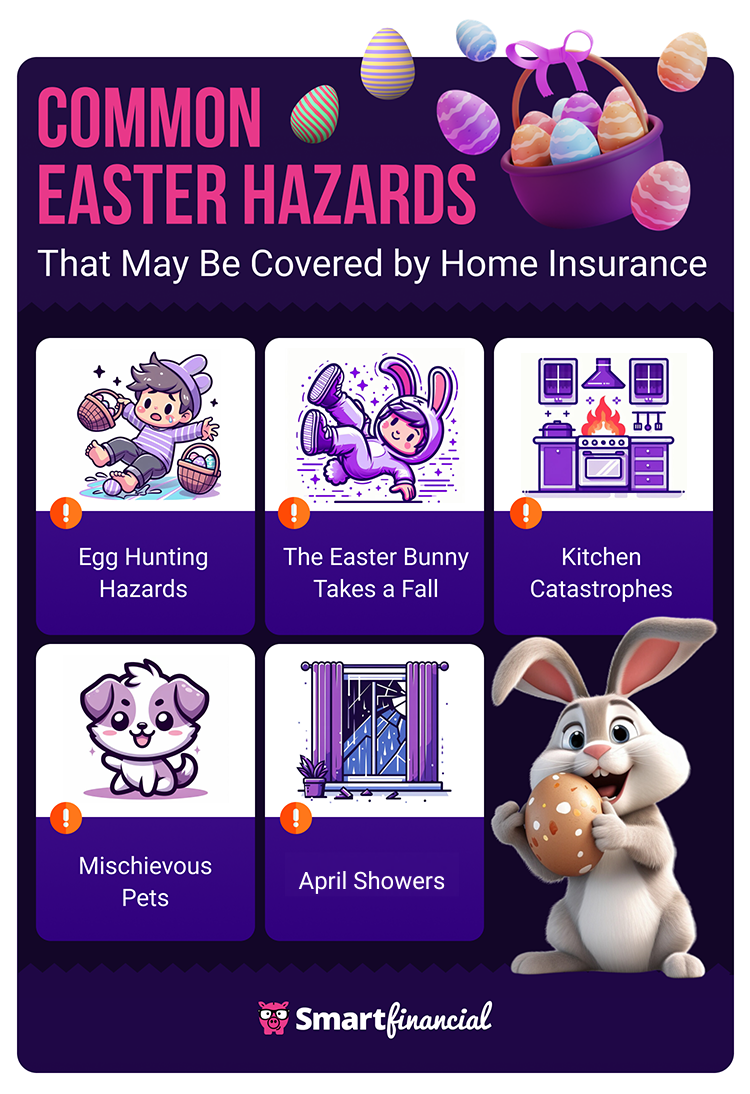
- Egg hunting hazards: If guests’ kids are injured while looking around for Easter eggs, you would be protected by medical payments coverage up to your limits. On the other hand, if a more serious accident occurs, such as a child falling into your swimming pool and drowning, you would be covered with the higher limits and legal fee coverage from personal liability insurance.[1]
- The Easter Bunny takes a fall: If you have someone dressed as the Easter Bunny at your gathering to entertain kids, an injury from tripping in their costume would be covered by medical payments or personal liability insurance. Depending on your policy, injury protection may also extend to hired Easter Bunny impersonators.[5]
- Kitchen catastrophes: Personal property insurance should cover the cost of repairing or replacing your home and belongings as needed in the event of an accidental kitchen fire. Medical payments and personal liability coverage may also apply if a guest is injured in the kitchen, such as cutting a finger with a knife or burning a hand on the stove.
- Mischievous pets: Personal liability insurance will typically cover damage your pets cause to a guest’s property, such as your dog chewing up someone’s cellphone. Additionally, liability insurance may cover injuries a pet causes, such as a dog bite, provided they aren’t an excluded breed.[5]
- April showers: Damage to your home caused by an Easter rainstorm, such as winds breaking your window or falling tree branches onto your roof, will typically be covered by your dwelling or other structures coverage. However, water damage from flooding typically isn’t covered without an additional flood insurance policy.[6]
When Is Your Homeowners Insurance Not Enough for an Easter Gathering?
Your homeowners' insurance may not be enough for an Easter gathering if your coverage limits are too low, leaving you with significant financial expenses covering repairs, medical bills or legal fees. For example, if a faulty propane tank explodes while grilling for an Easter party and injures multiple people, your liability limits may not be high enough to cover the injuries.
Should You Get Umbrella Insurance for an Easter Party?
An umbrella insurance policy can extend your personal liability coverage limits, typically in increments of $1 million. If you have guests coming over for an Easter gathering, it may be worth considering umbrella insurance to protect you from the cost of significant injuries or legal fees that exceed your normal coverage limits. However, the additional limits under an umbrella policy will not cover your personal belongings if they’re damaged during your holiday party.[8]
Tips To Reduce Liability Risk During an Easter Gathering
Below are a few tips to help reduce the chance of a liability risk when hosting an Easter gathering:
- Offer alternatives to alcohol to reduce accidents from drunk guests
- Secure walkways around your home, keeping trip hazards out of the way and cleaning up slippery spills as soon as possible
- Ensure heavy furniture or technology, like a cabinet or a desktop computer, is secured in place and won’t topple over if a guest bumps into it.
- Don’t leave your kitchen unattended while the oven or stove is in use.
- Keep a working fire extinguisher on hand to put out any kitchen fires. Additionally, learn the proper method for extinguishing a grease fire when cooking.
- Keep a watchful eye on children, ensuring they aren’t playing too recklessly in dangerous areas or around breakable belongings.
- Keep swimming pools off-limits to children unless an adult is available to supervise. Consider fencing off your swimming pool or other attractive nuisances to prevent accidents.
- Check your local weather in advance of your party and make accommodations if your outdoor party will need to be moved indoors due to an Easter rainstorm.
Home Insurance for Easter Gatherings at a Glance
Here’s a quick breakdown of everything you’ll need to know regarding home insurance when planning for an Easter gathering:
- Home insurance can help protect you if an Easter guest is injured on your property, someone’s personal belongings are damaged or your home needs repair from an accident during a party.
- Medical payments coverage can help pay for minor injuries and medical bills, typically with limits of up to $5,000, but it won’t cover legal expenses.[1]
- Personal liability coverage protects you from more severe guest injuries, damage to their personal belongings and the cost of legal disputes, with limits typically up to $500,000.[1]
- Medical payments and personal liability coverage will only cover guests and won’t reimburse you for medical costs incurred by you or other members of your household.[1][2]
- Home insurance can cover property damage to your dwelling, unattached structures and your personal belongings.[3]
- Umbrella insurance coverage can provide added protection if you go beyond your personal liability limits, typically in $1 million increments of additional coverage.[8]
- Preparing your home in advance and keeping a watchful eye on guests can help reduce the risk of an accident that leads to a claim.
Checklist for Homeowners Hosting Easter
When you’re preparing to host an Easter gathering, keep this checklist in mind regarding your home insurance coverage:
- Ensure you have home insurance coverage, as you’ll need to cover lawsuits, medical bills for guests and damage to your home out of pocket without it.
- Review your homeowners policy to understand what you’re covered for and any exceptions for which you’ll want to take additional precautions.
- Confirm your liability coverage limits to know how much you’re protected for.
- Consider increasing your limits or purchasing umbrella coverage to ensure you’re protected against more severe accidents.
- Shop around and get quotes from three to five other insurance companies to ensure you’re getting the best premium for your home coverage.
- Insurance quotes /
- Home /
- Easter Home Insurance
Preston Micalizio writes insurance content for SmartFinancial. He brings three years of professional experience writing in various industries, from higher education to e-commerce. He strives to engage with the audience, provide accurate reporting and make complex subjects easily digestible.


Get a Free Home Insurance Quote Online Now.
More on Home Insurance

Looking for Home Insurance?
Compare rates from dozens of companies in less than 3 minutes.