

Can I Change My Car Insurance Before the Policy Period Ends?
 Written by Preston Micalizio Written by Preston Micalizio Preston MicalizioPreston Micalizio writes insurance content for SmartFinancial. He brings three years of professional experience writing ... Read more |  Edited by Dan Marticio Edited by Dan MarticioDan MarticioDan Marticio is the content manager at SmartFinancial and has written 150+ articles across multiple insurance verticals.... Read more |
 Editorial Standards
 SmartFinancial Offers Unbiased, Fact-based Information. Our fact-checked articles are intended to educate insurance shoppers so they can make the right buying decisions. Learn More
You’ll typically be able to change your car insurance policy at any time, even before it ends, by canceling your current policy, adjusting it or switching to a new provider entirely. Keep in mind that you don’t leave yourself a lapse in coverage by canceling your policy before you get a new one; otherwise, you could face higher car insurance rates or legal penalties like fines or a suspended license.
Keep reading to learn how you can change your car insurance before the policy period ends without facing penalties and the benefits of doing so.
|
Key Takeaways
|
On This Page

Why Would Someone Want to Switch Car Insurance Mid-Policy?
What Happens if I Cancel My Car Insurance Before the Policy Period Ends?
Do All Car Insurance Providers Charge Cancellation Fees?
What Are the Benefits of Switching Car Insurance Providers?
How To Change Car Insurance Providers Mid-Policy
FAQs

Why Would Someone Want to Switch Car Insurance Mid-Policy?
Shopping around with different car insurance companies may reveal offers with better rates or superior insurance coverage, giving you a good reason to switch. You could also face life events that raise your existing premiums or allow better rates with other insurers. Below are a few examples of reasons why you might want to switch car insurance mid-policy:
- Your rates increased: If you had an accident or your credit score tanked, your insurer might raise your rates, giving you a reason to shop around for another auto insurance company that can offer better rates.
- You had a specific life event: Car insurance companies often calculate rates based on factors like your location, marriage status or credit score, and if any of these change, it could affect your premium. An insurer may offer you a better rate if, for example, you moved to a new city with a lower accident rate.
- Lacking discounts: Some insurers may offer discounts that others don’t or provide better rates for bundling homeowners or renters insurance with your car insurance coverage, giving you a reason to switch.
- Poor customer service: Sometimes a bad experience with a company is enough reason to switch to a different company, either because they made the claims process a hassle or because their agents didn’t assist you to the level they should have.
What Happens if I Cancel My Car Insurance Before the Policy Period Ends?
Canceling your car insurance mid-policy can have consequences, the primary one being that you won’t have car insurance without already getting a new policy. Minimum levels of car insurance are required in all states except for New Hampshire, and a lack of insurance could result in driver’s license suspension, car impoundment, fines or even jail time, depending on the state.[1] For example, getting caught driving without insurance in Florida could result in a fine of up to $500.[2]
If you get in an accident without coverage, it would also leave you to pay the entire bill for injuries and damage out of pocket. A lapse in coverage is a high-risk indicator that could also result in higher rates or coverage denial the next time you apply.
Do All Car Insurance Providers Charge Cancellation Fees?
Not all car insurance providers have a cancellation fee — however, it can vary between insurers and state laws. For example, these fees are permitted in Connecticut, but only up to $100.[3] These penalties exist to cover administrative expenses and other costs of early cancellation.
Will I Get a Refund if I Cancel My Car Insurance Early?
While policies will differ between companies, many will offer a refund based on the remaining time in your policy if you cancel before the term ends — typically 90% of the unearned premium, minus other cancellation fees if applicable.[4] For example, if you paid $1,000 for a 12-month policy and you canceled after six months, then you would be refunded $450, which is 90% of the unearned premium of $500.
What Are the Benefits of Switching Car Insurance Providers?
When it comes to car insurance, consumers generally prioritize two things: cost and customer service. By shopping around, you may be able to find identical coverage at a lower cost. For example, a person who works from home and has below-average annual mileage may want to switch to a carrier that offers pay-per-mile car insurance that charges based on miles driven.
Sometimes, you may even want to pay a little extra for superior customer service. Accidents can be stressful and traumatic, and you will want a competent adjuster who can walk you through the claims process hassle-free.
How To Change Car Insurance Providers Mid-Policy
Below, we’ll go over the steps to weigh the factors for and against canceling your car insurance and how to go about switching insurance companies seamlessly.
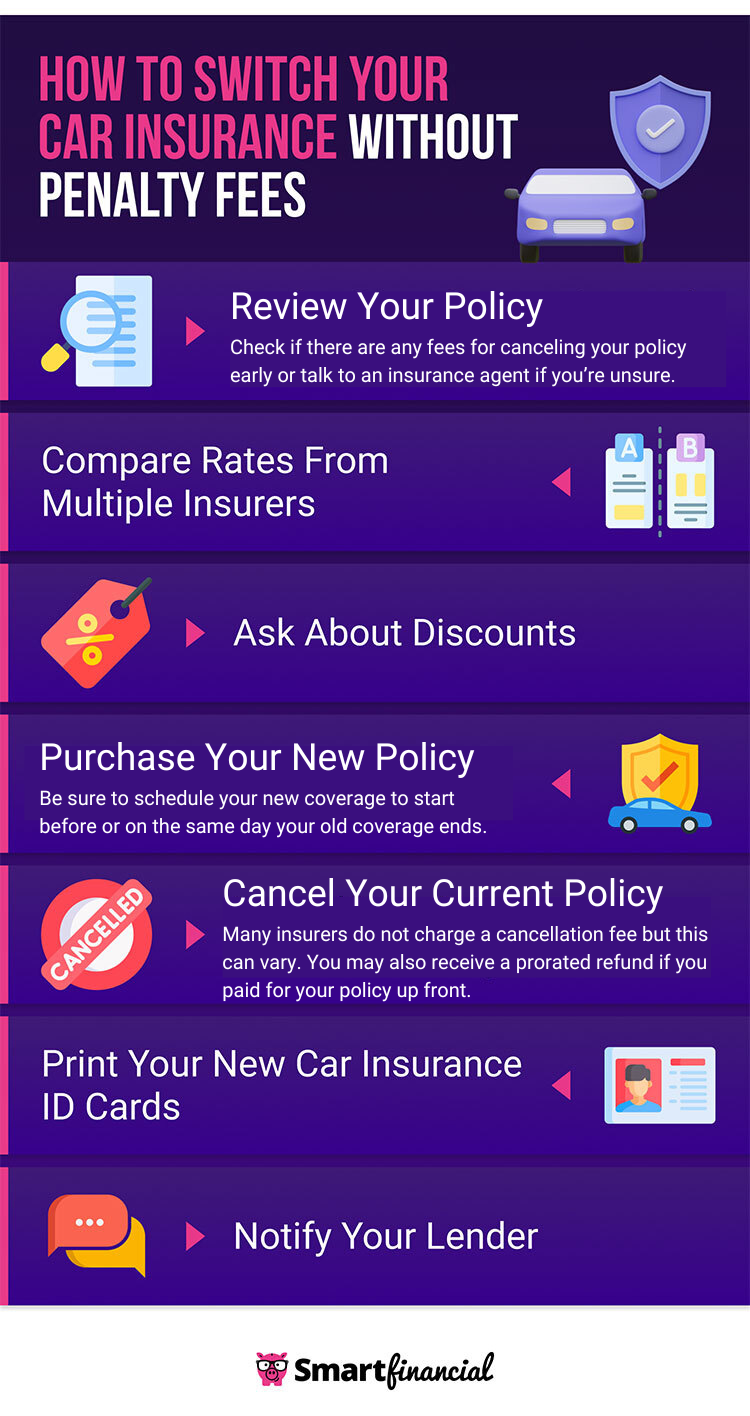
Step 1: Review Your Policy
You’ll need to understand the extent of your policy and what it does and doesn’t cover, as there may be benefits you aren’t considering. For example, you may lose access to existing discounts based on long-term loyalty by canceling.
Additionally, canceling before your term has expired may incur a cancellation fee or force you to eat the cost of initial enrollment fees, making it a better value to wait until your existing policy is closer to expiring or is over before switching.
Step 2: Shop Around
It’s impossible to know whether switching is worth it without comparing other companies' offers, so check out the policies of at least three to five other car insurance companies. Ensure you’re comparing equivalent policies. For example, if you currently have full coverage from your existing insurer, you won’t get a fair comparison by looking at insurance premiums for minimum coverage from another.
Step 3: Ask About Discounts
Discounts are another great way to save money with your car insurance. For example, if you have multiple cars that you want to include on a single policy, maintain a clean driving record or have a car with safety devices, you might qualify for even lower costs on your premium.
Check with an insurance agent to see what they offer and what you might qualify for. Keep in mind that since not all insurers offer the same discount, you may find one at a new company that your existing policy doesn’t have, so it doesn’t hurt to be thorough.
Step 4: Purchase Your New Policy
Once you’ve decided on your new policy, go ahead and make the purchase. To avoid a lapse in coverage, you should schedule the start date for your new policy to begin before your existing coverage expires or is canceled.
Step 5: Cancel Your Current Policy
Now that you have established your new policy, you should be safe to cancel your existing one. Even if you decide to wait until closer to the end of your term, contacting your insurance and canceling to avoid any unintentional auto-renewal is a good idea.
Step 6: Print Your Insurance Card
You’ll need to show proof of insurance if you’re pulled over to prove you meet your state’s minimum insurance requirements, so keep a printed copy of your card in your car. Many insurance companies will mail you a physical copy or give you the option to use an electronic insurance card that you can keep on your phone.
Step 7: Notify Your Lender
If your car is financed, you'll need to inform your lender that you’ve switched insurance providers, as they typically require you to maintain full coverage on your car. Without notification that you’ve switched insurance companies, the lessor could repossess your car or purchase coverage on your behalf and bill you for it, potentially for a higher premium than you’d have chosen yourself.
- Insurance quotes /
- Auto /
- Can I Change Car Insurance Before Policy Ends
Preston Micalizio writes insurance content for SmartFinancial. He brings three years of professional experience writing in various industries, from higher education to e-commerce. He strives to engage with the audience, provide accurate reporting and make complex subjects easily digestible.


Get a Free Auto Insurance Quote Online Now.
More on Auto Insurance

Looking for Auto Insurance?
Compare rates from dozens of companies in less than 3 minutes.