

Why You Should Use an Anti-Theft Device for Car Insurance Discounts
 Written by Preston Micalizio Written by Preston Micalizio Preston MicalizioPreston Micalizio writes insurance content for SmartFinancial. He brings three years of professional experience writing ... Read more |  Edited by Richard Murphy Edited by Richard MurphyRichard MurphyRichard Murphy manages content on SmartFinancial's website. With a strong background in content strategy and copywriting... Read more |
 Editorial Standards
 SmartFinancial Offers Unbiased, Fact-based Information. Our fact-checked articles are intended to educate insurance shoppers so they can make the right buying decisions. Learn More
Installing an anti-theft device for your car can do more than help prevent theft — it might also earn you a car insurance discount. Many insurance companies offer an anti-theft discount, though availability and eligibility can vary by carrier and location. Still, adding this protection may help you save money while improving your vehicle’s security.
Keep reading to learn more about anti-theft devices, what some of the best options are and how they might help you save money on your car insurance premiums.
|
Key Takeaways
|


What Is an Anti-Theft Device for Cars?
An anti-theft device for a car is a tool or technology installed by the vehicle’s manufacturer or added later using an aftermarket product. These devices are designed to help prevent car theft, deter thieves from targeting your vehicle or assist in recovering it if stolen.
Anti-theft devices generally fall into three categories: passive, active and tracking. We’ll explore each type of device below.
Why Should I Use an Anti-Theft Device for My Car?
As implied by its name, the primary reason to use an anti-theft device for your car is to help prevent theft. Replacing a stolen car can be a costly and frustrating experience — one that’s often avoidable with proper theft deterrents.
Even if you have comprehensive car insurance, you may still face out-of-pocket costs for a rental car or public transportation while shopping for a replacement car. In some cases, filing a theft claim may also lead to higher premiums.
As an added benefit, you might qualify for an anti-theft auto insurance discount by installing an approved device — depending on your insurer and state regulations.[1]
What Are the Best Anti-Theft Devices for Cars?
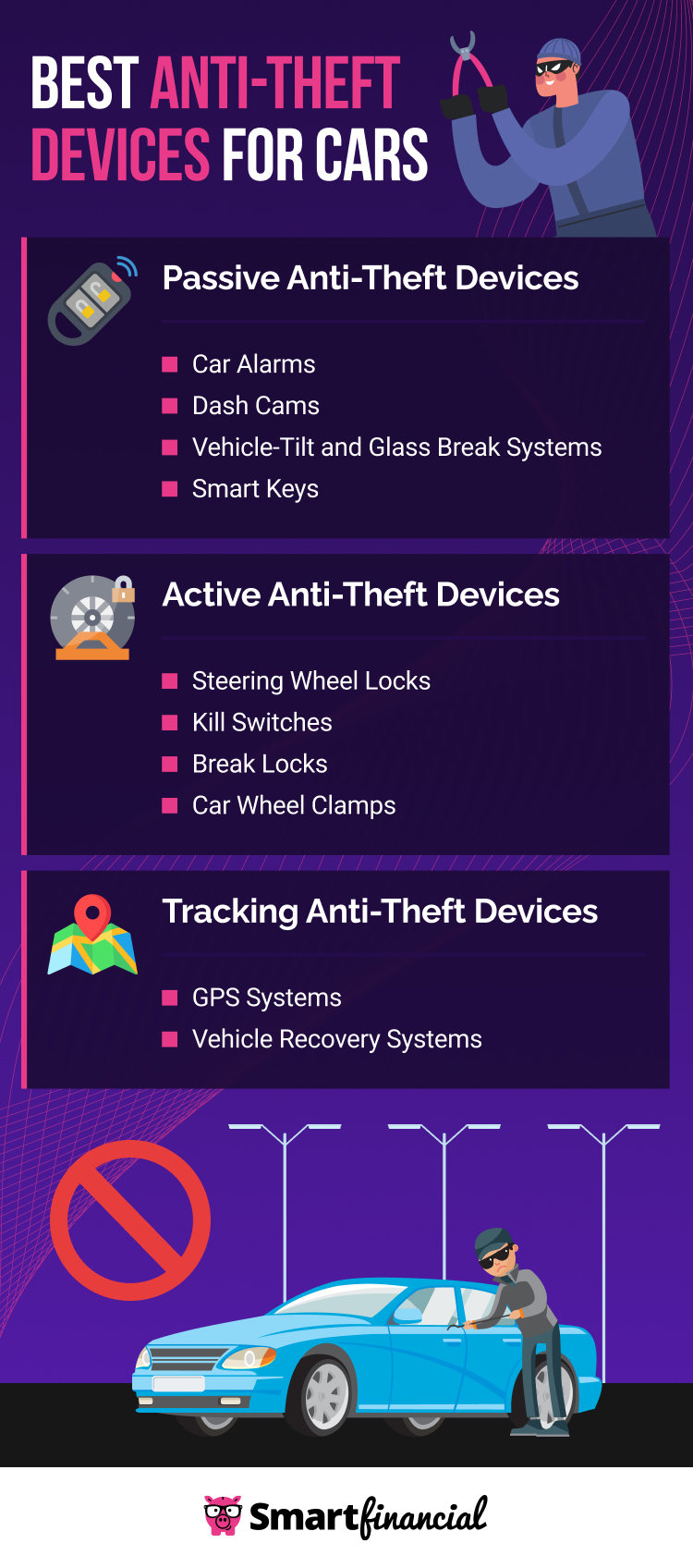
Below, we’ll highlight some of the most effective anti-theft devices for cars, organized by category:
Passive Anti-Theft Devices
Passive anti-theft devices typically activate automatically without requiring any action from the driver. While these systems serve as strong deterrents, they may not stop a determined thief from stealing your vehicle.
Some examples of passive devices include:[2]
- Car alarms: These systems usually activate when the car is turned off or the doors are locked. If someone attempts to open the vehicle. The alarm may trigger a loud siren or flashing headlights. Many cars come with built-in alarms from the manufacturer.
- Dash cams: Mounted on the dashboard or windshield, dash cams record activity around your vehicle. A visible camera may deter potential thieves and provide valuable video evidence in the event of a theft. This footage can be shared with law enforcement during recovery efforts.
- Vehicle-tilt and glass break systems: Like alarms, these devices trigger loud sounds or flashing lights if someone breaks a window or tries to move your car. For example, a tilt sensor may activate if a thief attempts to tow your vehicle — potentially deterring the crime.
- Smart keys: These keys use coded signals to unlock and start your vehicle only when they’re nearby. Many newer models include smart key systems, but drivers of older vehicles can often install one through a dealership or automotive locksmith.
Active Anti-Theft Devices
Active anti-theft devices require the driver to engage the system each time it’s used. These devices can be highly effective, but they must be manually activated to work correctly.
Some active anti-theft devices include:[2]
- Steering wheel locks: This heavy-duty metal bar attaches to your vehicle’s steering wheel, preventing it from turning and making theft more difficult.
- Kill switches: Installed inside the vehicle, this switch disables a specific function — such as the ignition or fuel pump — until manually turned off. This can prevent thieves from starting the engine and driving away.
- Brake locks: These devices clamp onto your car’s brake pedal, making the vehicle unusable until the lock is removed.
- Car wheel clamps: This lock fits over one of the vehicle’s tires, preventing the wheel from rotating and effectively immobilizing the car.
Tracking Anti-Theft Devices
Unlike passive or active systems, tracking anti-theft devices don’t prevent theft directly — they assist with vehicle recovery after a theft occurs by identifying where your car has been taken.
Some examples of tracking anti-theft devices include:[2]
- GPS systems: These devices utilize satellite data to track your vehicle’s location and movement, making it easier to recover if it is stolen.
- Vehicle recovery systems: These systems may combine GPS tracking with telematics to identify the car’s location and alert the owner in the event of suspected theft.
Do Car Insurance Companies Offer Anti-Theft Discounts?
Many car insurance companies offer anti-theft discounts, though not all do. What qualifies for a discount can vary from insurer to insurer. For instance, many providers prefer passive anti-theft devices when evaluating a vehicle’s risk because they activate automatically — without relying on the driver to remember to do so.[1]
Generally, insurers offer discounts of 15% to 20% for passive devices, with discounts of up to 30% for more advanced systems.[1] For example, GEICO customers may save up to 23% on car insurance by installing an anti-theft system.[3]
Some other insurance companies that offer anti-theft discount auto insurance include:[4][5][6][7][8]
Are Insurance Carriers Required To Offer Anti-Theft Discounts?
Insurance carriers aren’t usually required to offer anti-theft discounts. However, 12 states mandate that insurers must provide this discount if you purchase comprehensive coverage:[1]
How To Qualify for an Anti-Theft Discount From Insurance Carriers
Qualifications for anti-theft device discounts may vary among insurance companies, but many, such as Nationwide, may require proof of device installation.[6] Others may only give discounts for specific types of devices. In some cases, insurers may only offer an anti-theft device discount depending on the state you live in.
To increase your chances of receiving an anti-theft device discount, consider shopping around with different insurance carriers. This allows you to compare not only which companies offer the discount but also how much you can save and whether the premiums fit your budget. Try getting quotes from three to five insurers to get a range of options. Keep in mind that you’ll likely need to obtain quotes from each insurance carrier individually, which can become tedious.
You can speed up this process by using an insurance marketplace like SmartFinancial. After answering a short questionnaire, we can connect you with a licensed insurance agent to help you get the coverage you need with the appropriate anti-theft device discount. Click here for a free auto insurance quote today!
- Insurance quotes /
- Auto /
- Anti Theft Device
Preston Micalizio writes insurance content for SmartFinancial. He brings three years of professional experience writing in various industries, from higher education to e-commerce. He strives to engage with the audience, provide accurate reporting and make complex subjects easily digestible.


Get a Free Auto Insurance Quote Online Now.
More on Auto Insurance

Looking for Auto Insurance?
Compare rates from dozens of companies in less than 3 minutes.