

How Much Does Cancer Treatment Cost With or Without Insurance?
 Written by Dylan Tate Written by Dylan Tate Dylan TateDylan Tate is an insurance content expert for SmartFinancial with over 300 articles about home, auto, business, health a... Read more |  Edited by Dan Marticio Edited by Dan MarticioDan MarticioDan Marticio is the content manager at SmartFinancial and has written 150+ articles across multiple insurance verticals.... Read more |
 Editorial Standards
 SmartFinancial Offers Unbiased, Fact-based Information. Our fact-checked articles are intended to educate insurance shoppers so they can make the right buying decisions. Learn More
The cost of chemotherapy and other cancer treatments can range from as little as $6,000 per year to more than $100,000 per year, depending on what stage your cancer is in and whether you have health insurance, among other factors.
While major medical insurance is the best way to cover cancer treatment costs, you may also be able to reduce the burden of your health care costs by taking advantage of a payment plan, asking for support from charitable organizations or individuals, applying for various types of government assistance and more.
Read below for more chemotherapy cost information and tips for keeping yourself from being overwhelmed by medical bills as you fight cancer.
|
Key Takeaways
|
On This Page

What Factors Influence the Cost of Cancer Treatment?
Cancer Treatment Cost With Insurance
Cancer Treatment Cost Without Insurance
What Financial Aid Options Do Cancer Patients Have Without Insurance?
Are There Ways To Reduce the Costs of Cancer Treatments?
What Happens if I Can’t Afford Cancer Treatment?
Chemotherapy Cost FAQs

What Factors Influence the Cost of Cancer Treatment?
Some of the main factors that influence how much you have to pay for cancer treatment include the type of cancer you have, what stage it is in, the type of treatment you receive, how long you undergo treatment and your insurance plan details. According to Rebecca Douglass, a general surgeon at Newman Regional Health, the cost of treatment could also depend on the quality of the health care facility where you are treated and whether you have to travel to get there.
“Centers of excellence may charge more due to their advanced technologies, experienced staff and specific expertise,” Douglass said in a message to SmartFinancial.
Cancer Treatment Cost With Insurance
Cancer patients with health insurance generally spend around $6,000 to $10,000 per year out of pocket on their deductible, copays and coinsurance for cancer-related treatment and therapy.[1] Keep in mind that the highest amount you could possibly have to spend out of pocket on health care in 2025 is $9,200 if you have an individual plan or $18,400 if you have a family plan through the Health Insurance Marketplace. Once you have spent up to the out-of-pocket maximum, your insurance company will cover 100% of your medical costs for the rest of the year.[2]
How Much Does Insurance Cover for Cancer Treatment?
The percentage of your cancer treatment costs that your insurance covers depends on which plan tier you select. Platinum health plans have the lowest out-of-pocket costs, with the health insurance company generally paying 90% of the bill for covered health care.[3]
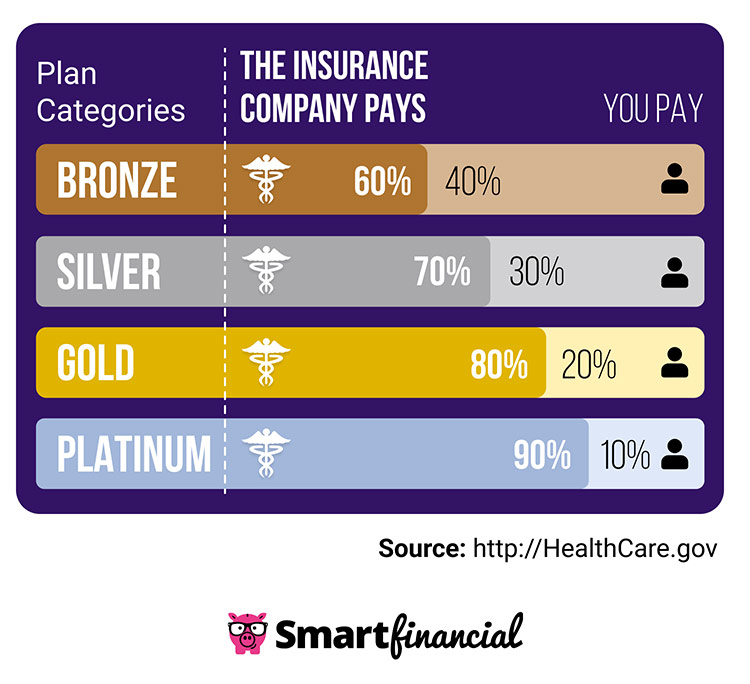
Less than 1% of Americans who shopped through the Marketplace opted for platinum-tier coverage in 2024, likely because plans in this category have the highest monthly premiums.[4] Nevertheless, a platinum plan may make sense if you have a severe condition like cancer that will result in significant out-of-pocket costs without more substantial insurance coverage.
Meanwhile, Medicare covers 80% of the Medicare-approved amount for chemotherapy that you receive in a doctor’s office or freestanding clinic after meeting your Part B deductible. The copay varies if you undergo chemotherapy in a hospital outpatient department, while there may be no cost sharing required if you receive treatment as a hospital inpatient.[5]
Cancer Treatment Cost Without Insurance
A 2020 study found that, without taking insurance into account, the combined cost of medical care and oral prescription drugs for Medicare members with cancer between 2007 and 2013 averaged $45,390 during the first year after the cancer diagnosis, $6,558.70 per year during the time between the first year after diagnosis and the final year of the patient’s life and $114,099.70 during the final year of the patient’s life.[6]
See the below table for a breakdown of average annual health care costs during each of these phases of treatment for several different types of cancer.[6]
|
Type of Cancer |
Initial Care Cost |
Continuing Care Cost |
End-of-Life Care Cost |
|---|---|---|---|
|
Bladder |
$27,067.40 |
$6,870.90 |
$97,338.80 |
|
Brain |
$142,208.20 |
$18,739 |
$178,228.80 |
|
Breast |
$36,124.70 |
$4,372.40 |
$78,808 |
|
Cervical |
$58,715.60 |
$3,956 |
$97,546.90 |
|
Colon |
$66,939.90 |
$6,454.50 |
$111,497.10 |
|
Esophageal |
$91,508.80 |
$10,618.70 |
$120,970.80 |
|
Hodgkin lymphoma |
$78,183.40 |
$10,306.40 |
$131,589.40 |
|
Kidney |
$43,412 |
$10,410.60 |
$107,749.30 |
|
Leukemia |
$54,134.90 |
$19,571.90 |
$175,626.10 |
|
Acute myeloid leukemia |
$199,362.20 |
$25,922.30 |
$254,017.70 |
|
Chronic lymphocytic leukemia |
$26,234.60 |
$12,805 |
$97,026.50 |
|
Chronic myeloid leukemia |
$67,356.40 |
$60,693.60 |
$137,731.70 |
|
Liver |
$71,624.70 |
$25,818.20 |
$104,313.90 |
|
Lung |
$71,937 |
$15,095.40 |
$114,828.50 |
|
Lung (non-small cell carcinoma) |
$70,895.90 |
$15,095.40 |
$114,099.80 |
|
Lung (small cell carcinoma) |
$87,656.90 |
$15,928.20 |
$119,929.70 |
|
Melanoma |
$9,161.30 |
$3,019.10 |
$82,868 |
|
Myeloma |
$106,916.40 |
$54,967.70 |
$148,350.40 |
|
Non-Hodgkin lymphoma |
$76,725.80 |
$13,429.60 |
$147,309.40 |
|
Oral |
$59,236.10 |
$5,934 |
$110,976.60 |
|
Ovary |
$80,161.40 |
$14,262.50 |
$112,954.60 |
|
Pancreatic |
$113,683.30 |
$22,278.60 |
$130,860.70 |
|
Prostate |
$28,420.80 |
$2,914.90 |
$80,057.20 |
|
Stomach |
$82,555.80 |
$9,577.70 |
$123,781.60 |
|
Thyroid |
$25,818.20 |
$4,997.10 |
$112,954.60 |
|
Uterine |
$39,143.70 |
$3,019.10 |
$94,736.10 |
What Financial Aid Options Do Cancer Patients Have Without Insurance?
There are several government agencies and private charitable organizations that can help you cover the various costs that may arise while you are being treated for cancer. For example, if you are out of work due to your condition, you may qualify for Supplemental Security Income (SSI) or Social Security Disability Insurance (SSDI), since cancer is often counted as a disability under the Americans with Disabilities Act (ADA).[7]
If your income is low, you may also be eligible for public programs like the Supplemental Nutrition Assistance Program (SNAP) to help pay for food and Temporary Assistance for Needy Families (TANF) to help pay for basic needs like clothing, phone service, utilities and more. Meanwhile, you may be able to receive help with short-term housing, transportation, dental care and more through charities, loved ones or churches in your community.[7]
Another option to keep in mind is critical illness insurance, which is generally cheaper than major medical insurance and pays out a one-time lump sum that you are free to spend however you please whenever you contract a major disease, such as cancer. For example, Cigna offers lump-sum cancer insurance that pays out between $5,000 and $100,000, with prices starting around $19 per month.[8]
Are There Ways To Reduce the Costs of Cancer Treatments?
The best way to reduce the cost of cancer treatments is to maintain health insurance. The cheapest individual health plan available through the Marketplace in any given state costs $381 per month on average.[9] When combined with the maximum out-of-pocket limit, this means that the average insured individual will have to spend no more than $13,772 per year on health care and insurance, which is far less than the average medical and drug costs during the first and last years of cancer treatment without insurance.[2][9]
In addition, health insurance companies that offer plans through the Marketplace are not allowed to charge you more for health insurance coverage based on a preexisting condition.[10] As a result, you won’t have to worry about encountering higher health insurance rates if you already have cancer.
Other steps you can take to better manage your expenses while fighting cancer include the following:[11]
- See if your health care provider offers payment plans or reduced rates
- Ask a medical social worker to recommend charities that could help cover some or all of your hospital bills
- If you are employed through work, contact your human resources department to get tips on how to lower your health care costs
- Buy generic versions of your prescription medicines when possible
- Use drug coupons and other discount programs, such as GoodRx
- Take care of your health to the best of your ability to avoid unnecessary emergency room visits
What Happens if I Can’t Afford Cancer Treatment?
If you can’t afford cancer treatment, your best option may be to spend down until you are eligible for Medicaid. Medically needy individuals can often qualify for Medicaid by spending a certain amount of money determined by their state on out-of-pocket health care expenses, even if they would not ordinarily qualify for Medicaid based on their current income or assets.[12]
Medicaid has no or low monthly premiums and may not require cost sharing for terminally ill individuals, meaning your chemotherapy or other cancer treatment may be mostly or completely free if you are on Medicaid.[13][14]
- Insurance quotes /
- Health /
- Chemotherapy Cost
Dylan Tate is an insurance content expert for SmartFinancial with over 300 articles about home, auto, business, health and life insurance under his belt. He has over nine years of experience writing for online publications, primarily about gaming and esports. In the process, he has become an expert in search engine optimization, news reporting, feature writing and copy editing.


Get a Free Health Insurance Quote Online Now.
More on Health Insurance

Looking for Health Insurance?
Compare rates from dozens of companies in less than 3 minutes.