

Halloween Home Insurance: 7 Scary Risks That Could Lead to a Claim
 Written by Dylan Tate Dylan TateDylan Tate is an insurance content expert for SmartFinancial with over 300 articles about home, auto, business, health a... Read more |  Edited by Richard Murphy Richard MurphyRichard Murphy manages content on SmartFinancial's website. With a strong background in content strategy and copywriting... Read more |
 Editorial Standards
SmartFinancial Offers Unbiased, Fact-based Information. Our fact-checked articles are intended to educate insurance shoppers so they can make the right buying decisions. Learn More
Homeowners insurance covers multiple kinds of losses you may encounter on Halloween, including vandalism, theft, fires and liability lawsuits. Even so, it’s best to practice Halloween home safety and lower your odds of filing a Halloween home insurance claim by taking steps like clearing tripping hazards from your front yard, testing your security system and switching to flameless candles.
Keep reading to learn more about Halloween and home insurance, including tips that can protect you against Halloween fire insurance claims and other tricks or pranks throughout the spooky holiday.
|
Key Takeaways
|
On This Page

Does Home Insurance Cover Halloween Accidents and Damage?
7 Halloween Risks That Could Lead to a Home Insurance Claim
How To Protect Your Home on Halloween
What Types of Home Insurance Protect You From Tricks on Halloween?
What To Do if Your Home Is Damaged on Halloween
Halloween Home Insurance Checklist
Halloween Home Insurance at a Glance
How To File a Halloween Home Insurance Claim
Frequently Asked Questions

Does Home Insurance Cover Halloween Accidents and Damage?
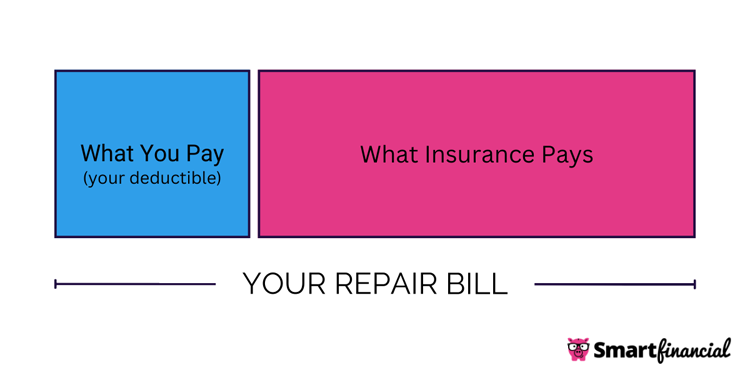
A standard homeowners insurance policy can cover several types of Halloween catastrophes, ranging from sudden perils that damage your property to accidents that result in visitors getting hurt. That said, property damage claims usually require you to make an out-of-pocket contribution known as a deductible.[1] As a result, your insurer won’t cover minor damage that costs less than your deductible to repair.
Home insurance generally won’t cover damage to or accidents involving your car — these situations are instead covered by car insurance. For example, if your car is vandalized on Halloween, you can be reimbursed through your comprehensive auto insurance. Conversely, you’ll have to pay your vehicle repair costs out of pocket if you have a liability-only car insurance policy.
7 Halloween Risks That Could Lead to a Home Insurance Claim
With an increase in substance use, reckless behaviors from teens and young adults and other risk factors intrinsic to the holiday, there are numerous common losses that could lead to homeowners insurance claims this Halloween weekend. Read the following sections for a rundown of the insurance perils you should keep an eye out for.
|
Common Halloween Risk |
Example |
|---|---|
|
Liability claims |
A child trips over a branch on a poorly lit walkway on their way to your front porch and breaks their wrist |
|
Vandalism |
Masked teenagers throw a large pumpkin through one of your windows |
|
Theft |
Intruders break into your home and steal your valuable jewelry while you’re away at a party |
|
Fire |
Decorative outdoor lights short-circuit and cause an electrical fire |
1. Can You Be Liable if a Trick-or-Treater Gets Hurt?
The increased traffic to your doorstep on Halloween creates more opportunities for accidents, like trick-or-treaters tripping over electrical cords or Halloween decor. If a visitor is injured on your property, you could have to file a home insurance claim to cover their medical expenses. For this reason, it’s crucial to make sure your walkways are hazard-free and well-lit to prevent a claim that could lead to higher home insurance rates.
2. Are Halloween Decoration Fires Covered by Home Insurance?
Although fire is one of the perils covered by standard home insurance policies, it’s best to reduce fire hazards to prevent injuries and devastating property damage in the first place.[2] For example, while a jack-o’-lantern illuminated with a wax candle may make for a festive Halloween decoration, if someone accidentally knocks it over, it could spread fire to dry leaves and, eventually, your home.
3. Does Home Insurance Cover Halloween Vandalism?
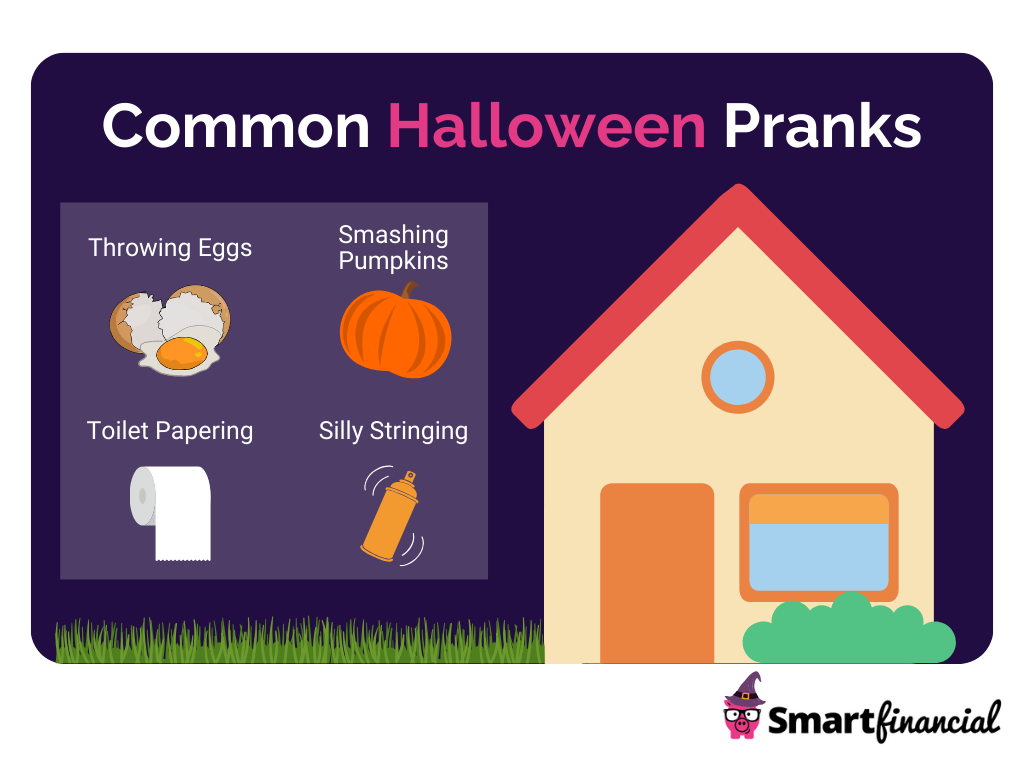
Most Halloween pranks — such as smashing pumpkins, toilet papering your house or covering your yard with silly string — tend to be fairly harmless, but throwing eggs in particular can lead to real, costly damage, especially if it results in chipped paint or broken windows. Fortunately, damage from vandalism or malicious mischief is covered by most home insurance policies.[2]
4. Are Stolen Halloween Decorations Covered?
Homeowners insurance provides coverage if you’re the victim of theft — which may be especially likely if you leave home to go to a party, since 72% of home burglaries occur while the residents are out of the house.[2][4] Of course, your deductible will still apply, so you likely won’t be able to file a claim if the thieves merely steal a few low-value decorations.
Amid an increased amount of foot traffic around residential properties, car theft is also a significant risk factor on Halloween. In fact, Halloween ranks as the worst holiday for stolen vehicles, ahead of other dangerous holidays like Labor Day and New Year’s Day.[5] That said, remember that stolen cars are covered by auto insurance rather than homeowners insurance.
5. What Happens if Your Dog Bites a Trick-or-Treater?
If your dog bites a trick-or-treater or some other visitor on Halloween, you could be held liable for covering their medical bills, potentially leading to costly Halloween insurance claims. You may even face a lawsuit if your negligence leads to a guest’s injury — like if you own a dog breed that’s known for being aggressive and fail to properly secure your pet before opening the door.
6. Can a Halloween Party Lead to a Liability Claim?
While trick-or-treaters briefly visiting your home on Halloween can lead to increased liability exposure, the risk of a liability claim may be even higher if guests stay on your property for an extended amount of time, like if you host a Halloween party. For example, if you serve expired candy at a house party that causes guests to get food poisoning, you may have to file a medical payments insurance claim to cover their medical treatments or prescription drugs.
7. What if Halloween Decorations Injure Someone or Damage Property?
In general, you may need to file a personal liability insurance claim anytime someone gets seriously hurt at your home or you’re held responsible for damaging their property. For example, you could face a costly liability claim if a strong gust of wind blows over your giant skeleton decoration, injuring a young trick-or-treater or destroying part of your neighbor’s fence.
How To Protect Your Home on Halloween
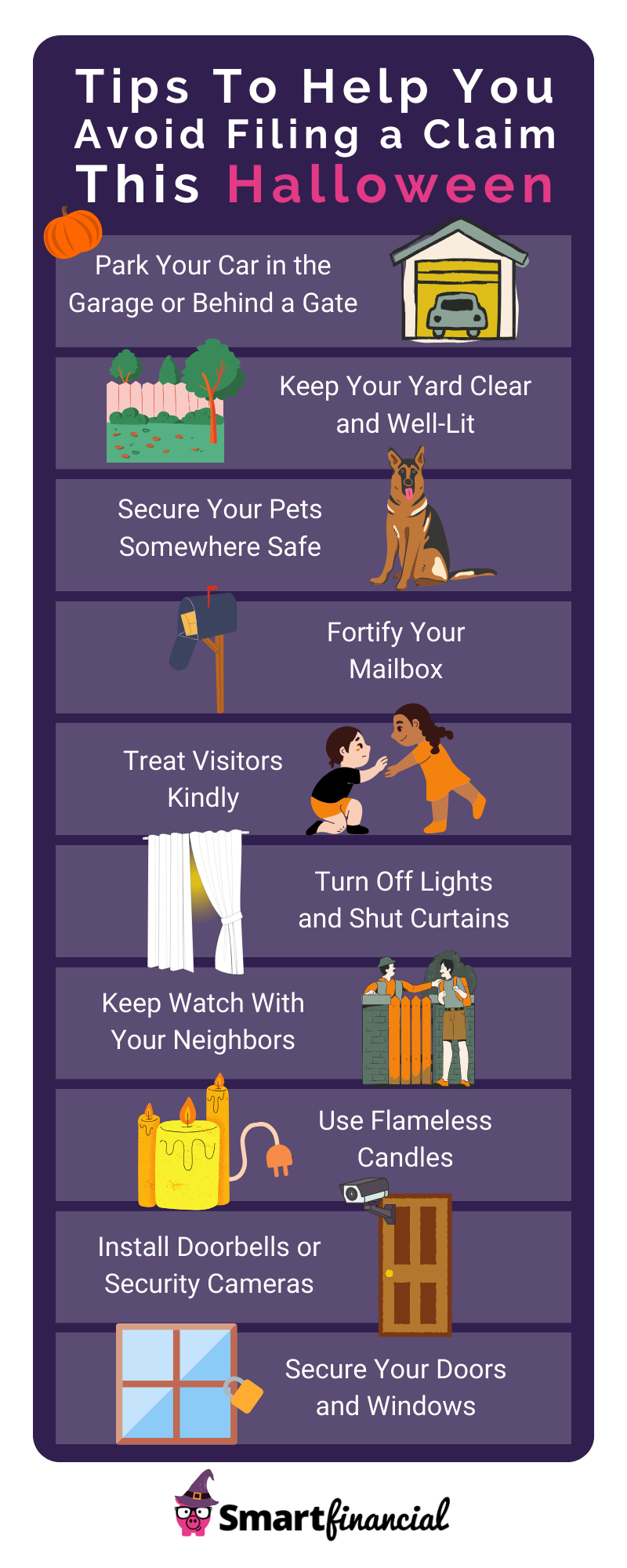
Use the following Halloween safety tips to protect your home from accidents, pranks and malicious behavior so you can avoid filing Halloween home insurance claims:
- Park your car in a safe location: If possible, park your vehicle in a garage or behind a locked gate to lower the odds that it’ll be stolen or targeted by vandals.
- Keep your yard clear: Clear your yard of any clutter that could become a tripping hazard, such as wet leaves, garden hoses or rocks. Also, ensure your pathways are well-lit using outdoor lights, such as a porch light or seasonally appropriate decorative lights.
- Secure your pets: To lower the odds of a dog bite incident, you need to take extra precautions to make sure your pets stay inside. For example, you could keep them tied to a leash in a different part of the house to make sure they don’t bolt out your front door whenever you open it to hand out candy.
- Fortify your mailbox: Your mailbox can fall victim to drunk drivers losing control of their vehicles — or even vandals swinging at mailboxes with baseball bats as they drive through the street. If safe and feasible, consider building a guardrail around your mailbox to protect your mail and small packages.
- Treat visitors kindly: While the actions of others may be outside your control, offering a friendly attitude, generous candy handouts and costume compliments can help build goodwill with visitors and reduce the risk of retaliatory mischief.
- Turn lights off at the end of the night: Once you’re done handing out candy for the night, be sure to turn your porch light off and shut your curtains. That way, fewer people will visit your home unnecessarily, lowering the likelihood of accidental injuries and subsequent liability claims.
- Keep watch with neighbors: One of the best defenses you can have against burglars and vandals is your neighbors. Introduce yourself to the people on your street, and agree to keep each other informed about suspicious activity.
- Use flameless candles: Unattended candles or jack-o’-lanterns could be tipped over and spark a fire, so it may be safer to switch to LED candles or glow sticks to mimic the warm light without the fire hazard.
- Install security cameras: Doorbell cameras, smart home devices and other types of security systems can deter prospective thieves. One study found that the majority of convicted burglars would choose not to rob a home if it had a visible outdoor security camera.[6] In addition, security camera footage may provide useful evidence for the police and for your insurance claim if you are robbed.
- Close and lock entrances: While ghosts might be able to pass through secured doors and windows easily, thieves and vandals can’t. Even if they attempt to pick the lock, they may give up if the extra time and effort outweigh the potential benefit. Additionally, installing motion sensor lights around your home’s entry points can deter criminals.
What Types of Home Insurance Protect You From Tricks on Halloween?
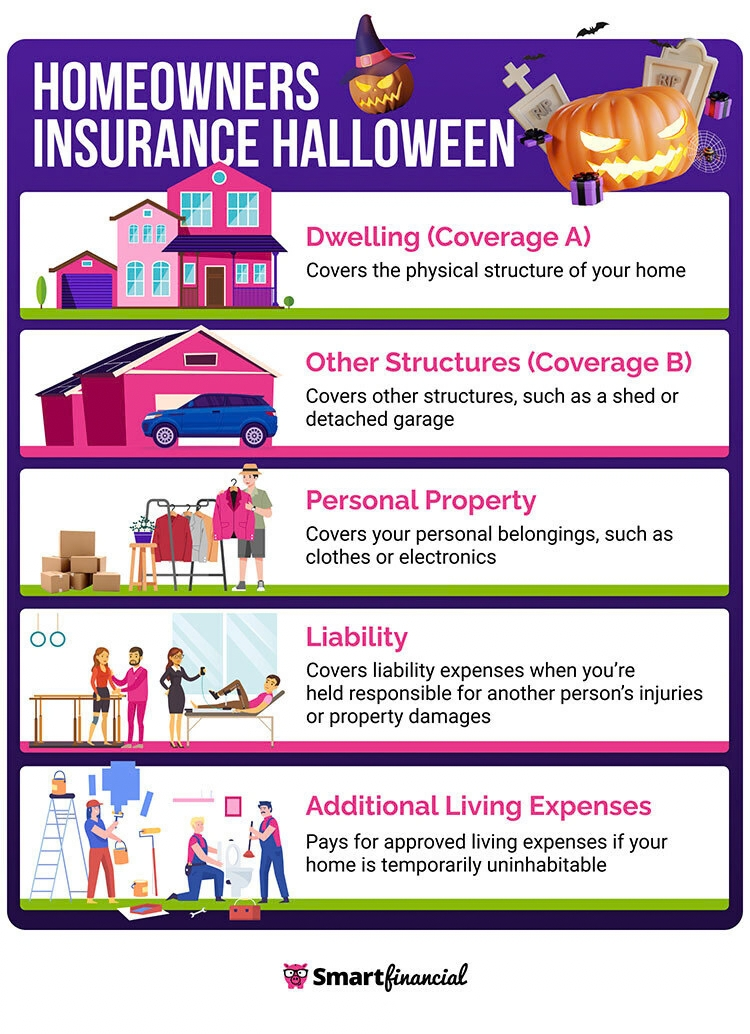
Standard homeowners insurance policies include six main types of coverage. Take a look at the following table to get an idea of how each coverage type may step in after a Halloween incident:
|
Coverage |
Description |
Examples of Covered Scenarios |
|---|---|---|
|
Covers the physical structure of your home and any structures directly attached to it |
Costumed vandals destroy your front door with baseball bats |
|
|
Covers structures on your property that aren’t directly attached to your home |
A teenager accidentally breaks your shed’s window while having a pumpkin-smashing contest with their friends |
|
| Personal property |
Insures your belongings, such as clothes, furniture and decorations |
Someone breaks into your house and steals your electronics while you’re out trick-or-treating with your children |
|
Pays for additional living expenses if your home becomes uninhabitable because of a covered peril |
A drunk driver crashes through your living room, and you must temporarily move to a hotel while you wait for your house to be repaired |
|
|
Personal liability |
Covers third-party expenses and your legal fees if you’re held liable for another person’s injury or property damage |
Your neighbor sues you after your outdoor lights spark an electrical fire that spreads to their property |
|
Medical payments |
Provides limited coverage for medical bills if someone gets hurt on your property — regardless of whether you’re at fault |
Somebody trips over gravestone decorations in your front yard and needs stitches on their elbow |
What To Do if Your Home Is Damaged on Halloween
If your home is damaged on Halloween, you need to take inventory of your losses, make minor repairs if needed to prevent further damage and determine whether your homeowners insurance coverage applies. Remember, if the necessary repairs are minimal — such as a minor paint touch-up on one part of a wall damaged by eggs — then the costs may not exceed your deductible, and you may need to be prepared to cover those costs out of pocket.
Halloween Home Insurance Checklist
Take note of the items on this checklist leading up to and during Halloween to maximize your odds of staying safe and avoiding insurance claims throughout the frightening festivities:
|
Before Halloween |
On Halloween Night |
After an Incident |
|---|---|---|
|
Stock up on candy |
Keep walkways adequately illuminated |
Photograph the damage |
|
Check exterior lighting |
Put your pets in a quiet room where they can’t easily get out of the house |
Clean up anything that could lead to further damage |
| Clear debris from your yard and walkways |
Turn your porch lights off to keep visitors away once you run out of candy |
Gather all the evidence you need to submit a claim to your insurance company |
|
Make sure decorations are secured to minimize tripping hazards or other accidents |
Halloween Home Insurance at a Glance
- Homeowners insurance covers a variety of common risks you may encounter on Halloween, including theft, vandalism, liability lawsuits and candle fires.
- Halloween is the most dangerous holiday for car thefts, but you’ll need to file a claim on your car insurance rather than your home insurance if your vehicle is stolen.
- Some types of minor Halloween incidents — such as stolen decorations or chipped paint after your house is egged — may not exceed the cost of your deductible, meaning you’ll have to cover these losses out of pocket.
- Steps you can take to stay safe and lower the odds of covered losses on Halloween include parking your car in a locked garage, keeping your pets indoors, switching to LED candles and making sure your walkways are clear and well-lit.
- After a covered Halloween accident or peril, you need to check what has been damaged, take steps to prevent additional damage and document your losses for your insurance claim.
How To File a Halloween Home Insurance Claim
Follow these simple steps to file a homeowners insurance claim if your property is damaged or stolen this Halloween:
- Document your losses: Take pictures or videos of the damaged parts of your home in good lighting and from multiple angles. You can also use video captured from a home security camera to prove what items were damaged or stolen.
- File a police report: If your claim involves a crime, such as theft or vandalism, you’ll want to call 911 so the responding officers can fill out a police report. Be sure to write down the names and badge numbers of the police officers and ask how to obtain a copy of the police report, since you may need to supply it when filing your insurance claim.
- Notify your insurance company as soon as possible: Once you’ve gathered all the necessary information, initiate the claims filing process by calling your insurance agent or using your insurance carrier’s website or mobile app. After you provide your policy number and documentation of the incident, your agent may be able to explain the claims process, requirements and whether the claim will exceed your deductible.
- Review your settlement: If your claim is approved, review the settlement, and if you accept it, use the insurance proceeds to repair damaged property or replace covered items. It may be helpful to compare quotes from multiple contractors to determine a fair price for the repair work on your home.
- Insurance quotes /
- Home /
- Halloween Safety And Home Insurance
Dylan Tate is an insurance content expert for SmartFinancial with over 300 articles about home, auto, business, health and life insurance under his belt. He has over nine years of experience writing for online publications, primarily about gaming and esports. In the process, he has become an expert in search engine optimization, news reporting, feature writing and copy editing.


Get a Free Home Insurance Quote Online Now.
More on Home Insurance

Looking for Home Insurance?
Compare rates from dozens of companies in less than 3 minutes.