

10 Essential Household Items You Should Insure Today
 Written by Dylan Tate Written by Dylan Tate Dylan TateDylan Tate is an insurance content expert for SmartFinancial with over 300 articles about home, auto, business, health a... Read more |  Edited by Dan Marticio Edited by Dan MarticioDan MarticioDan Marticio is the content manager at SmartFinancial and has written 150+ articles across multiple insurance verticals.... Read more |
 Editorial Standards
 SmartFinancial Offers Unbiased, Fact-based Information. Our fact-checked articles are intended to educate insurance shoppers so they can make the right buying decisions. Learn More
From appliances and furniture you use every day to designer clothing and jewelry you save for special occasions, there are several household items you need to insure. In general, all of your belongings should be covered under a typical homeowners insurance policy, but you may need to purchase additional coverage to insure particularly expensive items at their full replacement cost.
Read below for more information about insurance coverage for various kinds of household items and why it’s necessary to be properly covered.
|
Key Takeaways
|
Top 10 Household Items You Need To Insure
The following sections will go over the most important types of items in your home that you need to insure, along with some of your options for covering them besides home insurance.
1. Jewelry and High-End Accessories
Jewelry and other high-end accessories are among the most crucial items to insure due to their high value and exposure to theft. A single engagement ring costs $5,500 on average, meaning a full collection of jewelry can easily be worth several thousand dollars, especially if many of the pieces of jewelry are fairly new.[1] You should also note that jewelry is one of the most commonly stolen household items, along with cash and gold.[2]
Jewelry insurance often covers perils that aren’t covered by a standard home insurance policy, such as unexplained disappearances, and it usually costs 1% to 2% of the overall value of the covered jewelry.[3] As a result, $7,500 worth of jewelry will likely cost you between $75 and $150 per year to insure.
2. Electronics
In 2019, Americans spent an average of more than $1,000 per household on new consumer electronics annually, which means that you can expect a large bill if a covered peril wipes out all of your cell phones, computers, tablets and video game consoles unless you have insurance to cover the replacements.[4]
Multiple insurance companies offer policies that can insure your electronics against sudden and uncontrollable losses, in addition to some losses that you are responsible for, like cracking your phone’s screen by dropping it or spilling water on your laptop. For example, Allstate subsidiary SquareTrade offers iPad protection plans for between $43 and $104.50 per year, depending on the type of iPad you insure, your deductible and the length of your coverage term.[5]
3. Antiques and Furniture
From rare antique cabinets to couches and chairs you sit on every day, you likely own several pieces of furniture that would be very costly to replace after a sudden loss if you didn’t have insurance. On average, it costs between $10,000 and $40,000 to furnish a three-bedroom home.[6] Naturally, your furniture replacement costs can skyrocket if you happen to own any highly valuable antiques.
4. Art and Collectibles
Artwork and collections are among the most valuable things a homeowner can own, making them some of the most important to insure. Like jewelry insurance, art insurance generally costs 1% to 2% of the value of the covered art, meaning a $1,000 painting could be insured for $10 to $20 per year.[7]
Similarly, collectibles insurance often costs between 0.5% and 2% of the covered collection’s insured value, which means that an $800 collection might cost $4 to $16 per year to cover. Examples of items that are commonly covered by collectibles insurance policies include the following:[8]
- Sports memorabilia
- Wine
- Rare books and manuscripts
- Rugs and tapestries
- Stamps
- Coins
5. Musical Instruments
You may want extra insurance coverage for your musical instruments beyond what is provided by your basic homeowners insurance policy, especially if you own several instruments. The cost of an additional insurance policy will likely be based on the value of your musical instruments.
For example, Aegis General Insurance Agency charges 73 cents per $100 worth of scheduled property coverage for instruments. This means that you could insure a $9,000 piano for $65.70 per year. Aegis also sets a maximum coverage limit of $15,000 per instrument, meaning the most you could have to pay to cover any single instrument is $109.50 per year.[9]
6. Home Appliances
Along with the fact that they can be very expensive to replace, you likely use many of your home appliances every day, so it’s critical to have an insurance policy in place that covers sudden damage to your appliances. Without insurance, it costs between $2,100 and $5,400 on average to buy a new refrigerator, microwave, stove and dishwasher.[10]
However, this may be covered by a home warranty, which often costs $300 to $600 per year. Alternatively, you may be able to secure coverage for mechanical or electrical breakdowns by adding an equipment breakdown insurance endorsement to your homeowners policy for $25 to $50 per year.[11]
7. Exercise and Sports Equipment
You may save money on gym membership fees by keeping your own exercise and sports equipment at home, but these savings could quickly evaporate if you don’t have an insurance policy that can step in after a sudden peril causes massive damage to your home gym.
On average, a basic home gym is worth somewhere between $800 and $5,000.[12] As for sporting equipment, the cost of a set of golf clubs can range from as little as $250 to as much as $2,000, while a portable basketball hoop from Spalding could cost anywhere from $200 to $3,000, depending on the quality of the equipment.[13][14]
8. High-End Clothing and Designer Items
If you’re particularly fashionable, you could find yourself with an extremely valuable collection of clothes, shoes, purses and other accessories requiring a large amount of insurance coverage. A 2015 study found that nearly half of the women surveyed had between $1,000 and $5,000 worth of clothing in their closets. The value of your wardrobe could undoubtedly exceed $10,000 if it includes several furs or other high-end apparel and accessories.[15]
9. Outdoor Equipment and Tools
Outdoor equipment and tools — such as lawnmowers, leaf blowers, hedge trimmers, chainsaws and more — make up another common collection of valuable items for many homeowners. A basic lineup of personally owned lawn care equipment can potentially cost upwards of $10,000. You could spend even more if you opt for more sophisticated tools, like a robot lawn mower, so having sufficient insurance coverage is key.[16]
10. Specialized Items
Below are examples of other notable items that you may need extra coverage to fully insure:
- Family heirlooms
- Silverware
- Personal documents
- Medical equipment
- Cash
- Firearms
What Types of Household Items Are Covered With Standard Home Insurance?
Practically all kinds of household items are covered by the personal property coverage portion of a standard homeowners insurance policy. That said, some types of possessions may not be covered up to their full value. For example, if you operate a home-based business, your home insurance company may only provide up to $2,500 worth of coverage for commercial property stored in your house.[17]
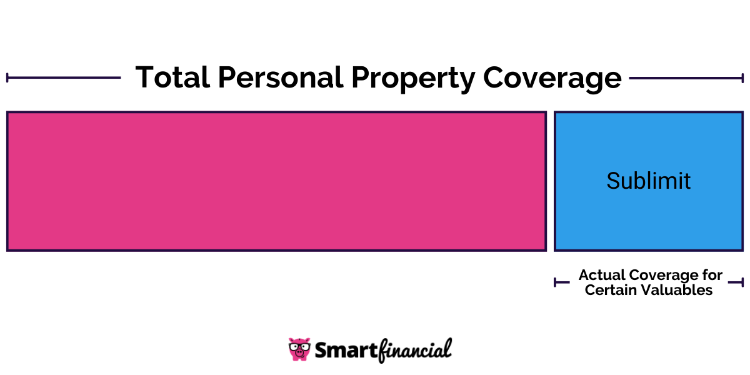
Similarly, many valuables are subject to sublimits under renters and homeowners insurance policies, meaning your insurer will only pay up to a certain amount that is lower than your overall personal property coverage limit after a covered loss, even if the actual value of the lost item is greater than the sublimit. For example, renters insurance policies from Lemonade will pay out no more than $1,500 for an insurance claim for stolen jewelry.[18] However, you may be able to raise the sublimits for specific items by getting a scheduled personal property coverage add-on.
Finally, you should keep in mind that insurance primarily covers sudden and unexpected losses rather than gradual damage. For this reason, appliances that are subject to wear and tear may not be insured if they cease to function due to extended use over the course of several years.
- Insurance quotes /
- Home /
- Household Items You Need To Insure
Dylan Tate is an insurance content expert for SmartFinancial with over 300 articles about home, auto, business, health and life insurance under his belt. He has over nine years of experience writing for online publications, primarily about gaming and esports. In the process, he has become an expert in search engine optimization, news reporting, feature writing and copy editing.


Get a Free Home Insurance Quote Online Now.
More on Home Insurance

Looking for Home Insurance?
Compare rates from dozens of companies in less than 3 minutes.