

How To Winterize Your Home: 15 Tips To Prepare for Colder Weather
 Written by Preston Micalizio Written by Preston Micalizio Preston MicalizioPreston Micalizio writes insurance content for SmartFinancial. He brings three years of professional experience writing ... Read more |  Edited by Richard Murphy Edited by Richard MurphyRichard MurphyRichard Murphy manages content on SmartFinancial's website. With a strong background in content strategy and copywriting... Read more |
 Editorial Standards
 SmartFinancial Offers Unbiased, Fact-based Information. Our fact-checked articles are intended to educate insurance shoppers so they can make the right buying decisions. Learn More
Home winterizing should begin in the fall, before the first frost, and should focus on crucial tasks such as checking for air drafts, cleaning gutters and servicing your HVAC system. These steps help keep your home comfortable, energy-efficient and safe throughout winter.
Keep reading for other tips on how to winterize your home and to learn whether homeowners insurance covers you for weather-related losses.
|
Key Takeaways
|


When Does the Winter Season Begin?
Officially, winter 2025 begins with the winter solstice on Dec. 21.[1] This marks the day with the shortest period of daylight and the longest night of the year in the Northern Hemisphere.
What Does Home Winterization Mean?
Home winterization is all about preparing your house for the cold by protecting it from harsh conditions, such as extreme temperatures, ice and hail. Not only does it help prevent costly weather damage, but it also keeps your home cozy and lowers your energy bills.
What Happens if Your Home Is Not Winterized?
If you do not winterize your house, you may see higher heating costs. Once the weather becomes freezing, potential leaks and water damage can occur as pipes freeze and burst. This lack of preparation could also result in discomfort from drafts and cold spots, health risks from mold growth and an increased likelihood of pest infestations.
If you fail to winterize your home when leaving for the winter, emergencies that could have otherwise been avoided if you had performed proper maintenance may occur while you’re out.
If a pipe bursts because it was not insulated, you could face substantial financial losses if you discover it only after returning from your winter trip.
When Is the Best Time To Winterize a Home?
The best time to winterize a house in the U.S. is during the fall, before the first frost and the onset of cold weather.[2] This allows homeowners to tackle winterization tasks more comfortably and avoid the difficulties of cold, snowy or icy weather.
In addition, some HVAC providers may offer an off-season discount during the fall if you buy a new HVAC model, enabling homeowners to prepare their homes for winter while saving on costs and avoiding last-minute rushes.[3]
15 Things You Need To Do To Winterize Your Home
Below, we've compiled a comprehensive checklist to help you prepare your home for winter.
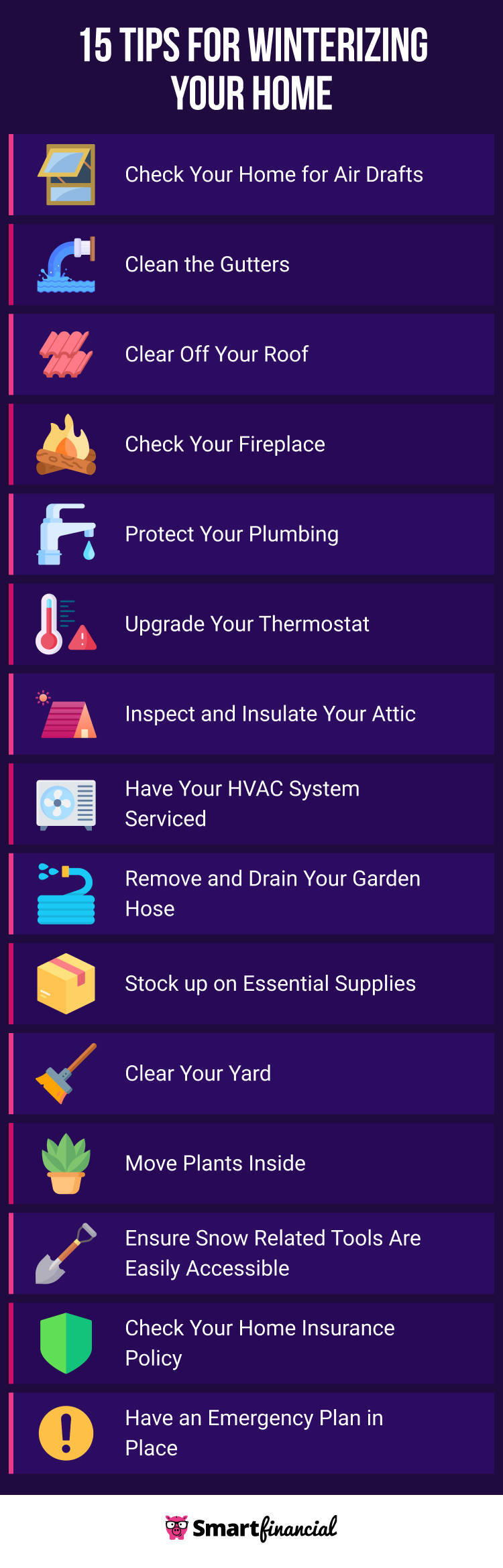
1. Check Your Home for Air Drafts
To identify air leaks in your doors, windows and attic, use the hand test for cold air or the candle or incense stick method. Watch for smoke movement in drafty spots. Depending on the size and location of the gap, you can seal these leak sources with weatherstripping, caulk or expanding foam insulation.
2. Clean the Gutters
Cleaning gutters before winter is vital to prevent water damage and ice dams. Blocked gutters can't divert water from melting snow or rain, increasing the risk of roof leaks and damage. Ensure gutters are clear and fastenings are secure and consider installing gutter guards to minimize debris buildup.
3. Clear Off Your Roof
Leaves and branches accumulating on your roof can cause moisture buildup, leading to leaks and damage over time. Hiring a professional for this, especially for steep roofs, is safer and more effective. Additionally, regular maintenance can extend your roof's lifespan.
4. Check Your Fireplace
Since fireplaces are often primary heat sources during the winter, you’ll want to ensure they’re well-maintained. Check for damage or wear, such as cracks or damper issues. Clean the chimney to prevent smoke backup or house fires.
For gas fireplaces, ensure the pilot light is functioning to prevent gas buildup and potential explosions. The hearth and surrounding area should also be clear of combustibles, and fireplace tools and safety screens must be maintained.
5. Protect Your Plumbing
Before winter arrives, you’ll want to insulate pipes in unheated areas, such as basements, attics and garages, especially those located along exterior walls. You should also regularly check and maintain your sump pump to ensure optimal efficiency, especially in areas prone to basement flooding.
Install an emergency pressure release valve to prevent pipes from bursting if they freeze. For homes with sprinklers, allow the system to drain properly and shut off the water. Additionally, be sure to know how to shut off the main water supply to minimize damage in the event of a burst pipe.
6. Upgrade Your Thermostat
While your standard thermostat helps regulate the temperature by turning off or reducing your heating or air conditioning, upgrading can make it easier to save on energy costs while keeping you comfortably warm in colder weather. During the winter, keeping the thermostat between 68 and 70 degrees and lowering it while you’re asleep or away from home, such as by 7 to 10 degrees, can help you save up to 10% on your heating costs.[4]
While you can do this manually, a programmable thermostat can automatically adjust these temperatures, allowing you to wake up to a warmer home rather than waiting for it to warm up after you wake up.[4]
7. Inspect and Insulate Your Attic
Ensure your attic insulation is at the recommended level, typically 10 to 14 inches of insulation material, such as fiberglass or cellulose, to prevent heat loss.[5] Check for and repair any damaged or missing insulation, as these areas can significantly reduce the effectiveness of your attic's thermal barrier.
Proper ventilation in the attic is also essential to prevent moisture accumulation and ice dam formation.
8. Have Your HVAC System Serviced
Servicing your HVAC system, including a furnace check, is essential before winter. A professional technician should inspect for wear and tear, cleanliness, and proper functioning to enhance energy efficiency and safety, while also reducing risks such as carbon monoxide leaks. Filter replacement and leak checks are crucial for optimal performance.
9. Remove and Drain Your Garden Hose
Water left in hoses can freeze and expand, cracking the hose and potentially damaging the outdoor faucet or connected plumbing inside the house. Before the first freeze, disconnect garden hoses from outdoor faucets, drain them thoroughly and store them in a dry place, such as a garage or shed. It's also advisable to shut off the water supply to outdoor faucets and drain the pipes to prevent residual water from freezing.
Homes with sprinkler systems should also be winterized by draining or blowing out the lines to remove any water that could freeze and damage the system. Installing insulated covers on outdoor faucets can provide additional protection against freezing temperatures.
10. Stock Up on Essential Supplies
Essential supplies include rock salt or ice melt to keep walkways and driveways clear of ice, as well as a reliable snow shovel or snow blower for efficient snow removal. It's also essential to have a stockpile of non-perishable food, bottled water, medication and warm blankets in case of power outages or severe weather conditions that might trap you indoors. Ensure you have a well-equipped first-aid kit, flashlights and extra batteries for emergency lighting.
An ample supply of firewood or pellets is essential for maintaining warmth in homes with fireplaces or wood stoves. Remember to plan for alternative heating sources, such as portable heaters, in case your primary heating source is unavailable. Regularly review and practice this plan for safety and readiness, and add to the list based on your region and family’s unique needs.
11. Clear Your Yard
Begin by removing debris, such as fallen branches, leaves and garden tools, which can become hidden hazards under snow. Store outdoor furniture, grills and other summer equipment in a shed or garage to protect them from the elements and prevent damage.
Clean and secure items on your deck or patio that cannot be stored indoors, such as large planters or furniture. It’s also essential to clear and prepare your patio and pathways for snow and ice removal. Ensure you have easy access to these areas for regular clearing throughout the winter.
12. Move Plants Inside
Identify plants in your garden that are not cold-hardy and prepare them for the indoor environment. Check them for pests and diseases to prevent infestations inside your home.
You can gradually acclimate plants to indoor conditions by placing them in a shaded area outdoors before transitioning them to a well-lit spot indoors. Once inside, consider each plant's specific needs for light, temperature and humidity and adjust their care accordingly if possible.
13. Ensure Snow-Related Tools Are Easily Accessible
Organize and place tools like snow shovels, snow blowers and ice scrapers in an easily reachable location, such as a garage or a shed near your home. This preparation allows for a quick response to snowfall, keeping driveways, walkways and entrances clear and safe. It's also a good idea to inspect these tools for any damage or wear and repair or replace them if necessary.
In addition to basic snow removal tools, keep a supply of rock salt or ice melt, along with a spreader, handy to treat icy surfaces and prevent slipping hazards. If you use a snow blower, ensure it's in good working condition and has enough fuel.
14. Check Your Home Insurance Policy
While most standard policies will cover you for losses caused by burst pipes, fires and collapse from sudden accumulation of snow on your roof, that may not be the case for all homes. For example, some older homes may have limited coverage, and insurance companies may exclude protection for the weight of snow or ice, as well as sudden tearing or freezing of your HVAC system. Winterizing your home becomes particularly important if you have such coverage exclusions.
Assess whether the coverage limits are sufficient in relation to the current value of your home and belongings. Additionally, consider flood insurance if your area is prone to flooding during the colder months.
15. Have an Emergency Plan in Place
Create an emergency plan that includes essential contacts, such as family, neighbors and emergency services, in case your home becomes suddenly uninhabitable, which may be the case if your roof collapses during a winter storm. Additionally, ensure your emergency kit is prepared and ready to use. Regularly review and practice this plan for safety and readiness.
Also, consider choosing a trusted local friend or neighbor for assistance in winter emergencies. This person can help with grocery shopping, snow clearing or transportation. Give them a spare key and inform them about essential items, such as medication or emergency supplies. Be prepared to offer reciprocal help if they need it.
Can I Save On Insurance by Winterizing My Home?
Insurance companies typically do not offer a winter insurance discount. However, several discounts can indirectly relate to winterizing your home, such as a smart home discount for installing a low-temperature sensor or green or safety features discounts for installing reinforced, energy-efficient windows to withstand winter winds.
Alternatively, you can save on homeowners insurance by shopping around. With SmartFinancial, you can fill out one questionnaire, and we’ll use your answers to match you with an insurance agent who can help you find the coverage you need. Get started with your free homeowners insurance quotes today.
- Insurance quotes /
- Home /
- How To Winterize Your Home
Preston Micalizio writes insurance content for SmartFinancial. He brings three years of professional experience writing in various industries, from higher education to e-commerce. He strives to engage with the audience, provide accurate reporting and make complex subjects easily digestible.


Get a Free Home Insurance Quote Online Now.
More on Home Insurance
Looking for Home Insurance?
Compare rates from dozens of companies in less than 3 minutes.