

Does Homeowners Insurance Cover Winter Storms?
 Written by Preston Micalizio Written by Preston Micalizio Preston MicalizioPreston Micalizio writes insurance content for SmartFinancial. He brings three years of professional experience writing ... Read more |  Edited by Dan Marticio Edited by Dan MarticioDan MarticioDan Marticio is the content manager at SmartFinancial and has written 150+ articles across multiple insurance verticals.... Read more |
 Editorial Standards
 SmartFinancial Offers Unbiased, Fact-based Information. Our fact-checked articles are intended to educate insurance shoppers so they can make the right buying decisions. Learn More
Homeowners insurance typically covers certain damages to your home’s structure and belongings caused by winter storms. However, not all types of damage are covered, like flooding from melted ice or mold from water damage, making it critical to know your policy's limits and reduce potential damage.
Keep reading to learn how winter storm coverage works, the steps to take when filing a claim and tips for preparing your home for the winter season.
|
Key Takeaways
|


What Types of Winter Storm Damage Is Covered by Home Insurance?
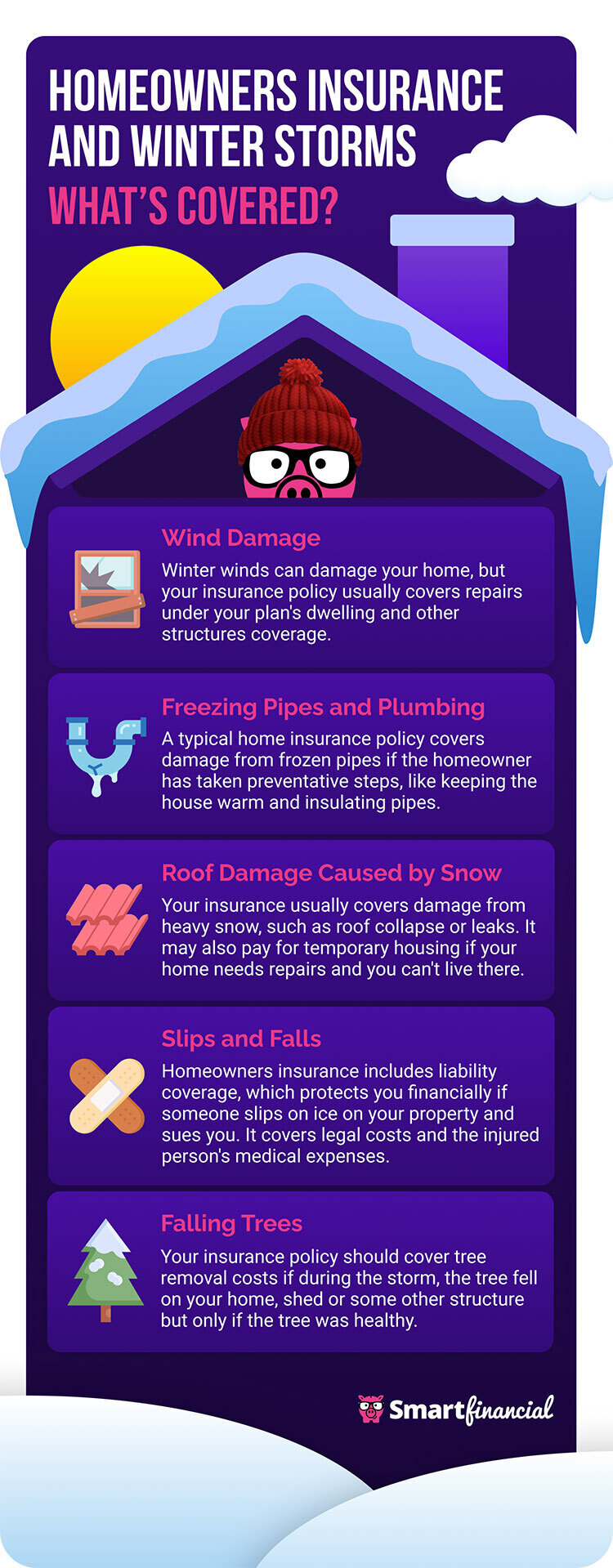
Heavy wind or snow damage will be protected by your homeowners insurance. Read our simple breakdowns for some common coverages included in home insurance for winter storms.
Wind Damage
Wind damage is a commonly covered peril included in a standard homeowners policy. In fact, 40.7% of claims in 2022 were filed due to wind and hail.[1]
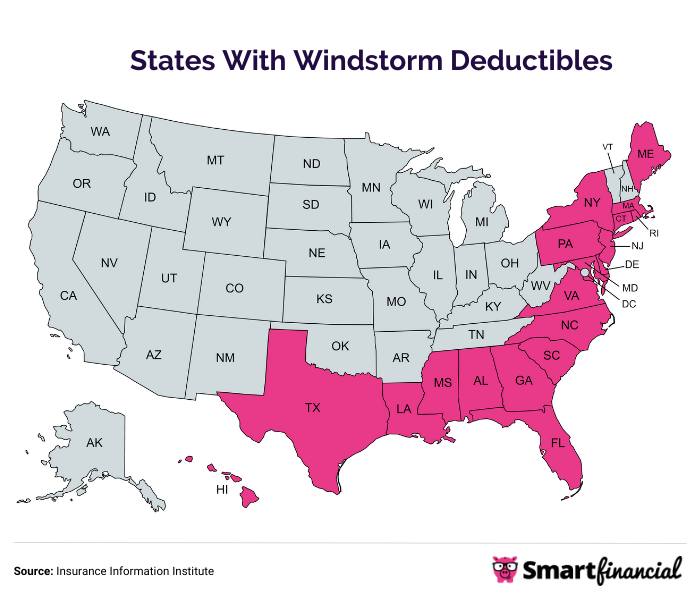
When severe weather brings fierce winds, they can tear off shingles, topple fences, fling debris through your windows and send blowing snow against your siding. Your policy typically covers the costs to repair these damages through your plan’s dwelling or other structures coverage. However, it's crucial to check if your policy has a specific windstorm deductible, which would require you to pay a separate deductible for wind and hail claims.
Frozen Pipes and Plumbing
A standard homeowners policy often includes coverage for damage from frozen plumbing, provided the homeowner has taken reasonable measures to prevent these occurrences, such as maintaining an adequate heating level or properly insulating the pipes. If a pipe does suddenly burst and sprays water on your belongings, you can rest easy knowing that any damaged furniture or other items are generally protected through the personal property coverage in your home insurance policy.
About 27% of home insurance claims filed in 2022 were due to water damage and freezing.[1]
Roof Damage Caused by Snow
Heavy snowfall can accumulate quickly, exerting significant weight on your home's roof and leading to potential collapse or water leakage. If heavy snow causes a collapse, your insurance policy typically covers the structural damage to your home, including the roof and the interior, as well as personal belongings inside your house.
Your homeowners policy may also provide loss of use coverage, which pays for temporary living spaces and associated expenses if your home is uninhabitable while being repaired. It's advisable to understand the specific snow load your roof can handle and whether your insurance considers the age and condition of your roof during claims. If you don’t maintain your roof, your insurance carrier may deny your claim should a collapse or leak occur.
Slips and Falls Due to Icy Conditions
Homeowners insurance policies include liability coverage, which can be a financial safeguard if a guest slips on ice on your property. This coverage can pay for the person’s medical bills and your legal defense fees if they sue you.
Fallen Trees
A severe winter storm can cause trees to fall, potentially damaging your home, garage or other structures. Your policy should cover the costs of repairing damage to your property as long as the tree was healthy and alive when it came down. Coverage typically includes the structure itself and may extend to cover personal property damaged by the fallen tree.
Some insurance companies may also cover the cost of healthy trees and shrubbery damaged due to a covered peril, including wind, as they can often contribute to property value. However, this coverage may be capped at 5% of the insurance amount of your dwelling for any one tree.[2]
Similarly, you should be covered if a branch falls on your property, but only if the tree was trimmed and maintained. In addition, the insurer may also cover the cost of removing the tree, but only if the winter storm completely uprooted the tree and fell on an insured structure, such as your house’s siding or shed. If your tree is uprooted but didn’t cause any damage to your insured property, you’ll likely be left covering the bill for debris removal outside of some cases where the tree is blocking your driveway or a handicap accessibility ramp.[2]
What Types of Winter Storm Damage Isn’t Covered?
Damage from naturally occurring flooding, a common aftermath of winter storms when snow and ice melt, is typically not covered under standard homeowners insurance policies. Flood insurance is a separate policy that homeowners must purchase through the National Flood Insurance Program (NFIP) or a private insurer. It should also be noted that floods can result in mold, and your homeowners policy won’t cover the mold cleanup.
Another common exclusion is for damages due to the homeowner's negligence. Insurance covers sudden, unforeseen events, and proper maintenance to prevent gradual deterioration is the homeowner’s responsibility. For example, pipes that burst after being frozen and ice dams on the roof may not be covered if the pipes and attic were not insulated beforehand.
Standard home insurance policies also don’t usually cover mudslides and avalanches, as they are typically classified under "earth movement," which requires a separate, often more expensive policy known as difference in conditions (DIC) insurance. You can get DIC insurance from a surplus lines insurer, which operates outside standard regulations and offers specialized property and casualty insurance unavailable in the regular market.
Tips To Prep Your Home for Winter Storms and Colder Weather
Preparing your home for freezing rain and high winds is a proactive step that can save you from future headaches and costly out-of-pocket repairs. Here are some tips to ensure your home is ready to withstand the winter perils:
- Insulate your attic, basement and any crawl spaces to help your home retain heat and prevent ice dams.
- Insulate your pipes to protect them from freezing and potentially bursting, especially those that run along exterior walls or through unheated spaces.
- Have a professional service your heating system at least once per year to ensure it's clean, working properly and not a carbon monoxide poisoning risk at least once per year.[3]
- Trim trees and remove dead branches so they don’t snap off and potentially damage your home or power lines. Remove dead trees entirely.
- Install storm windows and doors to add a layer of protection against freezing temperatures and reduce heating costs.
- Have an emergency kit ready with essentials like bottled water, non-perishable food, flashlights, batteries, blankets and a first-aid kit.
- Have a battery-powered radio to stay informed on power outages and emergencies, especially if communication services like the internet, television or cell service go out.
- If your home is prone to ice and snow melt damage, consider buying flood, mudslide, or avalanche insurance.
- Listen for winter storm warnings and follow instructions if there are any emergencies.
- Double-check your fire alarms and other smart home devices, especially if you use your fireplace.
How To File a Home Insurance Claim for Winter Storm Damage
Filing a home insurance claim for winter storm damage can be straightforward if you follow the proper steps. Here’s how to navigate the claims process effectively:
- Document the damage: Take extensive photographs and video when it is safe. This visual evidence is crucial for your insurance company to understand the extent of the damage.
- Make temporary repairs: This may include covering broken windows with plastic sheeting or placing a tarp over a damaged roof. Keep receipts for any materials you purchase, as they may be reimbursed under your policy.
- Review your policy: Understand your coverage, deductibles and specific time limits for filing claims. Knowing your policy helps set expectations and prepares you for discussions with your insurance adjuster.
- File your claim promptly: Many insurers have a 24-hour claims service. Be prepared to provide details about the damage and your documentation.
- Prepare for the adjuster's visit: Have your list of damaged or lost items ready, along with any receipts, photos or videos. Having a copy of your policy and any home inventories you've compiled is also helpful.
- Keep a claims diary: This should include all conversations with your insurance company, including dates, times, names and summaries of discussions. Track your claim's progress and any expenses incurred along the way.
- Be patient but persistent: The claims process can be time-consuming, especially after widespread damage caused by a winter storm in your neighborhood. Stay in regular communication with your insurer, but be prepared for the process to take longer than usual due to the high volume of claims.
- Accept the settlement: After investigating the claim, your adjuster will offer a settlement amount. After accepting it, you can use the funds to make repairs to your home or replace damaged items.
- Insurance quotes /
- Home /
- Winter Storm Insurance
Preston Micalizio writes insurance content for SmartFinancial. He brings three years of professional experience writing in various industries, from higher education to e-commerce. He strives to engage with the audience, provide accurate reporting and make complex subjects easily digestible.


Get a Free Home Insurance Quote Online Now.
More on Home Insurance

Looking for Home Insurance?
Compare rates from dozens of companies in less than 3 minutes.