

7 Best Ways To Save On Car Insurance for People Who Don’t Drive Often
 Written by Preston Micalizio Written by Preston Micalizio Preston MicalizioPreston Micalizio writes insurance content for SmartFinancial. He brings three years of professional experience writing ... Read more |  Edited by Richard Murphy Edited by Richard MurphyRichard MurphyRichard Murphy manages content on SmartFinancial's website. With a strong background in content strategy and copywriting... Read more |
 Editorial Standards
 SmartFinancial Offers Unbiased, Fact-based Information. Our fact-checked articles are intended to educate insurance shoppers so they can make the right buying decisions. Learn More
Several types of car insurance for low-use vehicles, such as pay-per-mile or usage-based insurance, can help you save if you don’t drive very often. You can also take advantage of various discounts or adjust your coverage amounts or deductibles to help lower your auto insurance premiums.
Keep reading to learn more tips for reducing car insurance costs when you maintain low mileage on your car.
|
Key Takeaways
|


Can I Reduce the Price of My Car Insurance if I Drive Less?
Reducing the amount you drive can result in a lower car insurance premium. Mileage is often a key factor in insurance companies determining rates — the more time you spend on the road, the more likely you are to get in an accident.[1] For example, if you recently changed job roles and will begin working from home, you may be able to get lower auto insurance costs since you no longer have a long driving commute to and from the office.
Insurance companies base their rates on how likely you are to file a claim. Since reduced driving time means fewer chances to get into accidents, low vehicle usage may result in lower premiums. As we’ll discuss later, other options may also be available — outside of traditional auto insurance policies — to help lower your car insurance rates if you drive infrequently.
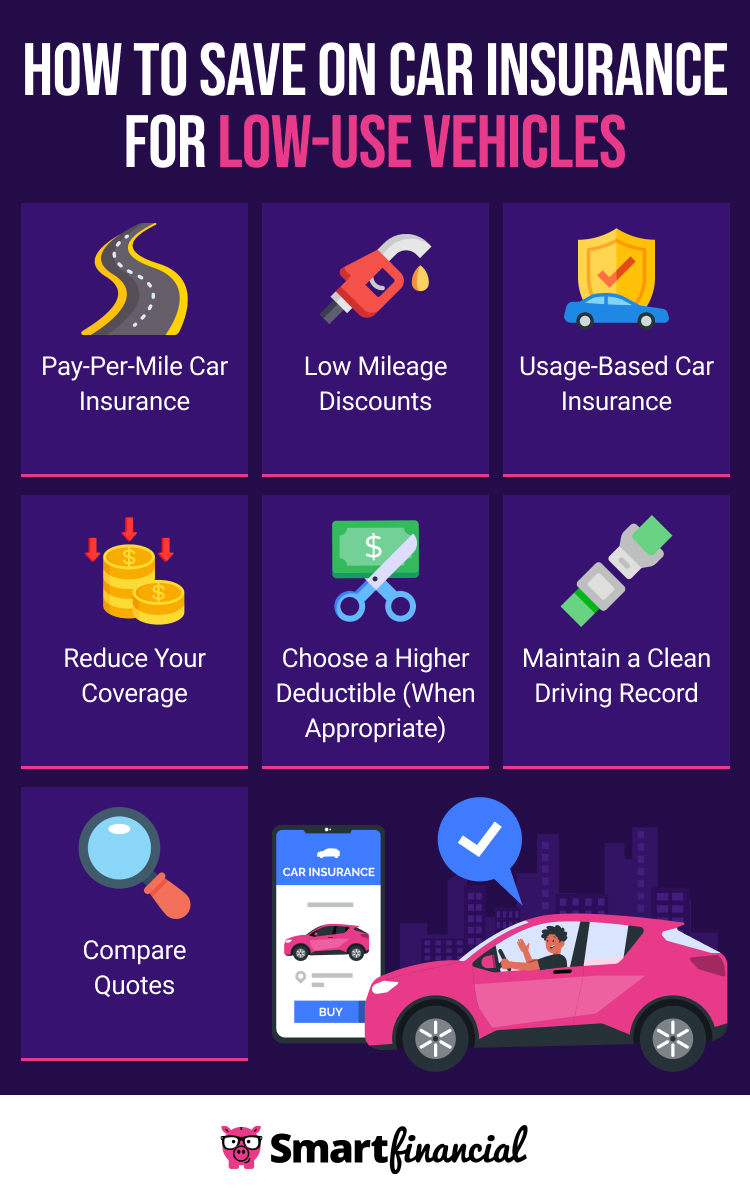
How To Save On Car Insurance for Low-Use Vehicles
Below, we’ll cover a few ways to save on your auto insurance rates if you have low vehicle use.
1. Pay-Per-Mile Car Insurance
Pay-per-mile car insurance offers flexible rates based on the number of miles driven instead of blanket coverage for all driving you do. Typically, rates consist of a base fee and a fee for each mile driven. For example, Nationwide’s pay-per-mile program has a base rate of $60 and a variable rate of 7 cents for every mile driven each month.[2]
Mileage is usually tracked using a telematics device, which sends data wirelessly to your insurer. However, some companies that don’t use telematics devices may require you to submit a picture of your odometer instead.
2. Low-Mileage Discounts
Some companies may offer low-mileage discounts for those who keep their mileage below a certain annual threshold. For example, American Family policyholders who drive fewer than 8,000 miles per year may save up to 25% on their auto insurance rates.[3] Keep in mind, this discount may only be available upon policy renewal instead of immediately upon purchasing the policy.
It should be noted that eligibility requirements and low-mileage discount amounts can vary by insurer.
3. Usage-Based Car Insurance
Usage-based car insurance (UBI) factors your driving habits into your premium, often using telematics to track your behavior. These programs consider your mileage along with other data points — such as your speed, breaking patterns and the time of day you drive. Telematics data is typically collected through a specialized device or a smartphone app that stays active while you drive, depending on the insurer.
Premiums for UBI programs are often adjusted regularly based on updated information, so you may see your rates fluctuate from month to month based on how much or little you use your car, as well as due to the driving behaviors you exhibit. However, savings may vary among insurers.
4. Reducing Your Coverage
Greater coverage limits may be unnecessary depending on how much you drive, as the added protection doesn’t help you much if you rarely use your vehicle. Depending on your state’s insurance requirements and current coverage, you may be able to lower your limits.
Since a lower coverage amount reduces what your insurer would potentially need to cover after an accident, it may help lower your rates. However, doing so risks increased out-of-pocket payments if you total someone’s expensive car, no matter how little you drive.
You may also lower your premium by removing unnecessary auto insurance endorsements and only maintaining minimum car insurance based on state laws. For example, unless you’re leasing your car, you can remove coverages such as collision, comprehensive or roadside assistance coverage to reduce overall costs. Keep in mind that, without these types of insurance, you would be left paying any out-of-pocket expenses for related claims.
5. Choosing a Higher Deductible (When Appropriate)
You can often lower your auto insurance premium by increasing your deductible — the amount you pay before your insurer covers the rest of a covered claim. Your deductible represents your share of the financial responsibility when filing a claim. When you take more of the financial burden off of your insurer, the company will often lower your premiums in response.
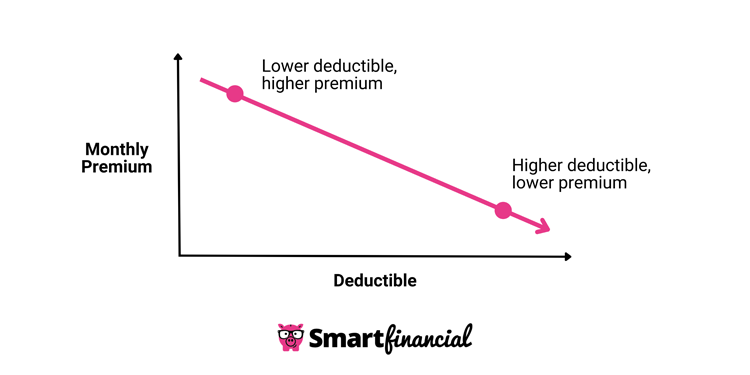
Keep in mind that you’ll likely need to pay your deductible for each claim you make. For example, if you get into multiple car accidents within the same month, you’ll need to file a claim and pay a separate deductible for each claim. Additionally, if your claim amount is lower than your deductible, you likely need to pay all your costs out of pocket.
6. Maintaining a Clean Driving Record
Maintaining a clean driving record by avoiding traffic tickets, accidents and other activities added to your motor vehicle report (MVR) can help reduce your insurance rates through discounts. Insurance companies offer good driver discounts for those who maintain a clean driving record for a specific period — as determined by individual insurers. For example, Travelers offers a safe driver discount for those who maintain a clean record for three to five years.[4]
7. Comparing Quotes
Comparing quotes can allow you to find better deals on your auto insurance rates. Try to gather quotes from three to five different insurers to get a good range of options. You’ll likely need to provide information on your car usage for underwriting purposes — such as your mileage, driving history and vehicle type — along with personal information, like your age, marital status and gender.
The quote-gathering process can be time-consuming, as you’ll likely need to request quotes individually from each insurer. Consider using an insurance marketplace like SmartFinancial to help speed up the process. After answering a brief questionnaire, we’ll connect you with a licensed insurance agent who can help you find the best auto insurance for your needs. Click here for a free car insurance quote today!
- Insurance quotes /
- Auto /
- Car Insurance For Low Use Vehicles
Preston Micalizio writes insurance content for SmartFinancial. He brings three years of professional experience writing in various industries, from higher education to e-commerce. He strives to engage with the audience, provide accurate reporting and make complex subjects easily digestible.


Get a Free Auto Insurance Quote Online Now.
More on Auto Insurance

Looking for Auto Insurance?
Compare rates from dozens of companies in less than 3 minutes.