

Is Daylight Saving the Worst Time To Drive?
 Written by Preston Micalizio Written by Preston Micalizio Preston MicalizioPreston Micalizio writes insurance content for SmartFinancial. He brings three years of professional experience writing ... Read more |  Edited by Richard Murphy Edited by Richard MurphyRichard MurphyRichard Murphy manages content on SmartFinancial's website. With a strong background in content strategy and copywriting... Read more |
 Editorial Standards
 SmartFinancial Offers Unbiased, Fact-based Information. Our fact-checked articles are intended to educate insurance shoppers so they can make the right buying decisions. Learn More
While summer and early fall are the most dangerous parts of the year for drivers, there is also an increased risk of traffic accidents associated with daylight saving time driving in the spring.[1][2] As a result, you should adapt your driving habits for a little while after the clock springs forward each year.
Keep reading for more information on driving during daylight savings time, including why it can be dangerous and how a crash could affect your car insurance rates.
|
Key Takeaways
|


What Is Daylight Saving Time?
Daylight saving time is the period when clocks are moved forward one hour relative to standard time used throughout the rest of the year. This change occurs during the summer months to allow people to better use daylight in the evenings. During the fall, clocks are then returned to standard time, allowing for better use of daylight hours during winter mornings.[3]
When Is Daylight Saving Time?
In 2026, daylight saving time begins on March 8 and ends on November 1.[3]
Why Should You Avoid Daylight Savings Time Driving?
A 2020 study found that there is a 6% increase in deadly car accident risk immediately following the transition into daylight saving time each spring, accounting for nearly 30 fatal accidents throughout the United States each year that may not have happened if not for the time change.[2]
It’s worth noting that the increased crash risk typically wanes during the week following the time change, after which driving conditions should return to normal for the overwhelming majority of drivers during daylight saving time.[2]
Read below for an overview of some of the characteristics of the first week of daylight saving time that may explain the increased crash risk that drivers encounter during this time frame and why it’s important for you to practice safer driving habits.
It’s Darker Early in the Morning
The greatest increase in fatal collision risk following the start of daylight saving time occurs in the early morning between 6 a.m. and 8 a.m., which could be attributed in part to the fact that people have not yet adjusted to driving in the dark to get to work during the days immediately after daylight saving time begins.[2]
The Sun Is Angled Differently in the Morning
If you’re on the road close to 8 a.m., you may instead find driving after daylight saving time more difficult due to the angle of the sun. Since the sun will rise nearly an hour later on the Monday after the switch to daylight saving time than on the Monday before the switch, the sun could be at a position that makes it more likely to obscure your vision, especially if you have to drive east to get to work in the morning.
For example, before daylight saving time, the sun may be high enough in the sky for you to block it with your car’s sun visor by the time you hit the road. However, once daylight saving time begins, the sun may be just above the horizon as you drive to work, making it more likely that sunlight will block your vision and put you at a greater risk of being involved in a traffic accident.
Drivers Might Be Drowsy Due to the Time Change
The greatest contributor to fatal car accidents during daylight saving time may be the loss of an hour of sleep. It’s estimated that 6% to 11% of police-reported motor vehicle crashes and 16% to 21% of fatal crashes are caused by drowsy drivers.[4]
More Animals on the Road
Although deer strikes become less common after daylight saving time begins, spring migration patterns still increase wildlife activity overall. Migration and related activities can therefore increase the risk of vehicle-animal collisions when driving through areas with a high deer population.[5][6]
What Are the Risks of Driving While Drowsy?
Drowsy driving is associated with a high number of car crashes each year. For example, at least 693 people died in 2022 as a result of car crashes where drowsiness was confirmed to be a contributing factor.[7] Fatigue can have the following impacts on your body, potentially making you more susceptible to various types of crashes:
- Harder time paying attention to the road: For example, you may not notice a distracted student walking into the street and accidentally strike them.
- Slower reaction time: For example, you may be more likely to rear-end another car if you don’t react to the driver in front of you slowing down quickly enough to brake in time.
- Inhibited decision-making abilities: For example, if you notice a fallen tree branch in the road but are not thinking clearly at the moment, you might swerve your vehicle and end up crashing into a ditch when you could have just as easily avoided the branch by slowing down and driving slightly to the side of the road.
How Can an Accident During Daylight Savings Time Impact Your Insurance?
Your car insurance company may raise your auto insurance premiums after you get into an accident, especially if you were the at-fault driver. After a single accident, your monthly premiums could rise by as little as $10 or as much as $800 or more, depending on factors like the accident’s severity and whether your insurer offers accident forgiveness or a similar benefit.[8] An accident during daylight savings time driving can therefore have financial consequences that extend well beyond the initial crash.
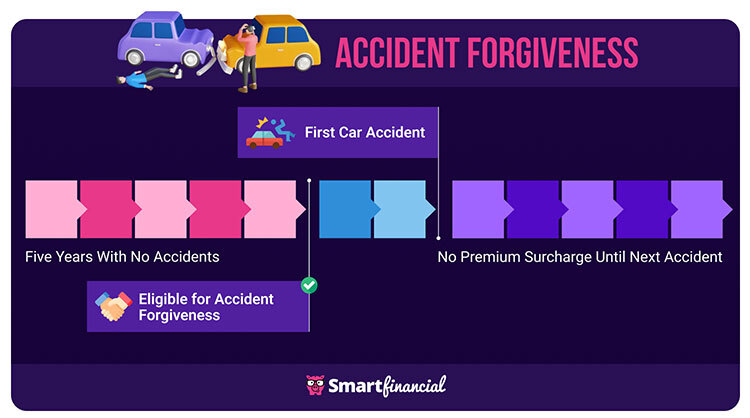
Traffic accidents will usually impact your insurance rates for three to five years.[8] Of course, your premiums may continue increasing if you are involved in additional accidents. If you have several accidents within a few years, your insurance company could even drop you, and you may have to shop for nonstandard insurance from high-risk car insurance carriers.
How To Save On Insurance in Time for Daylight Saving
If your primary concern is saving money on car insurance, keep an eye out for potential discounts as you shop around. For example, many auto insurance companies will offer you lower rates if you have gone an extended period without having to file a claim or have installed anti-theft devices in your vehicle.
As you prepare for daylight saving time, you may want to shop around by comparing quotes from three to five insurance companies to ensure you are getting the best deal on the coverage you need. To get a car insurance quote from any one company, you will need to provide the insurer with personal details, such as your driving record. You’ll likely also need to give information about your vehicle, such as its make and model.
You can get quotes from multiple insurance providers quickly by going through a marketplace platform like SmartFinancial. All you have to do is answer a few questions about your coverage needs and budget and we’ll connect you with agents who can help you find policies that suit your requirements. Click here if you’d like to talk to an agent about getting a free auto insurance quote today.
- Insurance quotes /
- Auto /
- Daylight Savings Driving
Preston Micalizio writes insurance content for SmartFinancial. He brings three years of professional experience writing in various industries, from higher education to e-commerce. He strives to engage with the audience, provide accurate reporting and make complex subjects easily digestible.


Get a Free Auto Insurance Quote Online Now.
More on Auto Insurance
Looking for Auto Insurance?
Compare rates from dozens of companies in less than 3 minutes.