

The State of Car Insurance 2026
 Written by Dylan Tate Written by Dylan Tate Dylan TateDylan Tate is an insurance content expert for SmartFinancial with over 300 articles about home, auto, business, health a... Read more |  Edited by Richard Murphy Edited by Richard MurphyRichard MurphyRichard Murphy manages content on SmartFinancial's website. With a strong background in content strategy and copywriting... Read more |
 Editorial Standards
 SmartFinancial Offers Unbiased, Fact-based Information. Our fact-checked articles are intended to educate insurance shoppers so they can make the right buying decisions. Learn More
Average full coverage car insurance rates went up by nearly 10% over the course of 2025 and may continue to increase going into 2026 due to factors like inflation and climate change. Auto insurance price hikes may be especially pronounced in states with high rates of car accidents, thefts, uninsured drivers and impaired driving incidents.
Keep reading to learn more about the state of car insurance in 2026, including what factors may be driving premiums up in your area and what steps you can take to mitigate rising costs.
|
Key Takeaways
|


2026 Car Insurance Rates
The average cost of car insurance in the United States rose from $2,458 per year in December 2024 to $2,697 per year in December 2025 — a 9.7% increase.[1][2] While various external factors may influence your car insurance rates in 2026, remember that they also depend on your personal characteristics, such as your driving record, the type of car you drive and, in some cases, your credit score.
2026 Car Insurance Rates by State
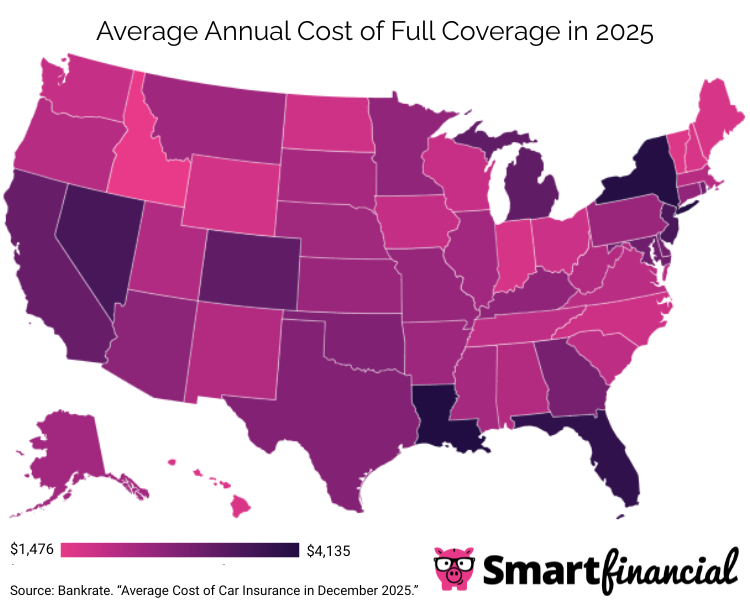
In the upcoming table, you’ll see the average cost of full coverage in each state as of December 2025:[2]
|
State/District |
Average Annual Full Coverage Premium |
|
Alabama |
$2,155 |
|
Alaska |
$2,378 |
|
Arizona |
$2,644 |
|
Arkansas |
$2,432 |
|
California |
$3,119 |
|
Colorado |
$3,203 |
|
Connecticut |
$2,753 |
|
Delaware |
$2,970 |
|
Florida |
$3,884 |
|
Georgia |
$2,909 |
|
Hawaii |
$1,678 |
|
Idaho |
$1,476 |
|
Illinois |
$2,376 |
|
Indiana |
$1,709 |
|
Iowa |
$1,932 |
|
Kansas |
$2,477 |
|
Kentucky |
$2,599 |
|
Louisiana |
$4,135 |
|
Maine |
$1,687 |
|
Maryland |
$3,039 |
|
Massachusetts |
$2,096 |
|
Michigan |
$3,207 |
|
Minnesota |
$2,577 |
|
Mississippi |
$2,325 |
|
Missouri |
$2,516 |
|
Montana |
$2,395 |
|
Nebraska |
$2,393 |
|
Nevada |
$3,568 |
|
New Hampshire |
$1,694 |
|
New Jersey |
$3,524 |
|
New Mexico |
$2,158 |
|
New York |
$4,090 |
|
North Carolina |
$1,831 |
|
North Dakota |
$1,801 |
|
Ohio |
$1,842 |
|
Oklahoma |
$2,797 |
|
Oregon |
$2,121 |
|
Pennsylvania |
$2,472 |
|
Rhode Island |
$2,991 |
|
South Carolina |
$2,023 |
|
South Dakota |
$2,300 |
|
Tennessee |
$2,004 |
|
Texas |
$2,751 |
|
Utah |
$2,188 |
|
Vermont |
$1,610 |
|
Virginia |
$2,070 |
|
Washington |
$1,919 |
|
Washington, D.C. |
$2,873 |
|
West Virginia |
$2,162 |
|
Wisconsin |
$1,902 |
|
Wyoming |
$1,760 |
Which States Have Seen the Biggest Rate Hikes?
New Jersey experienced the biggest rate hike in the United States in 2025, with a 22.8% increase in average full coverage car insurance premium costs from December 2024 to December 2025. Other states with significant price increases include Ohio (20.2%) and Maryland (15.2%). Conversely, 12 states saw premiums decrease over the course of 2025, with Missouri drivers enjoying the biggest savings — a 22.2% price drop.[1][2]
New Liability Limit Requirements
New Jersey is raising its minimum liability insurance coverage limits in 2026, which will lead to higher prices for drivers who currently have minimum coverage. Previously, New Jersey enforced 25/50/25 limits — meaning $25,000 in bodily injury liability coverage per person, $50,000 in bodily injury liability coverage per accident and $25,000 in property damage liability coverage. Beginning on Jan. 1, 2026, the minimum limits rose to 35/70/25.[3]
Meanwhile, North Carolina raised its minimum liability coverage limits from 30/60/25 to 50/100/50 on July 1, 2025. As a result, if you live in North Carolina and have a 12-month minimum coverage car insurance policy that you purchased before the new limits took effect, you should see your coverage limits and premiums go up when your policy comes up for renewal in the first half of 2026.[4]
Factors Causing Increases in Premiums in 2026
Various external factors can drive increases in car insurance premiums over time. Check out the following sections to learn about the market forces that may impact your insurance costs in 2026.
Crash Severity and Fatalities
Throughout the United States, the rate of fatal car accidents dropped by 8.6% in the first half of 2025 — which is good news for drivers and insurance companies alike. That said, some states individually experienced an increase in traffic fatalities; people living in areas with high rates of serious car crashes can expect to pay higher-than-average insurance premiums.[5]
Repair Costs
Car repair costs rose by 9.7% from November 2024 to November 2025 — more than triple the overall inflation rate — raising repair-related payouts for insurance companies.[6] Most parts used in auto repairs are imported, but these parts became more expensive after tariffs took effect in May 2025.[7] Rising repair costs may be further exacerbated if you have an electric vehicle or other car that requires specialized labor to fix advanced technology.
Inflation
Cars were more expensive to buy in 2025, meaning insurers had to account for higher replacement costs after accident-related car insurance claims. Specifically, inflation rose by 0.9% for new cars, 0.6% for new trucks and 3.6% for used vehicles. Furthermore, there was a 2.3% increase in the cost of funeral expenses, which may be covered by the bodily injury liability coverage portion of a car insurance policy in the event of a fatal wreck.[6]
Car Theft
Car theft rates dropped by 23% across the United States from the first half of 2024 to the first half of 2025 — which may promote insurance savings, since it means insurers are less likely to have to pay out comprehensive insurance claims related to vehicle thefts. Nevertheless, drivers in Alaska should be on the lookout for rising premiums because it was the only state that experienced a higher rate of car thefts in early 2025.[8]
Severe Weather
In general, extreme weather events are becoming more common over time, prompting an increase in the number of comprehensive insurance claims for storm damage to vehicles and collision insurance claims for weather-related car accidents. For example, in Missouri alone, insurance companies paid out an estimated $300 million toward catastrophic weather claims for nonresidential property insurance — including auto insurance — policyholders in 2025.[9]
Medical Costs
Medical inflation affects car insurance prices because medical bills may be covered by bodily injury liability insurance, personal injury protection or medical payments coverage after a crash. During 2025, there was a 1.1% increase in the cost of medical supplies, equipment and drugs. In addition, there was a 3.3% increase in the overall cost of health care services — including a 5.7% increase in the cost of hospital services.[6]
Uninsured and Underinsured Motorists
Uninsured driver rates are generally on the rise in most states; in many cases, drivers who do have insurance don’t have enough to fully cover the costs associated with an accident. In total, one-third of drivers in the United States were either uninsured or underinsured from 2017 to 2023.[10] This raises the risk that insurers will have to pay out bodily injury or property damage claims on uninsured and underinsured motorist coverage policies, leading to higher premiums.
Distracted Drivers
At its most severe, phone distraction can raise a driver’s chances of getting into a car accident by 240%. As a result, the risk of getting into a distracted driving collision is on the rise, as one study found that drivers use their phone at some point during one-third of all trips, and active phone use makes up 2.4% of the total amount of time drivers spend behind the wheel.[11]
Driving Under the Influence
Drunk driving rates trended upward following the COVID-19 pandemic, placing both impaired drivers and others on the road with them at greater risk of getting into an accident that results in serious bodily injury or death.[12] The DUI rate may have a particularly significant impact on insurance costs in Hawaii, where it’s estimated that more than half of drivers killed in car crashes in 2023 had a blood alcohol content above the legal limit at the time of the collision.[13]
Lawsuits
The average cost of legal services rose by 8.3% throughout 2025, and attorney fees are expected to keep increasing going into 2026.[14] This can lead to more costs for your insurance company whenever there is a lawsuit covered by your bodily injury or property damage liability insurance — even if the judgment or settlement ultimately paid to the injured party isn’t particularly high.
Cyberattacks
As vehicles become more technologically advanced, they also become more susceptible to hacking. A 2025 study noted that data breaches and ransomware attacks targeting the automotive industry were particularly prevalent throughout 2024. Additionally, 92% of automotive cybersecurity attacks in 2024 were carried out remotely.[15]
How To Get Lower Car Insurance Rates in 2026
If your car insurance rates go up in 2026, you can take steps like these to save money on coverage:
- Ask about discounts: Insurance companies often offer discounts to drivers who practice safe driving habits, go an extended period of time without filing any claims, maintain good grades in school or bundle their home and auto insurance policies, among other things. Ask your insurance carrier whether you qualify for any discounts that aren’t currently being applied to your policy.
- Get usage-based insurance: If you work from home or otherwise drive infrequently, you may be able to secure lower premiums by opting into a telematics or pay-per-mile auto insurance program. Keep in mind that this may instead raise your premiums if you drive a lot.
- Schedule an insurance review: It’s a good idea to conduct an annual insurance review to determine whether your current policy is providing adequate coverage at an affordable price and what savings options may be available. For example, it may make sense to drop your comprehensive and collision insurance if you have an older car that is worth less than 10 times the cost of coverage.[16]
- Take a defensive driving course: Taking a state-approved accident prevention course may lower your odds of getting into a car wreck and make you eligible for cheaper car insurance rates. That said, eligibility for defensive driving discounts may be limited. For example, Nationwide’s defensive driving discount is only available for people over the age of 55 who have gone at least 35 months without an at-fault accident.[17]
- Improve your credit: Insurance providers may use a credit-based insurance score to calculate your rates, so improving your credit may lead to insurance savings. However, the use of credit as a rating factor is restricted in California, Hawaii, Maryland, Massachusetts, Michigan, Oregon and Utah.[18]
- Buy a safer car: Since insurance companies may consider the safety record of your vehicle when determining your premiums, it may be worthwhile to switch to a different brand if you currently drive a car with a high rate of accidents.
- Install an anti-theft device: Installing a car alarm or a similar anti-theft device can lower your exposure to theft, making you less likely to file a claim and potentially enabling you to qualify for a discount.
- Shop around: Car insurance companies have their own unique methods for setting prices, so you need to compare quotes from multiple carriers to figure out the best available rate for your circumstances and coverage needs. You can compare auto insurance quotes for free through SmartFinancial!
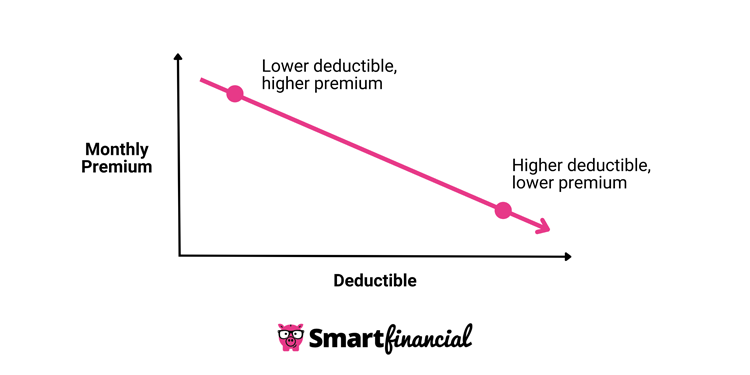
- Raise your deductible: Higher deductibles generally correspond to lower premiums, meaning you may want to consider raising your selected deductible amount — as long as you have enough money saved up to cover the higher deductible in the event of a claim.
- Insurance quotes /
- Auto /
- State Of Car Insurance
Dylan Tate is an insurance content expert for SmartFinancial with over 300 articles about home, auto, business, health and life insurance under his belt. He has over nine years of experience writing for online publications, primarily about gaming and esports. In the process, he has become an expert in search engine optimization, news reporting, feature writing and copy editing.


Get a Free Auto Insurance Quote Online Now.
More on Auto Insurance

Looking for Auto Insurance?
Compare rates from dozens of companies in less than 3 minutes.