

Texas Home Insurance Quotes and Coverage
 Written by Dylan Tate Written by Dylan Tate Dylan TateDylan Tate is an insurance content expert for SmartFinancial with over 300 articles about home, auto, business, health a... Read more |  Edited by Richard Murphy Edited by Richard MurphyRichard MurphyRichard Murphy manages content on SmartFinancial's website. With a strong background in content strategy and copywriting... Read more |
 Editorial Standards
 SmartFinancial Offers Unbiased, Fact-based Information. Our fact-checked articles are intended to educate insurance shoppers so they can make the right buying decisions. Learn More
With average premiums exceeding $4,000 per year, Texas is an expensive state for homeowners insurance due to factors like inflation and its high exposure to natural disasters, such as floods and tornadoes. Shopping around and asking about discounts can help you save on Texas home insurance, but you may need to turn to a surplus lines carrier or an insurer of last resort if you can’t find affordable coverage from a standard insurance company.
Keep reading to learn the ins and outs of home insurance in Texas, including what coverage options are available and what steps you can take to make your policy cheaper.
|
Key Takeaways
|


Types of Home Insurance To Consider in Texas
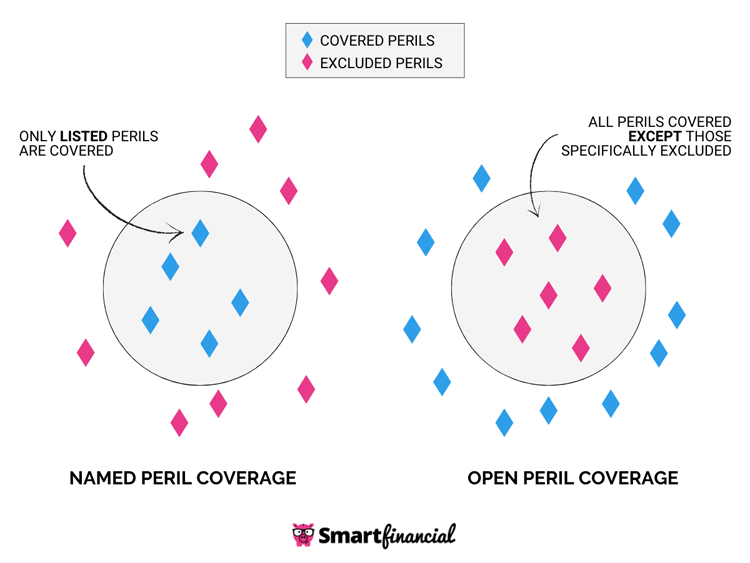
In Texas, insurers may use different names to refer to the most common types of home insurance policy forms, which differ when it comes to the level of coverage they provide. See the following table for an overview of the major types of homeowners coverage — along with what each policy form is called outside of Texas.[1]
|
Texas Policy Form |
Other Name |
Description |
|---|---|---|
|
HO-A |
Provides named peril coverage for your home and belongings |
|
|
HO-A+ |
Provides named peril coverage for your home and belongings but covers more perils than an HO-A policy |
|
|
HO-B |
Provides open peril coverage for your home and named peril coverage for your belongings |
|
|
HO-C |
Provides open peril coverage for your home and belongings |
What Does a Standard Home Insurance Policy Cover in Texas?
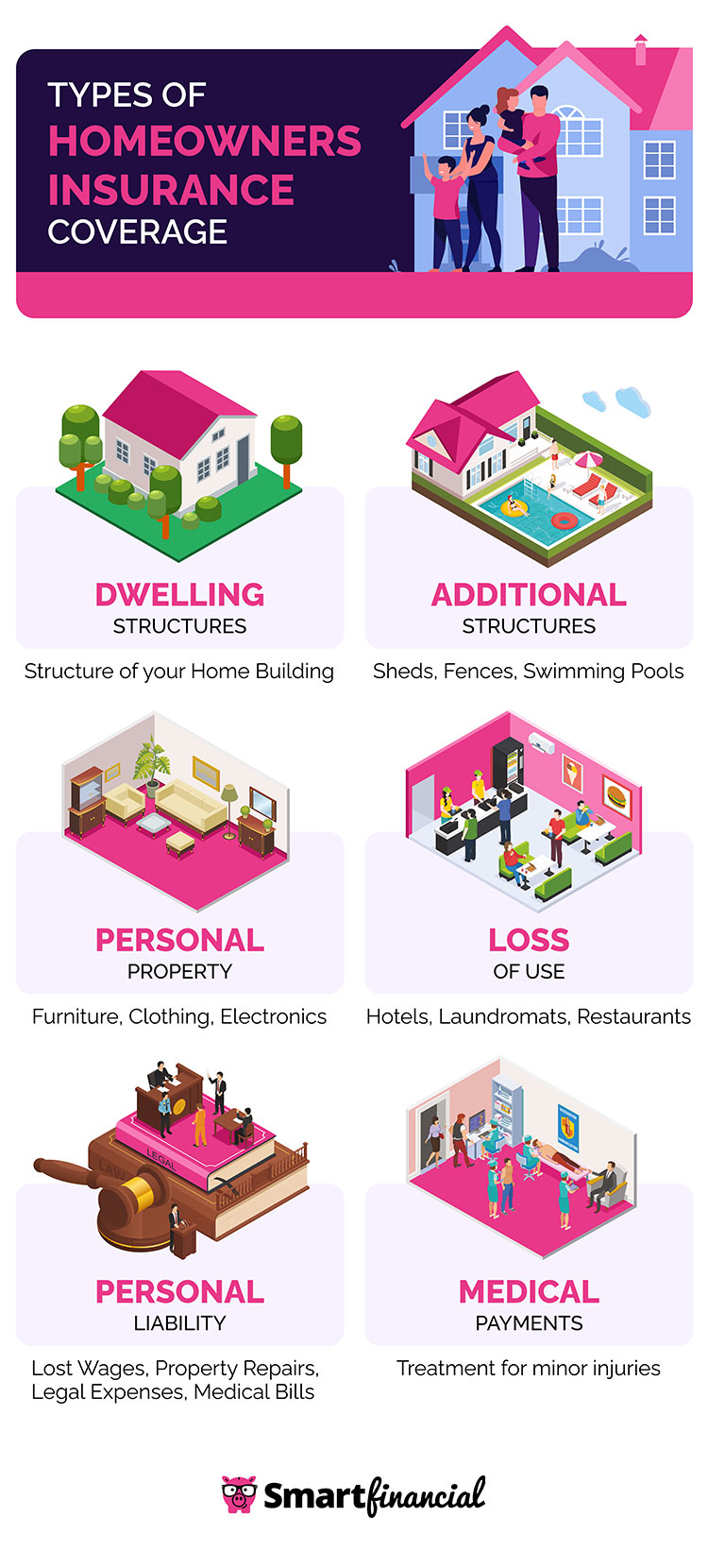
Standard home insurance policies include the following six coverage types in Texas:
- Dwelling: Dwelling coverage insures the physical structure of your house. It also covers any structures that are directly connected to your home, such as a patio or garage.
- Other structures: Other structures coverage can reimburse you for damage to freestanding structures on your property besides your home, potentially including outbuildings, fences and swimming pools. Your other structures insurance typically covers the same perils as your dwelling coverage.
- Personal property: Personal property insurance covers damage to the items you own, such as furniture, electronics and clothes. Coverage often applies to possessions you store outside of your home, though you may have a lower sublimit for off-premises claims.
- Loss of use: After a covered peril renders your home uninhabitable, you can lean on your loss of use coverage to pay for temporary additional living expenses, like hotel stays or restaurant meals.
- Personal liability: If you are held liable for someone’s injury or damage to their property, personal liability insurance can cover expenses like hospital bills, lost wages, funeral costs, property repairs and legal fees.
- Medical payments: Medical payments insurance can cover medical expenses for someone who gets hurt on your property, even if you aren’t held liable for their injury. However, it doesn’t cover legal fees and generally has a lower coverage limit than personal liability coverage.
A standard homeowners policy insures your home against any source of damage that isn’t expressly named in the policy as an exclusion. Conversely, your belongings are typically only insured against perils that are specifically named in the policy — generally including the following 16 perils:
|
Vandalism or malicious mischief |
|
|
Windstorm or hail |
|
|
Explosion |
Volcanic eruption |
|
Riot or civil commotion |
Falling objects |
|
Damage by aircraft |
Weight of ice, sleet or snow |
|
Damage by vehicle |
Freezing of home systems |
|
Smoke |
Sudden/accidental power surges |
|
Sudden/accidental tearing, cracking, burning or bulging of home systems |
Water/steam discharge from home systems and appliances |
What Isn’t Covered?
Home insurance typically covers sudden and unexpected losses rather than gradual and predictable losses, so your insurance company likely won’t reimburse you for damage caused progressively by wear and tear, infestations, mold or continuous water leaks. Your insurance provider may also deny a claim if your house has been vacant for an extended period of time.[3]
While home insurance covers most types of natural disasters, your property won’t be insured against flooding or earthquakes unless you buy separate flood insurance and earthquake insurance. In addition, insurers may exclude coverage for wind and hail damage if you live in a high-risk area — like the Gulf Coast — meaning you may also have to buy separate windstorm coverage for losses caused by hurricanes or tornadoes.[3]
What Is the Average Cost of Texas Home Insurance?
As of September 2025, homeowners insurance costs an average of $4,101 per year in Texas — which is 70% higher than the average premium across the United States.[4] Numerous factors can affect your annual home insurance prices, such as your location, policy details, credit score, property characteristics, insurance claims history and more.
Homeowners Insurance Crisis in Texas
Texas is one of several states — along with California and Florida — facing an insurance crisis as the rising natural disaster risk drives up insurance prices, making it harder for homeowners to find affordable coverage. Texas is the most tornado-prone state in the country, while flooding is the most common natural disaster Texas homeowners must contend with.[5][6] Other common natural disasters in Texas include hurricanes, wildfires and winter storms.[6]
Since insurance companies take on more risk by covering disaster-prone properties in Texas, they have to charge more for home insurance coverage in these areas. Although Texas is not currently the most expensive state for homeowners insurance, its average premium is rising at a faster rate than in other states, suggesting that it could eventually become one of the costliest states in the country for homeowners coverage.[7]
Some insurance companies — like Foremost Insurance — have even limited the number of homeowners insurance policies they offer in Texas to mitigate their financial losses. As affordable home insurance policies become harder to find in Texas, some homeowners are attempting to self-insure by simply saving up money to cover their own losses in the event of a damaging peril.[7]
Texas Homeowners Insurance Discounts
There are numerous steps you can take to secure home insurance discounts in Texas, including the following:[8]
- Installing security systems, smoke alarms, sprinklers or smart home devices
- Buying a new home or renovating your home to add updated wiring and hardware
- Upgrading your roof with impact-resistant or fire-resistant materials
- Going several years without filing any home insurance claims
- Bundling multiple insurance policies — such as home and auto — from the same insurer
- Staying with the same insurance company for a long time to earn a loyalty discount
- Joining the military or another organization that enables you to qualify for an affinity discount
Texas Home Insurance Requirements and Laws
Homeowners insurance is not required by law in Texas. That said, your lender will likely require you to maintain home insurance until you have finished paying off your mortgage, and coverage may also be mandatory if you live in a neighborhood governed by a homeowners association (HOA). Remember that homeowners insurance coverage is a wise investment even if it’s not required for you.
Texas is a file-and-use state, which means that homeowners insurance companies generally don’t need to get government approval before changing their rates.[7] This may make the state more appealing to home insurers — potentially making it easier for consumers to find coverage — but it also means your premiums may go up more quickly since carriers face fewer legal hurdles when attempting to raise Texas homeowners insurance rates.
How To Get Texas Homeowners Insurance
To get the best Texas homeowners insurance policy for your circumstances, you should first shop around, comparing quotes from at least three to five different insurance companies. This can be a difficult task though, especially if you reach out to insurers one at a time to give them the information needed to generate a quote.
Fortunately, you can enjoy a simpler comparison shopping process through SmartFinancial. You’ll only have to fill out one questionnaire before we share your information with our insurance partners, enabling you to collect free home insurance quotes in as little as a few minutes. Start comparing homeowners insurance quotes today by clicking here and typing in your ZIP code!
What Do You Need To Get Homeowners Insurance in Texas?
The insurance shopping process may vary by insurer, but you should generally be prepared to present the following information when you request quotes from home insurance companies:[9]
- Who lives in your home
- How many pets you own
- Whether you operate a home-based business
- Your insurance coverage and claims history
- Replacement cost of your home
- Age and square footage of your home
- Materials used to build your house and roof
- What home improvements you’ve made
- What safety devices you’ve installed
What To Do if You Don’t Qualify for Texas Home Insurance
If you’re having a hard time getting a Texas home insurance carrier to cover you, consider opting into the Voluntary Inspection Program. You’ll receive a certificate of insurability if you pass your inspection, meaning homeowners insurance companies can’t decline to cover you for three years unless they inspect your home and describe any issues they find in writing.[10]
You may want to apply for coverage through the Texas Fair Access to Insurance Requirements (FAIR) Plan Association if you can’t pass an inspection or your property is otherwise deemed uninsurable by the private insurance market. The Texas FAIR Plan Association is an insurer of last resort, so you can only apply if you have been turned down by at least two private insurance companies.[3]
The Texas Windstorm Insurance Association (TWIA) is another insurer of last resort that offers windstorm insurance to homeowners in high-risk areas where wind and hail coverage are excluded from basic home insurance policies. Finally, you can try shopping from out-of-state surplus lines insurance companies, which specialize in covering unique risks but are not licensed by Texas’ insurance department.[3]
- Insurance quotes /
- Home /
- Texas
Dylan Tate is an insurance content expert for SmartFinancial with over 300 articles about home, auto, business, health and life insurance under his belt. He has over nine years of experience writing for online publications, primarily about gaming and esports. In the process, he has become an expert in search engine optimization, news reporting, feature writing and copy editing.


Get a Free Home Insurance Quote Online Now.
More on Home Insurance

Looking for Home Insurance?
Compare rates from dozens of companies in less than 3 minutes.