

Life Insurance Awareness Month: What It Is, Why It Matters and How To Choose the Right Coverage
 Written by Dylan Tate Written by Dylan Tate Dylan TateDylan Tate is an insurance content expert for SmartFinancial with over 300 articles about home, auto, business, health a... Read more |  Edited by Richard Murphy Edited by Richard MurphyRichard MurphyRichard Murphy manages content on SmartFinancial's website. With a strong background in content strategy and copywriting... Read more |
 Editorial Standards
 SmartFinancial Offers Unbiased, Fact-based Information. Our fact-checked articles are intended to educate insurance shoppers so they can make the right buying decisions. Learn More
Life Insurance Awareness Month is a celebration that emphasizes educating people about the importance of life insurance — making it a great opportunity to evaluate whether you need a life insurance policy or should increase the coverage amount on your existing policy. Life insurance may be essential if you have beneficiaries who rely on your income, as it can help cover funeral costs and other major expenses after you die.
Keep reading for more information about what to do during Life Insurance Awareness Month and how you can find the best policy for your situation.
|
Key Takeaways
|
On This Page

What Is Life Insurance Awareness Month?
The Importance of Life Insurance
Who Should Consider Life Insurance?
How Much Life Insurance Do I Need?
Understanding the Different Types of Life Insurance
How To Celebrate Life Insurance Awareness Month
Life Insurance Awareness Month at a Glance
How To Review and Shop for a Life Insurance Policy
Frequently Asked Questions

What Is Life Insurance Awareness Month?
Life Insurance Awareness Month is an observance focused on educating people about life insurance and how it can provide financial security for families.[1] According to a 2024 report, more than 40% of adults in the United States believe they need life insurance or should increase their coverage amount, so this month is an excellent time to review whether you have a policy that adequately meets your coverage needs.[2]
When Is Life Insurance Awareness Month?
Life Insurance Awareness Month is recognized every year in September. It is one of multiple informal celebrations created by the nonprofit organization Life Happens, along with Insure Your Love and Disability Insurance Awareness Month.[1]
|
Celebration |
Month |
Purpose |
|
Insure Your Love |
February |
Reminding Americans that purchasing life insurance is a great way to show your love for the people you care about most |
|
Disability Insurance Awareness Month |
May |
Helping people understand the nuances surrounding disability insurance and how it differs from other insurance coverage types |
|
Life Insurance Awareness Month |
September |
Teaching people that buying life insurance can be a straightforward and affordable way to provide for your loved ones financially |
Life Insurance Awareness Month History
Life Happens established Life Insurance Awareness Month in 2004 due to the high percentage of Americans who weren’t sufficiently protected by life insurance coverage. The organization itself was founded in 1994, and one of its main functions is providing information and marketing resources to help educate consumers about the role life insurance can play in shaping their personal finances.[3]
The Importance of Life Insurance
Life insurance is important for a number of reasons. Here are examples of some of the possible benefits of purchasing a life insurance policy:[4]
- Financial safety net for your loved ones
- Income replacement
- Assistance in covering final expenses, mortgage payments and any other debts your family is responsible for
- Tax-free death benefits
- Accumulation of cash that may be accessible before your death
- Investment component that allows certain policies to grow in value
- Additional coverage options that may help you customize your policy to match your exact coverage needs
- Continuity for businesses that lose key employees
- Estate planning
- Final donation to your favorite charity
Who Should Consider Life Insurance?
In general, everyone should consider life insurance unless they have no intention of ever starting a family or are already wealthy enough to provide for their dependents after their death. See the following sections to learn more about why life insurance is important for different kinds of people.
Young Adults
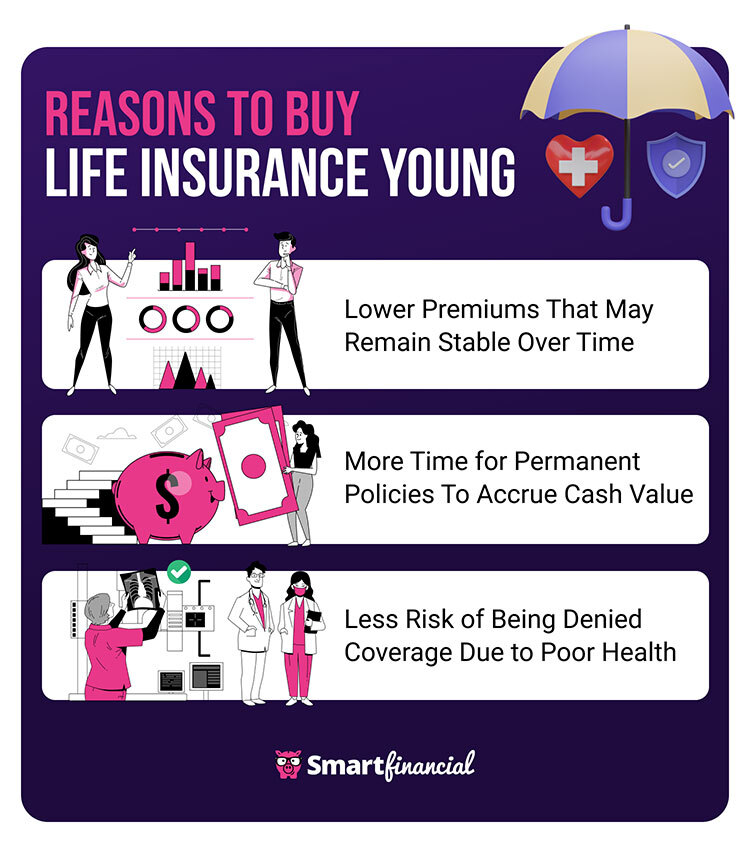
Though life insurance may not be at the forefront of every young adult’s mind, buying coverage while you’re young is a great idea — even if you don’t yet have a family relying on your income. Life insurance tends to be cheaper the younger and healthier you are, since you’re less likely to die early on in the coverage period and may spend more time paying premiums.[5] As a result, if you ever expect to have dependents, it may be cost-effective to get life insurance early.
Newly Married Couples
If you don’t buy coverage earlier, you’ll definitely want to invest in life insurance once you get married because it can potentially replace your income in the event that you die, allowing your spouse to remain financially stable even if they currently rely on your salary. One option for newlyweds to consider is joint life insurance, which covers both spouses under the same policy.
There are two main categories of joint life insurance. First-to-die coverage pays out a death benefit after one spouse dies, offering financial support for the remaining spouse. Conversely, second-to-die coverage pays out a death benefit only after both spouses have died, meaning it primarily helps your children or any other beneficiaries you both leave behind.[6]
Parents
In addition to protecting your spouse, life insurance can help you secure your children’s financial future — which may be especially important as long as they’re living under your roof. A life insurance payout can help cover big expenses for your children — such as student loans, a new car or a down payment on their first house — or it may simply help them maintain their everyday standard of living after you die.
Even if you’re a stay-at-home parent and don’t have an income to replace, it may still be beneficial for you to be covered by a life insurance policy. For example, after your death, your spouse may need to pay someone to perform some of the services you previously handled — such as cooking, cleaning or child care — and life insurance can help cover these expenses.
Homeowners
A mortgage is a massive financial obligation for young homeowners, and it could prove especially burdensome for the surviving spouse if the primary wage earner in a family were to die. To ease this burden, consider buying a life insurance policy that will last at least as long as your loan repayment period. For example, if you take out a 30-year mortgage, you may want an accompanying 30-year term life insurance policy that could help your spouse pay it off.
Business Owners
There are several ways in which business owners may benefit from buying life insurance to cover themselves and their employees, including the following:[7]
- Attracting and retaining talented workers and executives
- Keeping the business operating smoothly amid economic uncertainty by borrowing against accumulated cash value
- Supplementing employees’ retirement funds or supporting their family members if they die while the policy is active
- Ensuring the seamless execution of the company’s succession plan by purchasing a partner’s share in the business after they die
- Providing a fair inheritance for all beneficiaries if ownership of a family-run business cannot be split among them equally
- Covering administrative costs and lost revenue associated with the death of a key person
Empty Nesters
Although life insurance may be less important once your children have grown up and moved out, it can still provide a crucial financial windfall for your spouse or other beneficiaries if you die as an empty nester. That said, if you aren’t already insured, your coverage needs may be different than those of a younger life insurance shopper. For example, if you’re 55, you could buy a 10-year term life insurance policy so your income will be covered through retirement.
Retirees
Over time, permanent life insurance policies accrue cash value, which you may be able to withdraw or borrow against before you die, depending on your policy details. Because of this, life insurance can be viewed as an investment opportunity, since you may be able to use this extra cash to supplement your retirement income.[8] Of course, it may not make much sense to buy this kind of policy for the first time if you’re already retired.
Likewise, it may not make sense to buy life insurance with a large death benefit after retiring, since you no longer have an income to replace. Nevertheless, it may be worthwhile to get a cheap burial insurance policy to help cover your final expenses, such as funeral, burial or cremation costs. Funerals cost about $7,000 to $12,000 on average, so your family could encounter a significant financial burden after you die unless you’re insured.[9]
How Much Life Insurance Do I Need?
How much life insurance you need depends on factors like how old you are, how much money you bring in each year and what you want your life insurance payout to cover for your beneficiaries. Here are a few different methods you can use to estimate the right amount of life insurance coverage for you and your family:[11]
- Human life value: A common recommendation is that you set your life insurance coverage limits at 30 times your annual income from ages 18 to 40, 20 times your income from ages 41 to 50, 15 times your income from ages 51 to 60, 10 times your income from ages 61 to 65 and a number based on your net worth after age 65. This accounts for the fact that you typically need more coverage when you’re younger.
- Simplified approach: If you’re interested in a simpler calculation, you could buy a policy that provides coverage equal to 10 times your income plus the value of any major expenses you want the policy to cover — such as college tuition for your children or money set aside as an inheritance or a charitable contribution.
- DIME formula: The most specific approach to choosing the right life insurance coverage amount involves adding up the total value of your outstanding debts, the income you would want to replace, your mortgage payments and a college education for your children. Then, you would select a policy with a high enough death benefit to cover all of these expenses.
Understanding the Different Types of Life Insurance
You may be able to choose from several unique types of life insurance, which may differ in terms of how they operate and when they can be beneficial. Below is a breakdown of some of the major types of coverage and when they are worth considering:[12][13][14][15]
|
Coverage Type |
Explanation |
Pros |
Cons |
|---|---|---|---|
| Term life insurance | Remains active for a set period of time — usually lasting up to 30 years — and then expires at the end of the coverage term | Most affordable way to secure life insurance with a sizable death benefit | You may reap no benefit from the policy if your coverage expires before you die and you didn’t purchase a return-of-premium rider |
| Whole life insurance | Provides coverage that generally lasts your entire life and accrues cash value that may be used to raise your death benefit or accessed before you die | Ensures that your family will reap a benefit from the policy at some point and may be able to supplement your retirement income or offer other benefits through its cash value component | Generally costs more than term life insurance because it provides more comprehensive protection and benefits |
| Universal life insurance | Offers permanent life insurance coverage with premiums and death benefits that can be adjusted over the course of the coverage period | Provides greater flexibility than whole life insurance by allowing you to change your death benefit if you want more coverage for your beneficiaries or need to lower your monthly insurance bills | Some types of policies grow cash value through higher-risk investment options, meaning your policy could lose money, depending on the performance of its underlying investments |
| Supplemental life insurance | Adds coverage on top of an employer-sponsored life insurance policy, which may only offer around $50,000 to $100,000 worth of coverage on its own | Accounts for the fact that the life insurance you get through work may not offer high enough coverage limits or may not be available after you leave your job | Likely costs more than your work-sponsored life insurance and may confuse beneficiaries who have to file claims on two separate policies after you die |
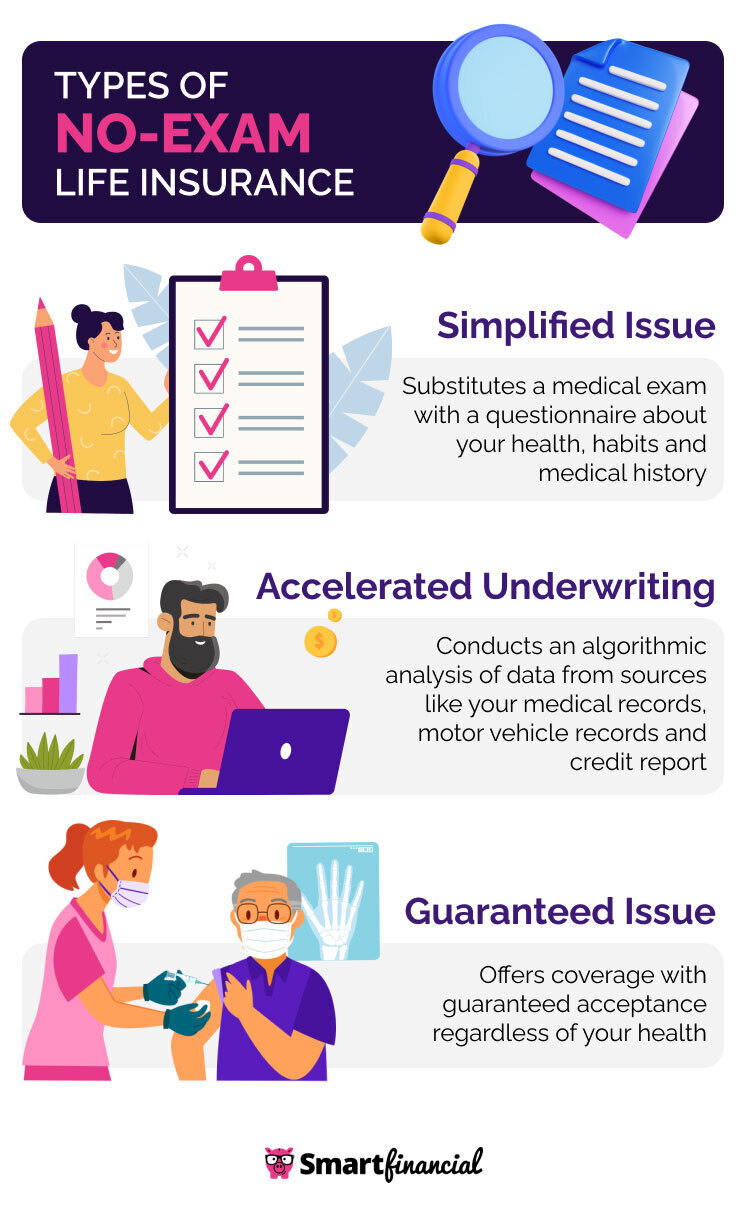
| No-exam life insurance | Replaces the medical exam that most policies require for approval with a simple questionnaire, accelerated underwriting or guaranteed approval regardless of your age or health status | Can be quicker and more convenient than standard underwriting methods and may be the only way to qualify for life insurance if you are already elderly or in poor health | Tends to be more expensive relative to the amount of coverage it provides and may not come with very high coverage limits — especially for older policyholders |
How To Celebrate Life Insurance Awareness Month
The best way to celebrate Life Insurance Awareness Month is to learn about life insurance and make sure you have an appropriate amount of coverage for yourself and your loved ones. While thinking about death can be uncomfortable, it’s important to make life insurance part of a financial plan that ensures your dependents will be taken care of if you experience an untimely death.
Another way to observe Life Insurance Awareness Month is to remember your own family members who have passed away. Think about how the time, resources and life lessons they invested in you have helped support you, and consider how you could do the same for others — including by purchasing life insurance. Doing so may highlight the financial security life insurance provides while also honoring loved ones who are no longer here.
Life Insurance Awareness Month at a Glance
- Definition: Life Insurance Awareness Month is an annual celebration created by Life Happens, a nonprofit organization that teaches people about life insurance coverage and personal finances.
- Purpose: The main goal of Life Insurance Awareness Month is to take time to educate people in the United States about the benefits of life insurance, including its potential to provide long-term financial security for families.
- Celebration: You can honor the Life Insurance Awareness Month celebration in September by reviewing your life insurance coverage needs and reflecting on the most important people in your life who have died.
- Who needs coverage: Most people would benefit from life insurance, though the exact amount and type of coverage recommended may vary from person to person. Examples of the types of people who generally need some kind of life insurance include young adults, married couples, parents, homeowners, business owners and older adults approaching retirement.
- Recommended coverage levels: Many people opt to purchase life insurance with a death benefit ranging from 10 to 30 times their current income. However, you may also want to consider your age and the types of expenses you want to cover in order to establish a life insurance payout amount that better matches your coverage needs.
- Coverage options: Term and whole life insurance policies differ when it comes to how long they remain active and whether they accumulate cash value over time. Depending on your circumstances, you may also want to consider coverage options like universal, no-exam and supplemental life insurance.
How To Review and Shop for a Life Insurance Policy
You’ll generally want to shop around to find a life insurance policy that meets your needs at an affordable price. Try to get quotes from three to five different insurance companies so you can see a range of benefits and premium options. You’ll need to give insurers information like your age, health, family medical history, career and hobbies so they can accurately underwrite your policy.
Though it can be time-consuming and tedious to gather quotes from each insurer individually, you can speed up the process by using an insurance marketplace like SmartFinancial. After you answer a brief questionnaire, we can connect you with a licensed insurance agent who can help you find the best life insurance policy for yourself and your beneficiaries. Click here to start comparing life insurance quotes for free today!
- Insurance quotes /
- Life /
- Life Insurance Awareness Month
Dylan Tate is an insurance content expert for SmartFinancial with over 300 articles about home, auto, business, health and life insurance under his belt. He has over nine years of experience writing for online publications, primarily about gaming and esports. In the process, he has become an expert in search engine optimization, news reporting, feature writing and copy editing.


Get a Free Life Insurance Quote Online Now.
More on Life Insurance

Looking for Life Insurance?
Compare rates from dozens of companies in less than 3 minutes.