

Can You Make an Insurance Claim if Your Car Overheats?
 Written by Preston Micalizio Written by Preston Micalizio Preston MicalizioPreston Micalizio writes insurance content for SmartFinancial. He brings three years of professional experience writing ... Read more |  Edited by Richard Murphy Edited by Richard MurphyRichard MurphyRichard Murphy manages content on SmartFinancial's website. With a strong background in content strategy and copywriting... Read more |
 Editorial Standards
 SmartFinancial Offers Unbiased, Fact-based Information. Our fact-checked articles are intended to educate insurance shoppers so they can make the right buying decisions. Learn More
When it comes to car insurance and overheating, mechanical failures — such as engine repair — are typically not covered. However, certain types of car insurance, such as mechanical breakdown insurance, may cover engine overheating after an accident, depending on the cause.
Keep reading to learn what types of car insurance can cover an overheating engine and what steps you can take to prevent high temperatures from damaging your car.
|
Key Takeaways
|
On This Page

What Happens When a Car Overheats?
What To Do if Your Car Overheats
Does Car Insurance Cover an Engine Overheating?
What Types of Insurance Might Cover Engine Overheating?
How To File a Claim for Overheating Damage
Overheating and Car Insurance at a Glance
How To Prevent Overheating and Save on Car Insurance
Frequently Asked Questions

What Happens When a Car Overheats?
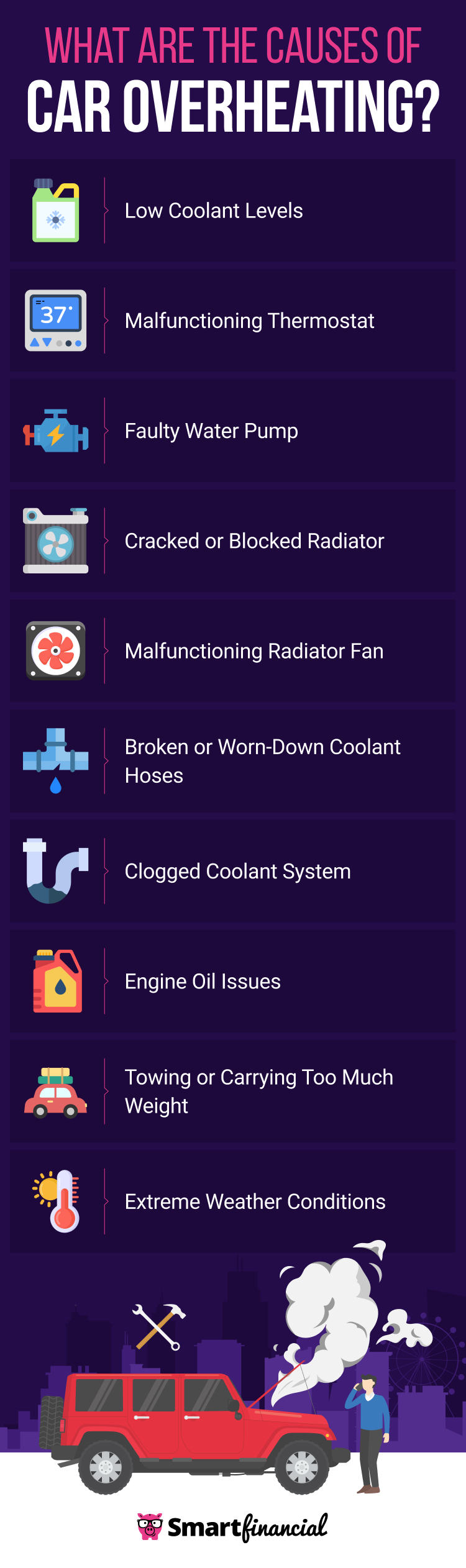
Most cars already operate at a high temperature — between 195 and 200 degrees Fahrenheit — but driving with significantly higher heat can cause serious issues, such as a complete mechanical breakdown or even a fire.[1][2][3] Common causes of car overheating include:[4]
- Low coolant levels
- Malfunctioning thermostat
- Faulty water pump
- Cracked or blocked radiator
- Malfunctioning radiator fan
- Broken or worn coolant hoses
- Clogged coolant system
- Engine oil issues
- Towing or carrying too much weight
- Extreme weather conditions
When your car begins to overheat, you may notice steam rising from under the hood or a strange smell due to a leaking fluid. The scent can help identify the issue — leaking oil often smells burnt, while leaking coolant typically has a sweet odor. The effects of overheating can vary based on how far the engine exceeds its normal operating temperature:[1]
- Up to 40 degrees over: Driving at this range can damage your car’s pistons or melt engine straps. You may hear a knocking sound while driving.
- Up to 80 degrees over: A significant drop in performance is likely, and continued driving can damage your car’s bearings or internal engine components. A rattling noise may be present.
- Over 100 degrees: At this point, the engine will likely stop functioning. Many components may be beyond repair.
What To Do if Your Car Overheats
If your car shows signs of overheating, it's essential to take it seriously and react, as ignoring the problem could lead to more severe mechanical problems. Follow the brief series of steps below to recover from an overheating engine:[5][6]
- Turn off your air conditioning to reduce stress on your engine.
- Turn up your car’s heat, which helps pull heat away from the engine.
- Safely pull over to the side of the road and turn the engine off.
- Leave your engine off, but keep your car's electrical components on with the key in the accessory position, which allows the car's electrical fans to continue cooling your engine.
- Leave your car in this position for at least 15 minutes to see if any warning lights turn off or your temperature gauge returns to normal. Do not touch the hood or external parts of your car for at least 20 minutes, as you could risk burning yourself.
- Top off your radiator fluid if you have some stored in your car, which can help prevent further damage.
- Contact roadside assistance or a local tow truck company to have your vehicle towed to the nearest repair shop.
- If you aren’t able to have your car towed, continue driving only if the lights and gauges have returned to normal, and head directly to the nearest mechanic. If your car shows signs of overheating again, pull over and repeat the process of letting it cool down.
Does Car Insurance Cover an Engine Overheating?
Standard car insurance is unlikely to cover engine overheating. Minimum liability car insurance only protects you from costs if you damage someone else’s vehicle, property or injure them in an accident, depending on your policy. It typically won’t cover mechanical issues with your own car.[7]
However, other types of car insurance may cover repairs for an overheating engine, depending on the cause of the damage.
We’ll explore those coverage types in the following sections.
What Types of Insurance Might Cover Engine Overheating?
Even if standard car insurance doesn’t cover engine overheating repairs, other types of auto insurance may offer protection. However, some of these options apply only if the overheating results from a covered incident — so not all engine overheating claims will qualify. Additionally, depending on your policy, you may be required to pay a deductible before coverage takes effect.
Types of insurance and other coverage options that may cover an overheating engine include:
Collision
Collision coverage is an optional form of car insurance included in full coverage policies, and it may help pay for repairs to an overheating engine if the damage stems from an accident. For example, if someone backs into your car and cracks your radiator, the resulting damage may be covered. Even if you were at fault in the accident, collision coverage will typically still cover damage that leads to engine overheating.
Comprehensive
Comprehensive coverage, included as part of a full coverage policy, may also cover engine overheating if it results from a covered peril. Perils such as floods, vandalism and falling objects are often covered. For example, if a tree falls on the front of your car and damages the engine, causing it to overheat, repairs are typically covered.
Mechanical Breakdown Insurance (MBI)
Mechanical breakdown insurance (MBI) can protect your engine from unexpected failures that aren’t caused by a collision. It may cover mechanical and electrical problems that aren’t due to normal wear and tear or a lack of maintenance. For example, if your car is exposed to extreme heat while driving and the engine is damaged, MBI will typically cover the repair.
Keep in mind that not all insurers provide mechanical breakdown insurance. Some companies also set eligibility limits based on a vehicle’s age and mileage. For instance, GEICO only offers MBI to vehicles that are 15 months old or younger and have 15,000 miles or fewer. GEICO also limits renewals to a maximum of seven years or 1000,000 miles.[8]
Extended Warranties or Service Contracts
An extended warranty or service contract may cover engine failure caused by manufacturer defects or premature wear, depending on the terms of the agreement. These warranties usually last for a set number of years or miles.
With proper maintenance, an average modern car can last between 200,000 and 300,000 miles, or possibly more.[9] However, base warranties for new vehicles typically cover only the first 3 years or 36,000 miles — whichever comes first.[10]
How To File a Claim for Overheating Damage
You’ll generally want to file a claim for overheating damage as soon as possible to help pinpoint the cause. For example, if you wait several months after an accident that damaged your engine and led to overheating, it may be harder to verify the cause and receive reimbursement for repairs. Be sure to gather all relevant documentation, including accident reports, photos of the damage and video recordings of any unusual engine noises and note how long the issue has persisted.
You may also need to take your car to a mechanic to diagnose the overheating. Insurance companies often want to confirm that the overheating resulted from a covered cause before approving payout. Additionally, they’ll likely require an estimate for the cost of repairs.
Reasons an Overheating Claim Might Be Denied
An overheating claim will most likely be denied if the cause is determined to be a lack of maintenance or normal wear and tear — conditions typically not covered by insurance. A claim may also be denied if the damage was caused by something your policy doesn’t cover. For example, if you drive into a tree and damage your engine, you likely won’t be covered unless you have collision coverage.
Overheating and Car Insurance at a Glance
Here’s the essential information you should know about engine overheating and car insurance:
- An overheating car occurs when your engine reaches a temperature higher than it’s designed for, which can cause significant damage.
- Signs your car may be overheating could include steam rising from the hood or odd smells from leaking oil or coolant. Some cars may also feature temperature gauges or warning lights that indicate when your engine reaches an unsafe temperature.
- Standard insurance typically won’t cover damage from engine overheating, but other types of insurance, like collision, comprehensive and MBI, might, depending on the cause of overheating. An extended warranty may also cover damage from overheating.
- Avoid driving your car if it overheats, and let it cool off on the side of the road with the engine off. Drive directly to a mechanic if your car’s temperature returns to normal, or contact roadside assistance or a tow truck for help.
- While you may need a mechanic to first diagnose the cause of your car overheating, you should file a claim as quickly as possible to improve your odds of approval and expedite the process.
How To Prevent Overheating and Save on Car Insurance
To help prevent your car from overheating and save money on car insurance from unexpected claims:[11]
- Keep up with regular maintenance and oil changes.
- Schedule inspections before the high summer temperatures common across the United States, as heat can worsen existing issues and lead to higher repair costs.
- Watch your temperature gauge for warning lights, and if it starts moving into the red, give your car time to cool down on the side of the road. If your car continues to give you warning signs, don’t put off going to a mechanic to have it checked out.
- When parking, try to keep your car in the shade whenever possible to reduce engine heat buildup.
- Check whether you need your car battery replaced, as batteries older than three years can lose capacity, which may put more strain on your engine.
- Insurance quotes /
- Auto /
- Car Insurance And Overheating
Preston Micalizio writes insurance content for SmartFinancial. He brings three years of professional experience writing in various industries, from higher education to e-commerce. He strives to engage with the audience, provide accurate reporting and make complex subjects easily digestible.


Get a Free Auto Insurance Quote Online Now.
More on Auto Insurance
Looking for Auto Insurance?
Compare rates from dozens of companies in less than 3 minutes.