

What Is Roadside Assistance?
 Written by Preston Micalizio Written by Preston Micalizio Preston MicalizioPreston Micalizio writes insurance content for SmartFinancial. He brings three years of professional experience writing ... Read more |  Edited by Richard Murphy Edited by Richard MurphyRichard MurphyRichard Murphy manages content on SmartFinancial's website. With a strong background in content strategy and copywriting... Read more |
 Editorial Standards
 SmartFinancial Offers Unbiased, Fact-based Information. Our fact-checked articles are intended to educate insurance shoppers so they can make the right buying decisions. Learn More
Roadside assistance is an optional auto insurance add-on or a standalone service that can help when you have car issues, such as a flat tire or dead battery. Covered services may vary between companies, so make sure your roadside assistance coverage meets your needs.
Keep reading to learn how roadside assistance works, what’s typically covered and how to get this service.
|
Key Takeaways
|
On This Page

How Does Roadside Assistance Work?
What Does Roadside Assistance Cover?
Who Needs Roadside Assistance?
How Does Roadside Assistance Differ From Other Coverages?
Which Companies Provide Roadside Assistance
How Much Does Roadside Assistance Cost?
How To Use Roadside Assistance
Where Can I Get Roadside Assistance Coverage?
FAQs

How Does Roadside Assistance Work?
Emergency roadside services, such as fuel delivery or towing to a mechanic, can typically be activated by calling a service phone number, using the provider’s website or requesting help through its app. Depending on your location, there may be a wait time before help arrives. For example, AAA services can take anywhere from 12 minutes to about an hour to arrive.[1]
Depending on your roadside assistance provider, the service may be covered under a monthly or annual plan fee or part of your insurance premium. Some roadside assistance programs are offered on a pay-per-use basis, meaning you may be charged immediately after receiving assistance.[2]
Occasional or emergency use typically won’t affect your insurance premiums, even if your roadside assistance is through your auto insurance provider. However, overuse of your roadside assistance or service calls that indicate high risk, such as consistently running out of fuel on the road, could cause a premium increase.[3]
When Can I Use Roadside Assistance?
Many roadside assistance services are available for use 24/7. Keep in mind that some plans may limit how many calls — or what types of calls — you can make during a specific time period. For example, AAA offers members up to four emergency roadside assistance calls per year of coverage.[4]
Can I Use Roadside Assistance on Different Vehicles?
Depending on your roadside assistance plan, the service may be available for multiple vehicles. For example, AAA membership covers you as the policyholder instead of a single vehicle, meaning you’re eligible for service in any vehicle you’re driving or riding in — even if you aren’t the car’s owner.[5]
However, some roadside assistance services offered through your insurance may only apply to vehicles listed on your policy. Check your coverage details to understand any limitations.
What Does Roadside Assistance Cover?
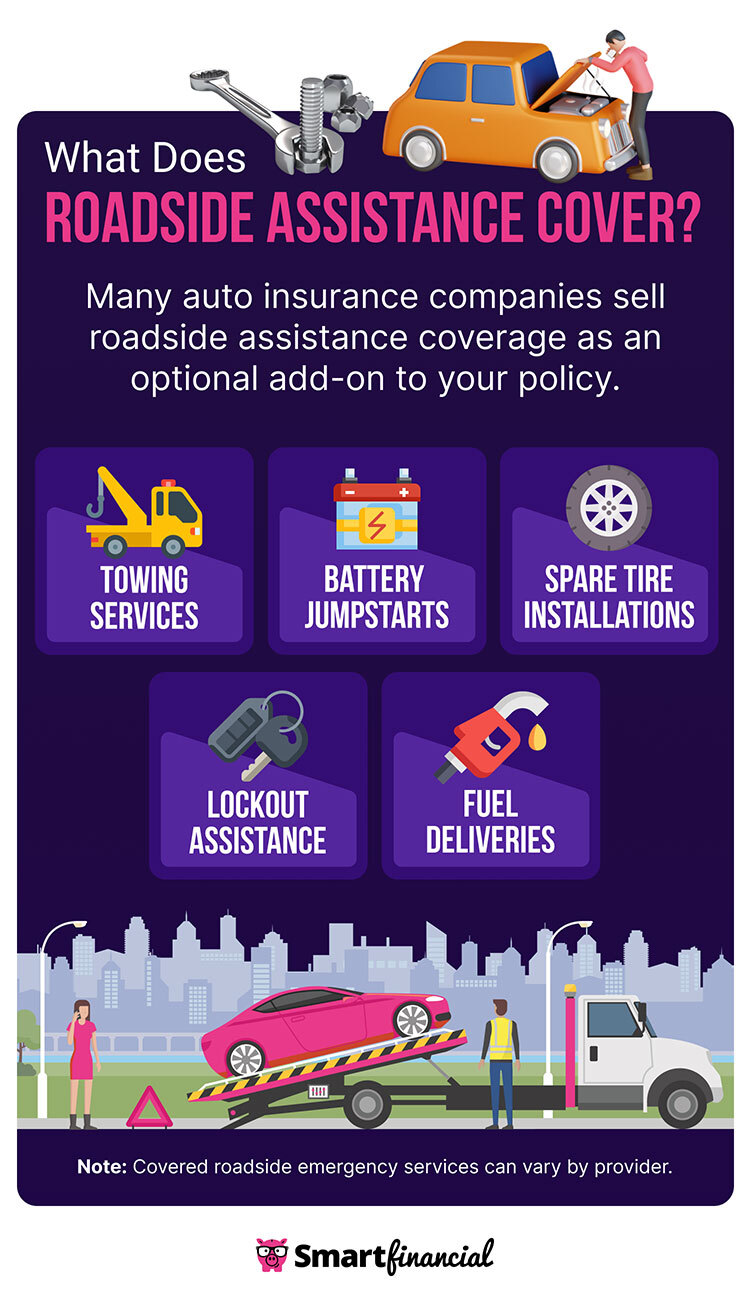
Roadside assistance typically includes several emergency services that help drivers get back on the road:[6]
- Towing
- Jumpstarting a dead battery
- Changing a flat tire
- Unlocking a car
- Delivering fuel when out of gas
Keep in mind that not all roadside assistance providers offer every service. For example, fuel delivery isn’t covered by the Farmers program but is covered by Nationwide.[7][8] Additionally, coverage may differ between service tiers, even from the same company.
What Isn't Covered?
Most roadside assistance services include limitations and won’t cover every cost. For example, emergency roadside coverage offered by State Farm only covers towing to the nearest repair facility — additional towing may cost extra. Similarly, mechanical labor, such as changing a tire, is typically limited to the first hour, and additional labor may incur extra costs.[10]
Roadside assistance also usually excludes the cost of parts or supplies. For example, the Travelers program does not cover the cost of a new car battery if yours dies, nor does it cover the cost of fuel if you need it delivered.[9]
Who Needs Roadside Assistance?
Roadside assistance can benefit any driver, especially when unexpected car trouble occurs — like getting a flat tire or needing a tow. Even if rarely or never used, having roadside assistance can provide peace of mind and help reduce driving anxiety. Parents of young or inexperienced drivers may also want to consider roadside assistance for their children, as new drivers might not know how to change a tire or could run out of gas and need fuel delivery.
However, drivers who spend significant time on the road will likely have a higher risk of getting a flat, needing a battery jump or needing their car pulled out of slippery mud or ice than someone who rarely drives. A single tow can cost as much as $125 for five miles or less, which could be more expensive than some annual roadside assistance plans — making the coverage worth considering for emergency situations.[11]
How Does Roadside Assistance Differ From Other Coverages?
While each roadside assistance program is limited to providing a set number of services, the issue doesn’t typically need to be caused by a specific peril. For example, while your auto insurance typically won’t cover you for standard wear and tear, roadside assistance will still change your tire even if it has worn down naturally. Unlike other forms of coverage, you also don’t need to make a claim and wait for approval from your insurer.
Which Companies Provide Roadside Assistance
Roadside assistance can be found from a number of various companies, some of which include:
How Much Does Roadside Assistance Cost?
The average roadside assistance service can cost between $50 and $100 annually, though prices vary depending on the provider.[6] Below is a breakdown of potential costs based on where you get coverage:[12]
- Auto insurance endorsement: $15 to $30 annually
- Automotive club: $50 to $180 annually
- Credit card company: No cost to $60 per service call[6]
- Cell phone company: No cost to $60 annually
- Car manufacturer: Free for a limited time
How To Use Roadside Assistance
Follow these best practices when using roadside assistance:
- Review your policy details and keep a copy in your glove compartment. You may need to provide your policy number when speaking to a representative on the phone or the technician sent to assist you to prove your policy is active.
- Download your provider’s app before you drive. It may be difficult to download it during an emergency — especially if you’re in an area with limited internet access.
- Use highway markers or street signs to share your location. Providing accurate location details can help roadside assistance reach you faster.
- Make your vehicle visible. If battery power allows, turning on your headlights or hazard lights can help the technician locate your car, plus it reduces the risk of passing drivers hitting your vehicle.
- Park your vehicle in a safe, visible area off the road when possible. Stay inside your car until help arrives to reduce the risk of injury from other drivers.
Where Can I Get Roadside Assistance Coverage?
You can get roadside assistance from several sources, including automotive clubs like AAA, credit card companies, cell phone providers and even your car’s manufacturer. You can also get roadside assistance through your auto insurance company, often as an endorsement to your existing policy. Some insurance companies — such as Allstate — offer roadside assistance services even if you are not a policyholder.[13] Contact your insurer to see what options are offered and whether they meet your needs.
If you don’t currently have auto insurance or want to switch providers — to lower your premium or expand your roadside assistance options — consider shopping around and getting quotes from three to five different insurance agencies. Be sure to ask about roadside assistance to understand what services are included.
- Insurance quotes /
- Auto /
- What Is Roadside Assistance
Preston Micalizio writes insurance content for SmartFinancial. He brings three years of professional experience writing in various industries, from higher education to e-commerce. He strives to engage with the audience, provide accurate reporting and make complex subjects easily digestible.


Get a Free Auto Insurance Quote Online Now.
More on Auto Insurance

Looking for Auto Insurance?
Compare rates from dozens of companies in less than 3 minutes.