

A Guide to Car Insurance for College Students Out of State
 Written by Dylan Tate Written by Dylan Tate Dylan TateDylan Tate is an insurance content expert for SmartFinancial with over 300 articles about home, auto, business, health a... Read more |  Edited by Richard Murphy Edited by Richard MurphyRichard MurphyRichard Murphy manages content on SmartFinancial's website. With a strong background in content strategy and copywriting... Read more |
 Editorial Standards
 SmartFinancial Offers Unbiased, Fact-based Information. Our fact-checked articles are intended to educate insurance shoppers so they can make the right buying decisions. Learn More
When it comes to options for car insurance for college students out of state, you may be able to stay on your parents’ auto insurance policy, or you may need to purchase a separate policy for yourself — depending on whether your parents’ home is still your primary residence. Car insurance tends to be expensive for young drivers, but many insurers offer discounts designed to make coverage more affordable for students.
Keep reading to learn more about out-of-state car insurance for students, including how much a college student may have to pay for coverage and why their premiums may change upon moving out of state.
|
Key Takeaways
|
On This Page

Can College Students Stay on Their Parents’ Car Insurance?
When Should a Student Get Their Own Car Insurance Policy?
Does Attending College in Another State Change Car Insurance?
How State Laws Affect College Student Car Insurance
What Happens if the Car Stays at School Most of the Year?
How Much Does Car Insurance Cost for Out-of-State Students?
Are Car Insurance Discounts Available for College Students?
Ways College Students Can Save on Car Insurance
Car Insurance for College Students Out of State at a Glance
How To Get Car Insurance for College Students Out of State
Frequently Asked Questions

Can College Students Stay on Their Parents’ Car Insurance?
Usually, you can stay on your parents’ car insurance while attending college in a different state as long as your parents’ address remains your primary residence. However, not every state or insurance company allows this, so you should contact your insurance company to let it know about your move and determine whether you can remain on your parents’ policy.[1]
One of the main appeals of staying on your parents’ auto insurance is that it’s often cheaper than buying your own coverage. For example, many insurance carriers offer discounted rates if you add multiple vehicles to the same insurance policy, making it more cost-effective to stay on the same policy as your parents than to buy a separate policy that exclusively covers your car.[1]
When Should a Student Get Their Own Car Insurance Policy?
Some insurers may allow any full-time student to stay on their parents’ car insurance, but for the most part, you’ll need your own policy once you’ve permanently moved to a new address.[2] For example, suppose you get a job in your college town, live there throughout the summer and only visit home a few times during the year. In this case, you may need to transition to your own policy, since your parents’ home may no longer qualify as your primary residence.
|
Whose Policy College Students Should Be On |
When They Should Be on This Policy |
|---|---|
|
Parents’ policy |
Staying on their parents’ auto insurance is often the simplest and cheapest option for students who only live in their college town during the school year and still consider their parents’ home to be their primary residence |
|
Student’s own policy |
If a student lives in their college town full time or otherwise permanently moves out of their parents’ home, they may no longer be eligible to stay on their parents’ car insurance and may need to purchase a separate policy for themselves |
Does Attending College in Another State Change Car Insurance?
Your car insurance premiums could change when you move to a different state for college because location is one of the main factors impacting car insurance prices.[3] For example, your premiums may increase if your college town has a higher rate of car accidents, theft or uninsured drivers than your hometown. Conversely, your premiums may drop if your college town has a lower rate of car insurance claims.
You should note that some universities don’t allow freshmen to keep cars on campus — so if you aren’t already covered by an auto insurance policy, you may not need to purchase one before your first year, depending on where you go to school. However, if you are currently covered, don’t cancel your policy, as a lapse in coverage can result in higher premiums whenever you try to reactivate your policy or buy a new one.[4]
How State Laws Affect College Student Car Insurance
Students who remain on their parents’ auto insurance while they’re in college out of state may not need to change their coverage details, since their policy would only need to continue meeting the requirements of the state where their primary residence currently is. However, if you permanently move out and switch to a new policy, this policy must follow the minimum car insurance requirements of the state you’re moving to.
For example, suppose a student graduating from high school lives in Washington and has the minimum amount of coverage required in that state. If they were to move out of their parents’ home and enroll at the University of Oregon, they may need to raise their property damage liability coverage limit by $10,000 and add personal injury protection and uninsured motorist coverage to their policy to comply with Oregon’s minimum requirements.[5][6]
What Happens if the Car Stays at School Most of the Year?
If a student keeps their car at school for most of the year, they may no longer be allowed to stay on their parents’ insurance. Even if they still consider their parents’ home to be their primary residence — like if their parents pick them up for the summer and they leave their car in their college town — they may still have to pay more for coverage because they have greater access to their car throughout the year and are therefore more likely to get into accidents.
How Much Does Car Insurance Cost for Out-of-State Students?
On average, college students ages 18 to 25 can expect to pay around $3,000 to $7,000 per year for auto insurance. Keep in mind that car insurance coverage is generally more expensive for teenagers and young adults because they have less experience on the road and are more likely to get into serious accidents as a result.[8] Other factors that may influence the cost of your car insurance policy include the following:[3]
- Driving record
- How often you drive
- Personal details, like your gender or credit information
- Details about your vehicle, like its actual cash value or safety record
- Policy details, like your coverage types, limits and deductibles
Are Car Insurance Discounts Available for College Students?
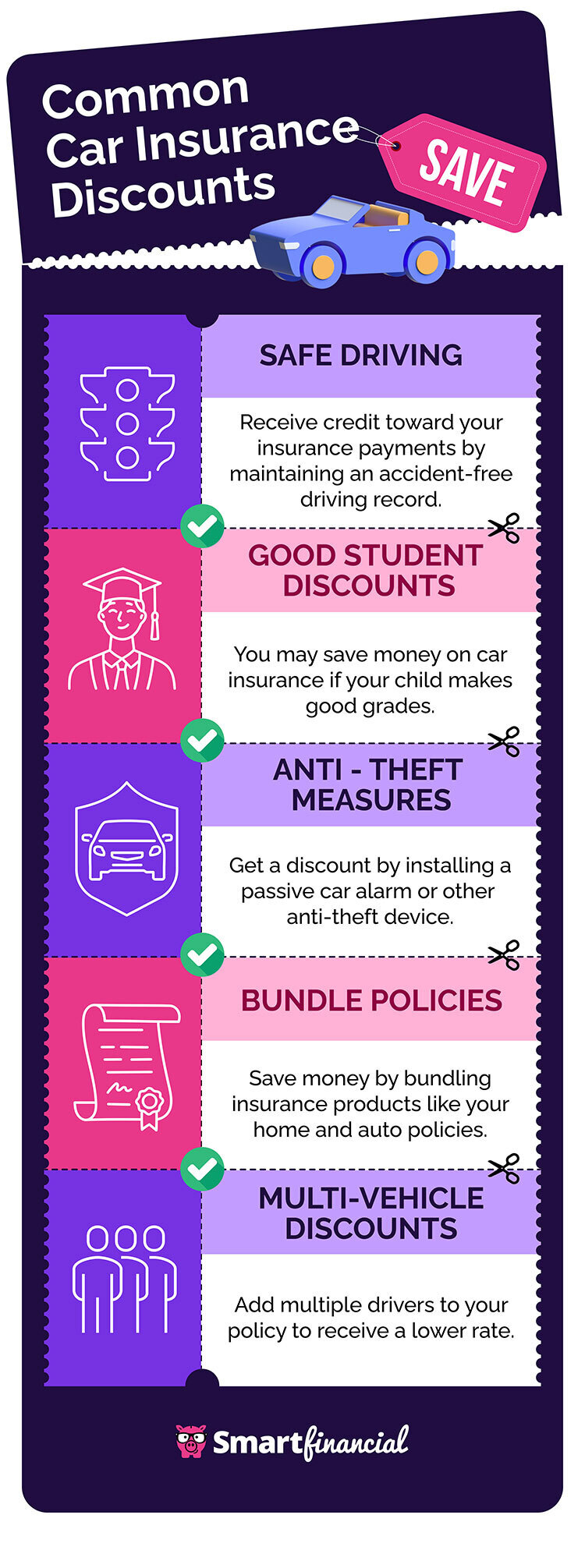
College students may be able to take advantage of multiple car insurance discounts to help make their coverage more affordable when they move out of state. Here are examples of discounts that students commonly qualify for:[1][9][10]
- Good student: Many insurers offer a good student discount to young adults who maintain a high grade point average — typically a 3.0 or higher. That said, some carriers may set specific restrictions on who is eligible. For example, Allstate’s good student discount only applies to full-time students under the age of 25 who aren’t married.
- Resident student: If you live on campus and don’t have a car with you, your parents may qualify for a discount on their insurance policy because there’s a smaller chance that they’ll need to file a claim related to your vehicle. A resident student discount — also known as a student-away-at-school discount — may only be available if you go to school at least 100 miles from where your parents live, depending on your insurer.
- Low-mileage: Students who drive infrequently can often save money by signing up for a pay-per-mile car insurance program. Similarly, you could enroll in a telematics program to secure cheaper rates by driving less often and consistently practicing safe driving behaviors.
- Affinity: Depending on your insurance company, you may qualify for an affinity discount on your car insurance based on your membership in a certain student organization or your enrollment at a certain university. Even after you graduate, you may be able to earn an alumni association membership discount.
Ways College Students Can Save on Car Insurance
In addition to staying on their parents’ policy and looking into discount opportunities, college students may be able to save money on car insurance by taking steps like these:[11]
- Comparing quotes from multiple insurance companies
- Installing anti-theft devices or safety features to lower the odds of filing a claim
- Choosing higher comprehensive and collision deductibles
- Dropping comprehensive insurance and collision insurance from older, less valuable cars that have been paid off
- Bundling multiple policies — such as auto and renters insurance — with the same insurer
- Maintaining a good credit score
Car Insurance for College Students Out of State at a Glance
- Staying on parents’ insurance: Even if they go to college in a different state, a student may be able to stay on their parents’ car insurance policy if they only stay on campus during the school year and consider their parents’ home address to be their primary residence. Check with your insurance provider to confirm its rules for college students out of state.
- Moving to a separate policy: Once a student has moved out of their parents’ home for good, they’ll likely need to obtain their own car insurance coverage. This policy must provide the minimum amount of coverage required by law in the state they’re moving to.
- Premium considerations: While teens and young adults pay more for car insurance on average, they can often save money by staying on their parents’ policy. However, they could save money by switching to their own policy in some cases, like if the state they’re moving to has a lower volume of car accidents or less stringent insurance requirements.
- Average cost: Auto insurance prices for college-age individuals typically range from around $300 to $600 per month. Your premiums may vary based on factors like your location, driving record and policy details.
- Specialized discounts: Certain discounts are specially designed to lower car insurance rates for college students, including good student, student-away-at-school and university-based affinity discounts. Students who don’t have regular access to a car may also benefit from joining a pay-per-mile or telematics program.
- Other ways to save: You may also be able to lower your car insurance premiums by shopping around, bundling insurance policies, removing unnecessary coverage types from your policy and taking steps to lower your chances of filing claims.
How To Get Car Insurance for College Students Out of State
You’ll generally want to shop around and compare quotes from at least three to five auto insurance companies before you move out of state for college. Be prepared to provide insurers with lots of information, including your age, your driving record and the make and model of your car. Of course, contacting car insurance companies one by one can be a serious time sink.
If you’re interested in a simpler insurance shopping experience, consider shopping through SmartFinancial. After we collect details about your coverage needs and budget through an online questionnaire, we’ll connect you with an agent who can help you compare quotes from the best car insurance companies and find the right policy. You can click here if you’d like to get no-cost auto insurance quotes today!
- Insurance quotes /
- Auto /
- Car Insurance College Student Out Of State
Dylan Tate is an insurance content expert for SmartFinancial with over 300 articles about home, auto, business, health and life insurance under his belt. He has over nine years of experience writing for online publications, primarily about gaming and esports. In the process, he has become an expert in search engine optimization, news reporting, feature writing and copy editing.


Get a Free Auto Insurance Quote Online Now.
More on Auto Insurance

Looking for Auto Insurance?
Compare rates from dozens of companies in less than 3 minutes.