

How To Find Health Insurance at 26
 Written by Preston Micalizio Written by Preston Micalizio Preston MicalizioPreston Micalizio writes insurance content for SmartFinancial. He brings three years of professional experience writing ... Read more |  Edited by Richard Murphy Edited by Richard MurphyRichard MurphyRichard Murphy manages content on SmartFinancial's website. With a strong background in content strategy and copywriting... Read more |
 Editorial Standards
 SmartFinancial Offers Unbiased, Fact-based Information. Our fact-checked articles are intended to educate insurance shoppers so they can make the right buying decisions. Learn More
Young adults may be surprised when they lose coverage from their parents’ health insurance at 26 and are forced to find their own plans. Fortunately, getting new health insurance doesn’t have to be a complicated process, and depending on the state you live in, you may be able to prolong how long you can remain on your parents’ plan.
Read on to learn what you’ll need to do when you lose your parents’ health coverage and whether you qualify to stay on their plan after you turn 26.
|
Key Takeaways
|


What Happens When You're Dropped From Insurance at 26?
After you age out of eligibility for coverage under your parents’ insurance, you typically need to find your own replacement coverage. Until you secure a health insurance plan, you will need to pay for doctor’s appointments, medications, surgeries or other normally covered health care services out of pocket. However, losing your parents’ coverage at 26 is usually considered a qualifying life event, allowing you to get coverage during a limited special enrollment period (SEP).[1]
Why Am I Being Dropped From My Parents' Health Insurance at 26?
The Affordable Care Act (ACA), also known as Obamacare, requires insurers to allow child dependents to remain on their parents’ health insurance until age 26.[1] Since health insurers have no requirements to continue covering adults, they generally end coverage at that age and require individuals to get their own plans with separate premiums, deductibles and copayments. There are, however, exceptions to this, which we’ll discuss later.
While losing coverage can leave many young adults uncertain about enrolling in health insurance for the first time, this provision marked a significant improvement over the rules in place before the ACA in 2010. Prior to the law for health insurance companies, many young adults lost their parents’ coverage as early as age 19, while full-time college students could potentially remain covered until age 23.[2]
When Does Health Insurance End for 26-Year-Olds?
Coverage ends after you turn 26, but the exact date varies depending on your parents' type of health insurance plan. If your parents have employer-based coverage, your plan typically lasts through the end of the month in which you were born.[3] For example, if your birthday is Sept. 1, you would retain coverage until Sept. 30.
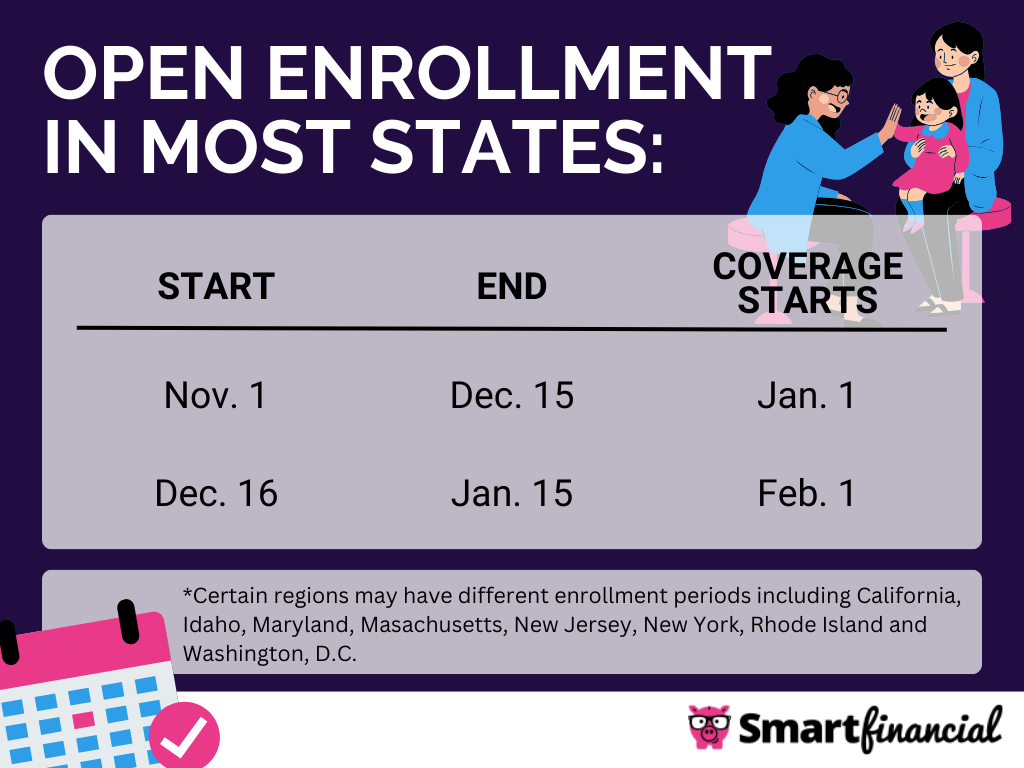
If your parents have a Health Insurance Marketplace plan, coverage extends until the end of the calendar year. Whether your birthday is Jan. 1 or Dec. 30, your coverage would still end on Dec. 31. However, you can enroll in your own plan during that year’s open enrollment period, which generally takes place from Nov. 1 to Jan. 15 each year.[3]
Can I Stay on My Parents' Health Insurance After I Turn 26?
Typically, you lose coverage from your parents’ health insurance within the calendar year after turning 26, but some exceptions exist. If your parents have insurance through an employer with 20 or more employees, you may be eligible to purchase extended coverage for up to 36 months through COBRA.[1]
You must request this coverage within 60 days of turning 26. For employers with fewer than 20 employees, you may be able to request similar extensions through your state insurance department, depending on your state’s laws.[1] Keep in mind that COBRA can be more expensive than other options, with typical monthly costs ranging from $400 to $700.[4]
Below is a list of states where you can potentially remain on your parents’ health insurance after turning 26 and how you might qualify:
|
State |
Age Limit Exceptions |
|---|---|
|
Florida[5] |
Coverage lasts until the end of the year you turn 30, provided you are a Florida resident or a part-time or full-time student. Must remain unmarried, without dependents and have no other health insurance plan. |
|
Georgia[6] |
Parents’ coverage doesn’t end for disabled dependents, regardless of age. |
|
Idaho[7] |
Parents’ coverage doesn’t end for disabled dependents, regardless of age. |
|
Illinois[8] |
Coverage lasts until you turn 30, provided you are an unmarried Illinois resident and a veteran who did not receive a dishonorable discharge. |
|
Indiana[9] |
Parents’ coverage doesn’t end for disabled dependents who are unable to maintain self-sustaining employment, regardless of age. |
|
Iowa[10] |
Parents’ coverage doesn’t end for disabled dependents and full-time students, regardless of age. |
|
Massachusetts[11] |
Parents’ coverage doesn’t end for disabled dependents who are unable to maintain self-sustaining employment, regardless of age. |
|
Minnesota[12] |
Parents’ coverage doesn’t end for disabled dependents, regardless of age. |
|
Missouri[13] |
Parents’ coverage doesn’t end for disabled dependents who are unable to maintain self-sustaining employment, regardless of age. |
|
Nevada[14] |
Parents’ coverage doesn’t end for disabled dependents who are unable to maintain self-sustaining employment, regardless of age. |
|
New Jersey[15] |
Coverage lasts until you turn 31, provided you are unmarried with no dependents of your own. |
|
New York[16] |
Coverage lasts until you turn 30, provided you are unmarried, ineligible for employer-based insurance and live or work in the state or insurance’s service area. |
|
Ohio[17] |
Parents’ coverage doesn’t end for disabled dependents who are unable to maintain self-sustaining employment, regardless of age. |
|
Oregon[18] |
Parents’ coverage doesn’t end for disabled dependents, regardless of age, provided a medical provider confirmed the disability before you turn 26. |
|
Pennsylvania[19] |
Coverage lasts until you turn 30, provided you are unmarried, have no dependents of your own, are not covered by any other insurance plan and are a Pennsylvania resident or enrolled as a full-time student in higher education. |
|
Rhode Island[20] |
Parents’ coverage doesn’t end for disabled dependents who are unable to maintain self-sustaining employment and are unmarried, regardless of age. |
|
South Carolina[21] |
Parents’ coverage doesn’t end for disabled dependents who are unable to maintain self-sustaining employment, regardless of age. |
|
South Dakota[22] |
Coverage lasts until you turn 30, provided you are a full-time student, while parents’ coverage doesn’t end at any age for disabled dependents. |
|
Wisconsin[23] |
Parents’ coverage doesn’t end for full-time students, regardless of age, or for those called to active duty in the National Guard or U.S. Armed Forces while a full-time student before the age of 27. |
Health Insurance Options for 26-Year-Olds
Below are a few options to consider when getting your own health insurance after turning 26 and losing coverage from your parents’ health insurance:
- Employer-based coverage: If you’re a full-time employee, you should be able to enroll in your employer-sponsored health insurance as part of a special enrollment period, if it's offered. In some cases, you may also be eligible for this as a part-time employee.
- Health Insurance Marketplace: You should be able to enroll in a health plan through the federal insurance marketplace, or your state’s version of the marketplace if it has its own exchange.
- Medicaid: Depending on your income, you may qualify for Medicaid in your state.
- Joining a partner’s plan: If you are married or have a domestic partner with health insurance, you may be able to join their plan.
- Student health insurance: Students enrolled in many colleges or universities can apply for a student health plan through their school.
How To Find Health Insurance at 26
Your best bet to find affordable health insurance after losing your parents’ plan at 26 is to shop around. If you have a primary care provider, look for plans that keep that provider in-network to help lower your costs. Compare quotes from three to five different insurance companies to see the coverage offered and the corresponding monthly premiums.
To expedite the process, consider using an insurance marketplace like SmartFinancial. After answering a brief questionnaire, we can connect you with a licensed insurance agent to help you find and compare coverages that meet your health needs. Click here for free health insurance quotes today!
- Insurance quotes /
- Health /
- Health Insurance At 26
Preston Micalizio writes insurance content for SmartFinancial. He brings three years of professional experience writing in various industries, from higher education to e-commerce. He strives to engage with the audience, provide accurate reporting and make complex subjects easily digestible.


Get a Free Health Insurance Quote Online Now.
More on Health Insurance

Looking for Health Insurance?
Compare rates from dozens of companies in less than 3 minutes.