

How To Change a Flat Tire: Or Is Roadside Assistance a Better Option?
 Written by Preston Micalizio Written by Preston Micalizio Preston MicalizioPreston Micalizio writes insurance content for SmartFinancial. He brings three years of professional experience writing ... Read more |  Edited by Richard Murphy Edited by Richard MurphyRichard MurphyRichard Murphy manages content on SmartFinancial's website. With a strong background in content strategy and copywriting... Read more |
 Editorial Standards
 SmartFinancial Offers Unbiased, Fact-based Information. Our fact-checked articles are intended to educate insurance shoppers so they can make the right buying decisions. Learn More
Even safe drivers are only one misplaced nail or pothole away from getting a flat tire on the road, so knowing how to change a flat tire can save you a significant headache. However, if it's unsafe to change the tire or you lack the right tools for the job, calling for roadside assistance may be the better option.
Keep reading to learn more about how to change a tire, what to do if you get a flat and when to consider roadside assistance services.
|
Key Takeaways
|


What Should I Do if I Have a Flat Tire?
If your tire has become flat, you should avoid driving on it. Driving on a flat tire further can worsen the damage, reducing the chance of repairing it and increasing costs.[1] If you cannot repair or replace the tire yourself with a spare, doing so at a repair shop isn’t prohibitively expensive – typically costing between $54 and $64 for repair and generally under $200 for a replacement, on average.[2][3]
Driving on a flat tire can also damage the wheel's rim, which can be much more expensive than a tire repair or replacement.[1] Depending on the car model and the extent of the damage, repairing a bent or cracked wheel could cost up to $400 or more than $900 to replace.[4][5] Doing so could also reduce the ability to steer or stop the car effectively, increasing the risk of an accident.
If you notice a flat tire, ensure the vehicle is parked safely — such as in a driveway, garage, parking lot or on a wide side street. If you can park in a safe area and have the tools, you can change the tire yourself. Otherwise, you should call a friend with the right tools and experience, roadside assistance or a tow truck to a repair shop.
What Should I Do if I Get a Flat Tire While Driving?
If you get a flat tire while actively driving, you’ll likely have fewer opportunities to park your vehicle safely away from traffic flow. Try to pull as far as possible to the side of the road, away from oncoming vehicles, turn on your hazard lights and engage your parking brake once stopped. If it's safe, you can attempt to replace the tire with a spare or patch the damage.
However, if you can’t reasonably assess the damage, don’t have the right tools or it’s not safe to change the tire due to traffic, you should stay inside your vehicle and call roadside assistance or a tow truck to avoid being struck by passing drivers.
How Long Does It Take To Change a Flat Tire?
Changing a flat tire doesn’t necessarily take long. Those inexperienced with the process typically require 20 to 30 minutes on average, while those familiar with it can complete it in 10 to 15 minutes. However, adverse weather, limited visibility or stubborn lug nuts can increase the time it takes to change a flat tire.[6]
How To Change a Flat Tire
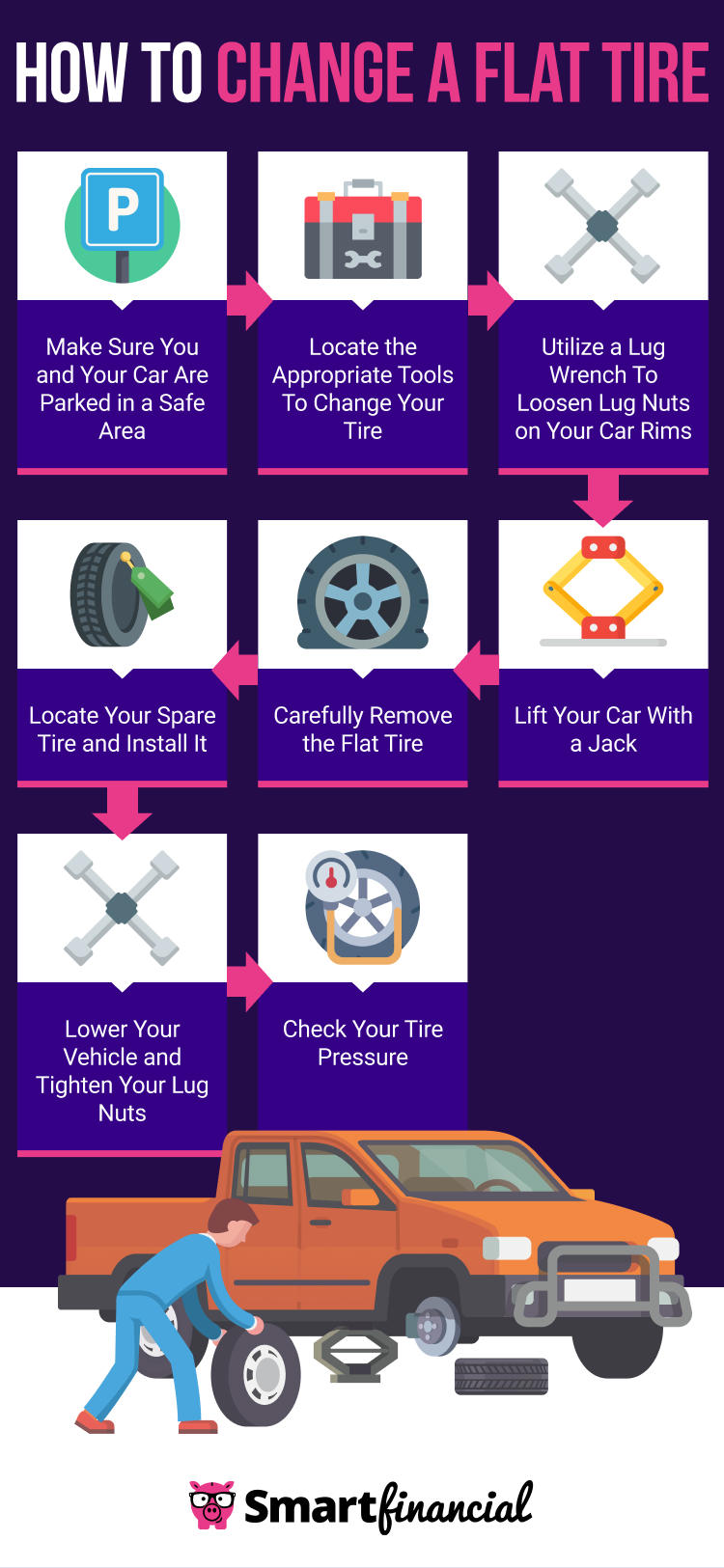
Getting a flat tire — especially while driving — can be a startling experience. However, changing your old tire for a spare is manageable even if you don’t have prior experience, as long as you have the right tools and a safe space to do it. Below, we’ll cover the process behind changing a flat tire:
1. Make Sure You and Your Car Are Parked in a Safe Area
When you notice a flat tire, make sure your vehicle is parked in a safe spot away from traffic and on a firm, level surface. Avoid parking on uneven ground, such as grass or dirt, since it may make changing your tire more difficult.
Additionally, try to park away from traffic if possible. Don’t stop in a blind spot or on a curve where you may be harder to see. Turn on your hazard lights to make you and your vehicle more visible if parked on the road.
2. Locate the Appropriate Tools To Change Your Tire
Gather the essential tools you’ll need to change your tire, such as a car jack, lug wrench and spare tire. These items are often stored in a compartment in your vehicle’s trunk, but you may need to purchase and store them yourself in advance. If you’re unsure which tools are required for your car’s make and model, check your owner's manual for a list of recommended items.
Additional tools — such as wheel wedges, a tire pressure gauge, a flat-head screwdriver and a portable tire inflator — aren’t strictly necessary but can make the tire-changing process safer and more efficient.
3. Utilize a Lug Wrench To Loosen Lug Nuts on Your Car Rims
Lug nuts are fastened onto the bolts of your car’s wheels to hold them in place, so you’ll need to loosen and remove those securing the flat tire in order to replace it. However, loosen the lug nuts slightly — without removing them — while your vehicle is still on the ground. The nuts may be extremely tight, making it more difficult to remove once the car is lifted.
If your car has wheel locks, a special adapter may be required to remove them. If you can’t see the lug nuts, check whether a hubcap is covering them. Hubcaps can typically be removed with a flathead screwdriver or a lug wrench.[7] Check your owner’s manual for the proper method to remove your hubcap safely to avoid damaging your vehicle or injuring yourself.
4. Lift Your Car With a Jack
Review your owner’s manual to confirm where to place the car jack. Small notches typically mark these jack points along your vehicle’s frame or chassis. Placing the jack in these designated spots helps ensure a stable lift and reduces the risk of damaging your vehicle.[7]
Lift your car slowly and carefully, creating enough clearance to remove the flat tire and install the spare.
5. Carefully Remove the Flat Tire
Once your car is safely lifted, fully remove the loosened lug nuts and keep them nearby — you can store them in an upturned hubcap if one was removed. Next, pull the flat tire straight off the wheel bolts. You may need to use some force, but do so carefully to avoid losing your balance, especially if you’re near traffic.
6. Locate Your Spare Tire and Install It
Slide the spare tire onto your vehicle by lining it up with the wheel studs — the fasteners the lug nuts attach to. Once the tire is securely in place, put the lug nuts back on and tighten them by hand. Avoid using the lug wrench at this stage, as tightening the nuts while the vehicle is still lifted could cause it to shift off the car jack and physically damage the vehicle.[7]
7. Lower Your Vehicle and Tighten the Lug Nuts
Slowly lower the vehicle, removing the car jack only once all tires are firmly on the ground. After the car's full weight is supported, remove the jack and fully tighten the lug nuts in a crisscross pattern to ensure even pressure across the wheel.
8. Check Your Tire Pressure
Return your tools to their proper storage location and check the tire pressure to ensure each tire is properly inflated. Your owner’s manual lists the recommended pounds per square inch (PSI) for each tire, and this information is often printed on a sticker inside the driver’s-side door frame.
If any tires are underinflated, use a portable air compressor to add air. You can also find free or low-cost air pumps at many gas stations.[7]
Things To Consider When Changing a Flat Tire
If you experience a blowout on a busy road or highway and there’s limited space to park safely, remain in your vehicle and call roadside assistance or a tow truck instead of attempting to change the tire yourself.
Even if you’re experienced in changing tires and the road seems clear, it only takes one distracted driver to cause an accident.
What Should I Do if I Don't Have a Spare Tire or Tools for a Flat Tire?
If you don’t have a spare tire or the tools to replace a flat, you'll need an alternative solution. If your vehicle is safely parked on private property you own or have permission to park on, you can get the tools you need by walking to a nearby repair shop or by asking a helpful friend or neighbor for a lift.
If you’ve had a blowout while driving and are forced to park on the side of the road or in a public area, like a parking lot, you likely won’t be able to get the necessary equipment or leave your car. In that case, consider calling a friend or family member to bring the tools you need.
Calling roadside assistance or a tow truck may also be more convenient. Roadside assistance can often patch or replace a flat tire and tow your vehicle to the nearest repair shop if additional help is needed.
Even if you don’t already have roadside assistance, many carriers let you enroll and request help immediately through a pay-per-use service.[8] However, some may require a short waiting period — though providers like AAA may allow you to waive it for a small fee.[9]
Does Roadside Assistance Cover Flat Tires?
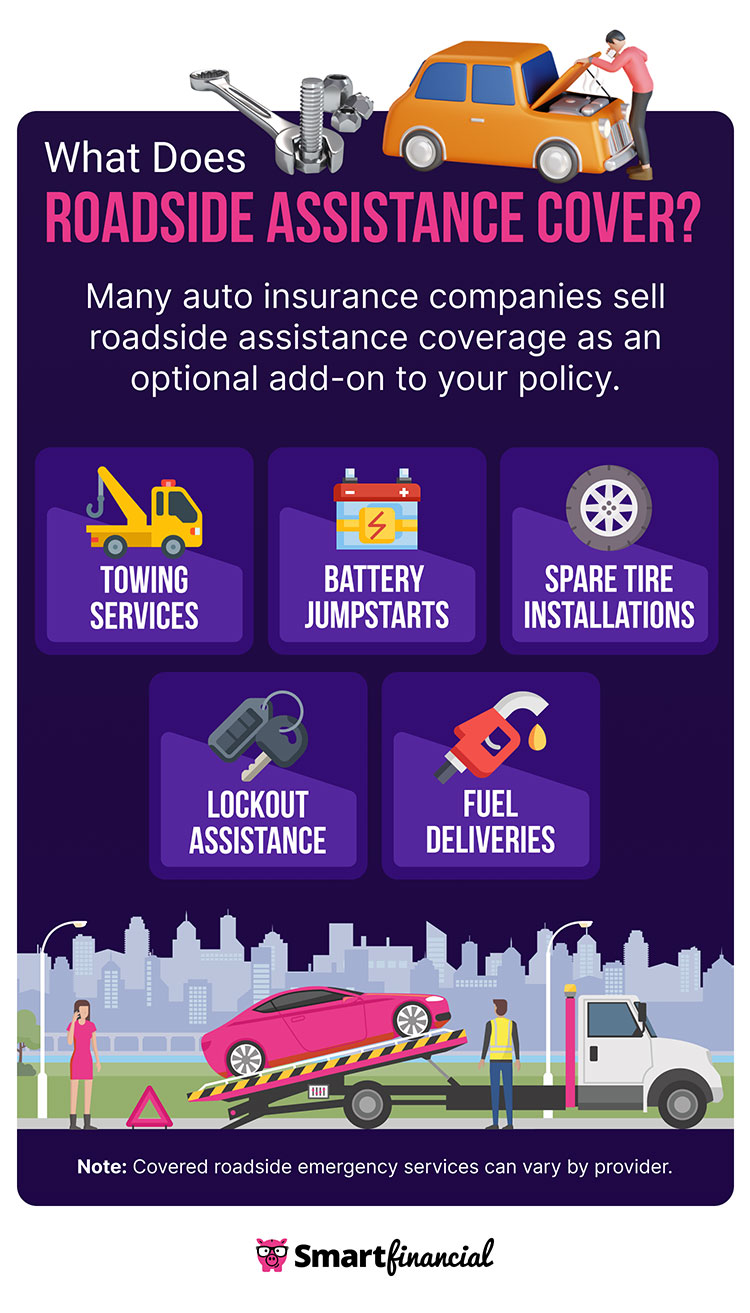
Roadside assistance typically covers changing a flat tire with your spare or towing your vehicle to the nearest repair shop. However, most plans don’t cover the cost of a replacement tire if you don’t already have a spare, meaning a tow may be your only option. Additionally, roadside assistance programs may limit how far they’ll tow your vehicle.
When Should I Consider Roadside Assistance for a Flat Tire?
You should consider calling roadside assistance if you get a flat tire on the side of the road, as it may be unsafe to change the tire yourself due to nearby traffic. If you don’t have the proper tools or don’t feel comfortable changing the tire, roadside assistance can provide help or tow your vehicle to a repair shop.
How To Get Roadside Assistance for a Flat Tire
You can usually enroll in roadside assistance coverage online or through your insurance carrier’s mobile app. While many auto insurance companies offer roadside assistance, some providers sell it as a standalone service, so coverage and benefits can vary significantly. Check with your current auto insurance carrier to see whether roadside assistance is included or available as an endorsement for an additional premium.
Consider shopping around to explore your options with insurance and roadside assistance companies, comparing premium costs and other benefits. Gathering quotes can be tedious, as you’ll typically need to request them from each insurer individually.
Speed up this process by using an insurance marketplace like SmartFinancial. After answering a brief questionnaire, we’ll connect you with a licensed insurance agent to help you get the coverage you need. Click here to get free quotes for auto insurance with roadside assistance today!
- Insurance quotes /
- Auto /
- How To Change A Flat Tire
Preston Micalizio writes insurance content for SmartFinancial. He brings three years of professional experience writing in various industries, from higher education to e-commerce. He strives to engage with the audience, provide accurate reporting and make complex subjects easily digestible.


Get a Free Auto Insurance Quote Online Now.
More on Auto Insurance

Looking for Auto Insurance?
Compare rates from dozens of companies in less than 3 minutes.