

Trucking Startups: Getting the Right Insurance From Day One
 Written by Dylan Tate Written by Dylan Tate Dylan TateDylan Tate is an insurance content expert for SmartFinancial with over 300 articles about home, auto, business, health a... Read more |  Edited by Dan Marticio Edited by Dan MarticioDan MarticioDan Marticio is the content manager at SmartFinancial and has written 150+ articles across multiple insurance verticals.... Read more |
 Editorial Standards
 SmartFinancial Offers Unbiased, Fact-based Information. Our fact-checked articles are intended to educate insurance shoppers so they can make the right buying decisions. Learn More
Trucking startups are required to maintain multiple types of commercial insurance, including liability coverage, workers’ compensation coverage and potentially cargo coverage. As a result, it’s important to prioritize finding the right insurance coverage as you try to get a brand new trucking company off the ground.
Read on to learn about the most important types of insurance for a trucking startup and how much your new business can expect to pay for coverage.
|
Key Takeaways
|
On This Page

What Is a Trucking Startup Company?
Why Is Insurance Important for a Trucking Startup Company?
What Are the Insurance Requirements and Standards for Trucking Startups?
What Types of Insurance Are There for Trucking Startup Companies?
How Much Does Insurance Cost for Trucking Startup Companies?
How To Find the Right Trucking Startup Insurance Policy
FAQs

What Is a Trucking Startup Company?
A trucking startup company is a newly established business devoted to the transportation of goods and materials across land using large trucks, such as tractor-trailers. Starting a new trucking company could involve purchasing a small fleet of trucks, or it could be as simple as becoming the owner-operator of a single truck and hauling freight for established trucking and transportation companies as an independent contractor.
Why Is Insurance Important for a Trucking Startup Company?
Without proper coverage, your trucking startup could be on the hook for numerous expenses in the event of a car accident or other mishap, including vehicle repairs, medical bills, replacement of lost cargo, lost wages for employees, attorney fees and more.
What Are the Insurance Requirements and Standards for Trucking Startups?
Several types of insurance are required by law for trucking companies. In most states, any business that uses vehicles for commercial purposes must carry commercial auto insurance.[1] Additionally, businesses with employees are broadly required to maintain workers’ compensation insurance in every state except for South Dakota, Texas and Wyoming.[2]
Furthermore, there are a couple of commercial insurance coverage types that the federal government requires specifically for businesses in the transportation and trucking industry. All vehicle-operating freight forwarders and motor carriers are required to have public liability insurance, which is included in a standard general liability insurance policy.[3][4] Meanwhile, motor carriers and freight forwarders that carry household goods must maintain cargo insurance.[3]
What Types of Insurance Are There for Trucking Startup Companies?
Read the following sections to get more information about the most important types of coverage to add to your trucking startup insurance policy.
General Liability
If your trucking business is held liable for injuring someone or damaging their property, general liability coverage can step in to cover medical bills, repair costs and, if the claim escalates into a lawsuit, legal expenses. Keep in mind that your general liability insurance will generally cover claims that aren’t related to car accidents, since these should be covered by your commercial auto insurance instead.
General liability insurance also typically includes personal and advertising injury coverage, which handles claims of defamation or copyright infringement. For example, if the owner of a rival trucking company accuses you of stealing their logo or printing false and disparaging information about them on your website, your general liability insurance coverage may take care of lawyer fees, judgments and/or settlements, as necessary.
BOP
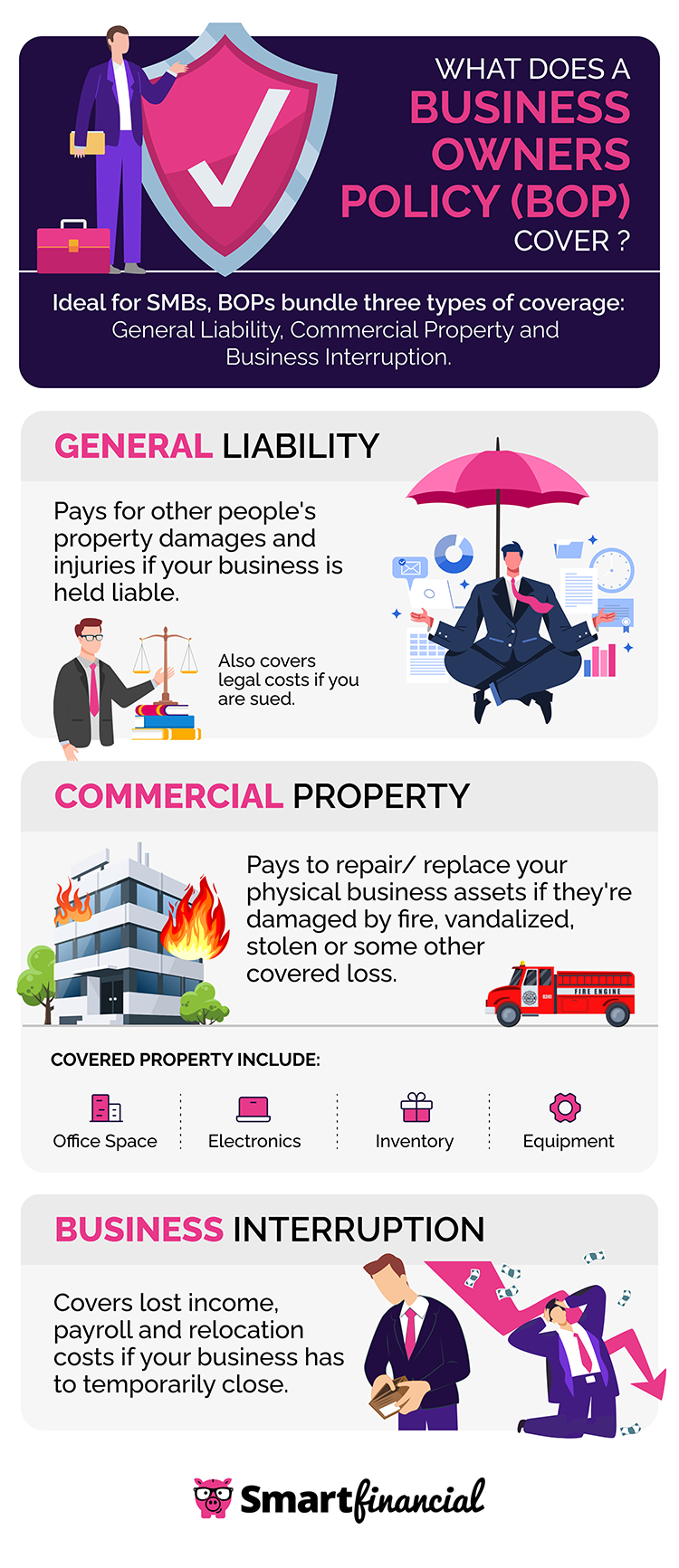
When you purchase a business owners policy (BOP), you will typically gain access to general liability coverage, along with commercial property insurance and business interruption insurance. Commercial property coverage insures your commercial buildings — such as office buildings and industrial garages — in addition to the items stored inside of those buildings against sudden perils, like fire and burglary.
Meanwhile, business interruption insurance covers lost revenue and other expenses that arise if a covered peril temporarily inhibits your business operations. For example, if a vandal causes substantial damage to one of your trailers, your business interruption coverage may pay for you to rent a new one while you wait for the damaged trailer to be fixed or replaced.
Workers’ Compensation
Workers’ compensation insurance protects your employees in case they experience an injury, contract an illness or die as a result of their work. Your policy should provide coverage for medical and rehabilitation costs, partial income replacement, disability payouts and death benefits for your employees, while also shielding you from lawsuits related to workplace accidents.
Cargo
Motor truck cargo insurance is a type of inland marine coverage that insures freight while it is in transit on one of your trucks. Along with paying to repair or replace damaged or lost goods, cargo liability insurance can cover legal expenses if a client sues you as a result of the damage or loss of their merchandise on your watch.
Commercial Auto
Your commercial auto insurance policy needs to include liability insurance that covers hospital bills and property repairs for others in case you are liable for injuring someone else or damaging their property in an automobile accident. Some states require you to carry additional coverage types, like uninsured and underinsured motorist coverage, which take effect if you are hit by someone who has no insurance or someone who doesn’t have enough insurance to cover all of your medical or repair expenses, respectively.[1]
For broader protection, you could consider adding optional coverage types like these to your commercial car insurance policy:[5]
- Physical damage: There are two types of physical damage insurance, which pay to repair or replace your vehicle when it is damaged or lost and another truck driver is not liable. Collision insurance covers car crashes that you are responsible for, while comprehensive insurance covers non-collision losses, such as fire damage and theft.
- Refrigeration breakdown: If you transport perishable foods or other refrigerated goods, you should make sure your policy includes refrigeration breakdown coverage, also known as reefer breakdown coverage. This coverage type insures you against the spoilage of your cargo due to a refrigeration malfunction.
- Bobtail: While your commercial auto liability insurance already covers your truck when you are actively driving for commercial purposes, there may be times when you drive it for non-commercial purposes, like if you drop off a trailer at one location and need to return your truck to the loading dock so a new trailer can be attached to it the next day. Bobtail insurance provides auto liability coverage while you are driving your truck without an attached trailer.
- Trailer interchange: Trailer interchange coverage insures trailers against sudden damage, and it may be particularly necessary if you do not own the trailer you are hauling.
Cyber Liability
If you conduct any business online, then you will likely benefit from a cyber insurance policy that covers expenses that stem from data breaches and other cybercrimes. For example, if you store clients’ credit card or banking information in an online database, cyber liability insurance may protect you from lawsuits after your database is hacked and your clients’ information is stolen.
Professional Liability
Professional liability insurance, also known as errors and omissions (E&O) coverage, insures your business against claims that you acted negligently or otherwise failed to perform your professional duties adequately. For example, if you sign a contract agreeing to deliver produce to a wholesaler across the country by a certain date, your professional liability insurance could cover any litigation that arises if you end up arriving a day late due to a scheduling error.
Commercial Umbrella
For extra liability coverage beyond what is already provided by your general liability, auto liability and other liability policies, you can purchase commercial umbrella insurance. For example, if you have $750,000 worth of cargo liability insurance but are sued after losing $1 million worth of cargo in a collision that you are responsible for, your umbrella insurance could cover the remaining $250,000 once you exhaust your cargo liability coverage limit.
Pollution Liability
You may benefit from having an environmental insurance policy that can cover cleanup costs and legal fees in case you are responsible for creating an environmental hazard. For example, pollution liability insurance could protect you from significant out-of-pocket costs after one of your parked trucks leaks oil and pollutes a local drinking water supply.
How Much Does Insurance Cost for Trucking Startup Companies?
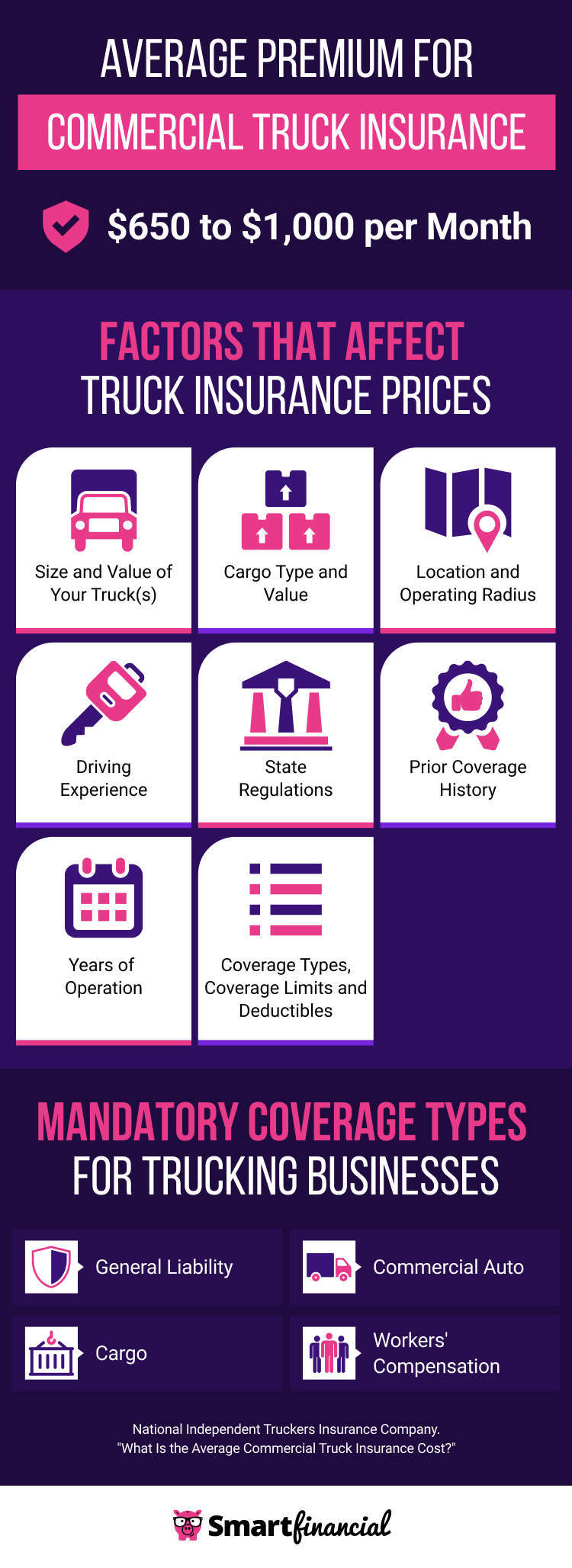
The average cost of a commercial truck insurance policy typically ranges from around $650 to $1,000 per month, depending on whether you are a transport or specialty trucker. Some of the other factors that can impact your truck insurance costs include the following:[6]
|
Size and value of your truck(s) |
State regulations |
|
Cargo type and value |
Prior coverage history |
|
Location and operating radius |
Years of operation |
|
Driving experience |
Coverage types, coverage limits and deductibles |
Keep in mind that you may also need to buy additional types of insurance, especially if you have a physical office and administrative staff. Most NEXT Insurance customers pay $95 to $195 monthly for a policy that includes general liability, workers’ compensation and commercial property insurance. However, you can likely expect higher workers’ compensation insurance premiums due to the high-risk nature of the trucking industry.[7]
How To Find the Right Trucking Startup Insurance Policy
In order to find insurance coverage for your trucking startup at the best price, it’s a good idea to compare quotes from around three to five different carriers, as some insurers may offer you a better deal than others for the same coverage. That said, it can be a slog to reach out to business insurance companies one by one to request quotes.
As a result, the best way to shop for commercial insurance is through SmartFinancial. Simply fill out a questionnaire to let us know about the type of insurance you need, and then we’ll connect you with agents who can help you sort through your insurance options. Start comparing commercial insurance quotes for free in as little as a few minutes.
- Insurance quotes /
- Commercial /
- Trucking Startup Insurance
Dylan Tate is an insurance content expert for SmartFinancial with over 300 articles about home, auto, business, health and life insurance under his belt. He has over nine years of experience writing for online publications, primarily about gaming and esports. In the process, he has become an expert in search engine optimization, news reporting, feature writing and copy editing.


Get a Free Commercial Insurance Quote.
More on Commercial Insurance

Looking for Commercial Insurance?
Compare rates from dozens of companies in less than 3 minutes.