

Business Owners Policy Insurance: What It Covers and How It Works
 Written by Dylan Tate Written by Dylan Tate Dylan TateDylan Tate is an insurance content expert for SmartFinancial with over 300 articles about home, auto, business, health a... Read more |  Edited by Richard Murphy Edited by Richard MurphyRichard MurphyRichard Murphy manages content on SmartFinancial's website. With a strong background in content strategy and copywriting... Read more |
 Editorial Standards
 SmartFinancial Offers Unbiased, Fact-based Information. Our fact-checked articles are intended to educate insurance shoppers so they can make the right buying decisions. Learn More
A business owners policy typically includes general liability, commercial property and business interruption coverage — but you may also have the option to add other coverages to your BOP, depending on your insurance company. Small businesses that do not operate in especially high-risk industries can often satisfy most or all of their commercial insurance needs by purchasing BOP insurance.
Read below to learn more about BOP insurance coverage, including what losses are usually covered and what factors may impact the cost of your policy.
|
Key Takeaways
|
On This Page

What Is Business Owners Policy (BOP) Insurance?
What Does Business Owners Policy Insurance Cover?
What Isn’t Covered by BOP Insurance?
Who Needs a Business Owners Policy?
How Much Does BOP Insurance Cost?
Is Business Owners Policy Insurance Required?
Business Owners Policy vs. General Liability Insurance
Business Owners Policy Insurance at a Glance
How To Get Business Owners Policy Insurance
FAQs

What Is Business Owners Policy (BOP) Insurance?
BOP insurance refers to a business insurance package that can cover many of the most common losses facing small and midsize businesses with low-to-moderate risk profiles. Examples of scenarios that may be covered by a standard business owners policy include the following:
- An inspector trips over a misplaced pallet at your warehouse and breaks their arm.
- One of your truck drivers drops a heavy box and destroys a ramp at another company’s loading dock.
- You make an advertisement comparing your product to a competitor’s product, and the other business claims you disparaged its product and sues you for defamation.
- Another company sues you after claiming you stole its copyrighted logo when creating your own logo.
- A customer gets food poisoning after eating at your restaurant.
- You need to replace several windows in your office building after a windstorm blows tree branches through them.
- Intruders break into your retail store and steal thousands of dollars’ worth of inventory.
- Your commercial building burns down and you need to temporarily rent office space until you can purchase a new building.
- A major snowstorm halts your construction project for several weeks, but you want to continue paying your employees during the downtime.
What Is a Business Owners Policy?
Business owners policy coverage specifically refers to an insurance product that allows you to bundle crucial liability and property coverages together in a single package. BOPs are both convenient and cost-effective, as it is usually cheaper to buy a business owners policy than it is to purchase each coverage type separately.
How Does BOP Insurance Work?
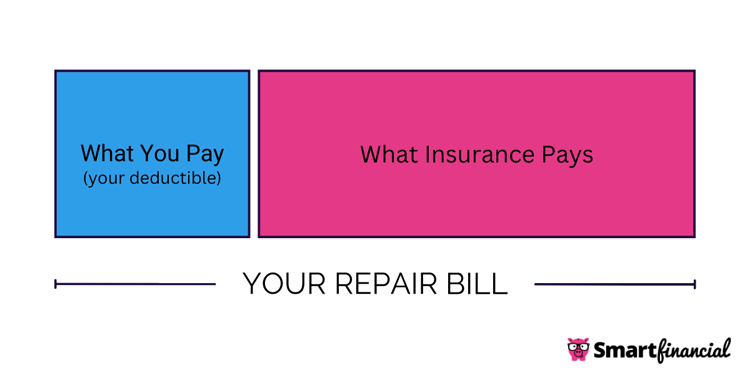
Depending on the type of loss you experience, you may need to make an out-of-pocket contribution — known as a deductible — whenever you file a claim on your BOP. In general, you can expect to pay a deductible for claims involving damage to your business property.[1] Conversely, some insurers don’t require a deductible for liability-related BOP claims.[2]
What Does Business Owners Policy Insurance Cover?
Basic BOPs generally include three main types of business insurance: general liability, commercial property and business interruption coverage.[3]
|
Coverage Type |
What It Covers |
Example Claim Scenario |
|---|---|---|
| General liability | Third-party bodily injury, property damage and advertising injury claims | A customer slips on a wet floor in your store and files a medical claim |
| Commercial property | Damage to business property, equipment and inventory from covered events, like fire or theft | A windstorm damages your office furniture and computer equipment |
| Business interruption | Lost income and operating expenses if your business temporarily shuts down after a covered loss | A fire forces your restaurant to close for repairs for two months |
See the sections below for a more in-depth overview of each coverage type.
General Liability Coverage
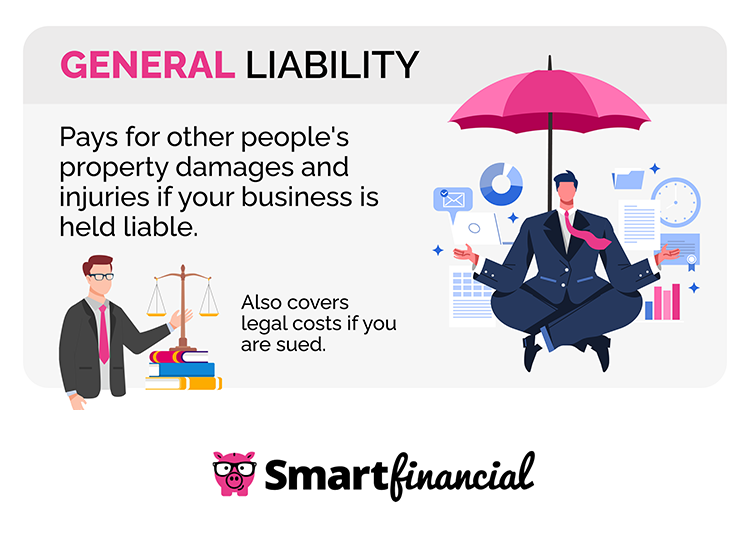
General liability insurance provides coverage in case your business is held responsible for another person or entity’s losses. For example, it can cover medical expenses for a guest who trips and breaks their arm on your business premises, or it can cover property repairs if your employees damage a customer’s belongings while completing a project at their home.
If a bodily injury or property damage claim escalates into a lawsuit, your general liability insurance can cover attorney fees, judgments, settlements and other legal defense costs. In addition, your BOP may cover your legal expenses if you are sued for personal or advertising injury. For example, general liability coverage may step in if you are accused of defamation or copyright infringement.
Commercial Property Insurance
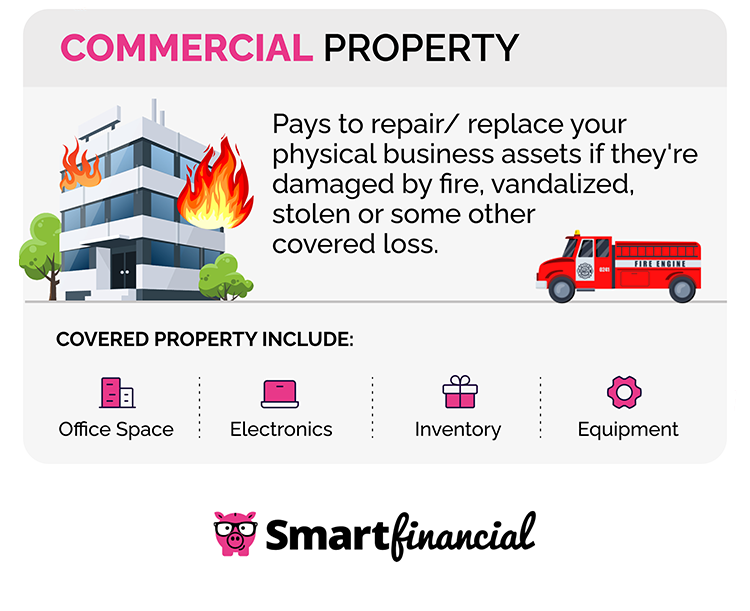
Commercial property insurance covers sudden and unexpected damage to your commercial buildings and the business-owned items inside them. For example, if a fire breaks out in your office building, commercial property coverage could pay to replace your computers, furniture, inventory, documents and other business personal property. Other covered perils commonly include explosions, storms, theft, vandalism and water damage from burst pipes.[4]
Business Interruption Insurance
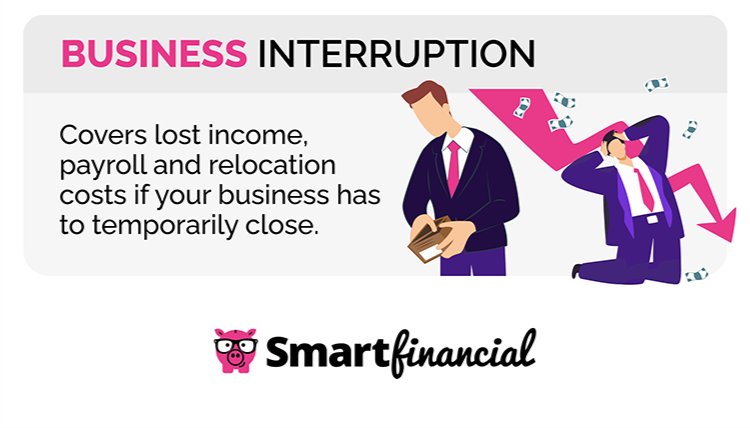
Business interruption insurance — also known as business income insurance — covers expenses that come up when a covered peril prevents your business from operating as usual, such as lost revenue, payroll and relocation costs. For example, in the event of a fire, business interruption insurance may help you temporarily rent office space so you can keep conducting business while you wait for your commercial building to be repaired.
Other Coverages
Depending on your insurance provider, you may have the option to add extra coverage types to your BOP, such as these:[3][5]
- Commercial umbrella insurance
- Cyber insurance
- Professional liability insurance
- Commercial auto insurance
- Workers’ compensation insurance
- Commercial flood insurance
- Commercial crime insurance
- Employee benefits liability insurance
- Employment practices liability insurance
What Isn’t Covered by BOP Insurance?
Your BOP’s exclusions may vary based on whether the policy includes any additional coverage types. In general, a basic business owners insurance policy won’t provide coverage in the following situations:
- A client sues your consulting firm because they lost money after you gave them bad advice or made some other mistake in the performance of your professional services.
- One of your delivery drivers is responsible for a commercial vehicle accident.
- Your company’s databases are hacked, and your customers’ payment information is stolen.
- An employee needs to go to physical therapy after they are injured on the job.
- Your commercial property is damaged by a flood or earthquake.
- One of your employees sues you due to allegations of harassment, discrimination or an error in the administration of their benefits.
- You discover that your chief financial officer has been embezzling money.
Regardless of the coverages included in your BOP, your insurance company won’t cover intentional losses, fraud, illegal conduct or losses that exceed your policy’s coverage limits.
Who Needs a Business Owners Policy?
BOP coverage is best for small and midsize businesses with relatively minimal risks and straightforward coverage needs. For example, USAA recommends BOPs for companies with less than $10 million in annual revenue and $15 million worth of commercial property.[5] Conversely, larger businesses in higher-risk industries that need to more precisely customize their coverage may want to opt for a commercial package policy instead.[6]
How Much Does BOP Insurance Cost?
The average cost of BOP insurance generally ranges from $500 to $3,000 per year. You can usually save at least 10% on your premiums by purchasing a business owners policy rather than buying each commercial coverage type individually.[7] Some of the factors that will influence your BOP costs include your industry, claims history, payroll, employee headcount and coverage details.[8]
Is Business Owners Policy Insurance Required?
Business owners policies generally aren’t required by law. That said, general liability insurance coverage is often mandatory for businesses that need to satisfy state licensing requirements, lease property or secure a government or other client contract — and a BOP may be the most cost-effective way to acquire this necessary business insurance coverage type.[9]
Business Owners Policy vs. General Liability Insurance
While business owners policies automatically include general liability coverage, there may be situations where a standalone commercial general liability insurance policy makes sense. The following table shows the main distinctions between general liability and BOP coverage:[6][7][12]
|
|
General Liability Insurance |
Business Owners Policy |
|---|---|---|
| Covered Losses | Third-party bodily injury, property damage or personal and advertising injury claims | Same as general liability insurance — plus damage to business-owned property, interruptions of normal business operations and potentially other losses |
| Average Annual Cost | $500 to $1,200 | $500 to $3,000 |
| Recommended For | Any business | Small businesses without specialized risks |
| Other Benefits | Grants policyholders the freedom to shop around and obtain core insurance coverages from different providers | Bundled policy means all claims and payments are conveniently handled by the same insurer |
A business owners policy is likely a better option for most small businesses, but standalone general liability insurance may be beneficial if you don’t have expensive equipment or buildings that would need to be replaced in the event of a sudden peril. For example, you may not need a full BOP if you work from home and do all of your work on a laptop you can afford to replace out of pocket, but you will likely still need liability coverage.
Business Owners Policy Insurance at a Glance
- Business owners policy insurance (BOP) bundles general liability, commercial property and business interruption coverage into one commercial insurance package designed for small and midsize businesses.
- BOP coverage protects against common business risks, including third-party bodily injury claims, property damage to business buildings and equipment and lost income after a covered disaster.
- A business owners policy is often more affordable than buying policies separately, with many small businesses paying roughly $500 to $3,000 per year, depending on industry, claims history and coverage limits.
- BOP insurance works best for businesses with straightforward risks, while companies with complex exposures may need a commercial package policy instead.
How To Get Business Owners Policy Insurance
Consider comparing business owners policy insurance prices from three to five different insurance carriers before picking a policy to increase the odds that you’ll find a good deal on the coverage you need. Though comparison shopping is always a good idea, it can take a long time if you contact multiple insurance companies individually to request quotes.
However, comparison shopping is much easier when you let SmartFinancial collect and analyze quotes for you. All you have to do is answer a few questions about your business and the kind of coverage you’re looking for, and then we’ll help you find the best policy for your company. Compare commercial insurance quotes through SmartFinancial today — and you won’t have to pay us a single penny!
- Insurance quotes /
- Commercial /
- Business Owner Policy Insurance
Dylan Tate is an insurance content expert for SmartFinancial with over 300 articles about home, auto, business, health and life insurance under his belt. He has over nine years of experience writing for online publications, primarily about gaming and esports. In the process, he has become an expert in search engine optimization, news reporting, feature writing and copy editing.


Get a Free Commercial Insurance Quote.
More on Commercial Insurance

Looking for Commercial Insurance?
Compare rates from dozens of companies in less than 3 minutes.