

Types of Commercial Auto Insurance: 10 Policies Your Business Might Need
 Written by Dylan Tate Written by Dylan Tate Dylan TateDylan Tate is an insurance content expert for SmartFinancial with over 300 articles about home, auto, business, health a... Read more |  Edited by Richard Murphy Edited by Richard MurphyRichard MurphyRichard Murphy manages content on SmartFinancial's website. With a strong background in content strategy and copywriting... Read more |
 Editorial Standards
 SmartFinancial Offers Unbiased, Fact-based Information. Our fact-checked articles are intended to educate insurance shoppers so they can make the right buying decisions. Learn More
At a minimum, your business must maintain auto liability coverage and other types of commercial auto insurance that are required by law in your state, such as personal injury protection or uninsured motorist coverage. It’s also recommended that you add physical damage coverage to your commercial auto insurance policy to cover sudden damage to your commercial vehicles.
Read on to learn about 10 of the most important commercial auto insurance types you need to consider for your company’s business insurance policy.
|
Key Takeaways
|
On This Page

1. Commercial Auto Liability Insurance
2. Physical Damage Coverage
3. Uninsured and Underinsured Motorist Coverage
4. Medical Payments Coverage (MedPay)
5. Personal Injury Protection (PIP)
6. Hired and Non-Owned Auto Insurance (HNOA)
7. Cargo Insurance
8. Bobtail Insurance
9. Fleet Insurance
10. Gap Insurance
Types of Commercial Auto Insurance at a Glance
How To Get Commercial Auto Insurance for Your Business
Frequently Asked Questions

1. Commercial Auto Liability Insurance
Commercial auto liability insurance — also known as primary liability coverage — protects your business from bearing all of the costs that may arise if you or one of your drivers is responsible for a commercial vehicle accident. Specifically, liability insurance can cover medical treatments, property repairs, legal fees and potentially other related expenses if your business is held liable for an accident that injures someone or damages their property.
|
Who Benefits From Liability Coverage |
Why Liability Coverage Is Beneficial |
|---|---|
|
Others |
Primary liability insurance takes care of medical or repair bills for other drivers, passengers or pedestrians in case your business causes a car accident, preventing them from bearing the weight of their own expenses after a devastating collision with a large business vehicle |
|
Your business |
Commercial auto liability coverage empowers you to keep your business running smoothly by ensuring that you won’t encounter massive out-of-pocket expenses after a sudden car accident caused by one of your employees |
Liability coverage is the most fundamental type of commercial car insurance, so it is crucial for any company that uses vehicles for business purposes — even if driving is not its primary commercial activity. Examples of businesses that need commercial auto liability insurance include the following:
- Package or food delivery services
- Rideshare drivers
- Limousine, taxi and other transportation services
- Construction contractors
- Electricians
- Plumbers
- Landscapers
- Florists
Most states require primary liability coverage for businesses that use vehicles. Usually, the minimum liability coverage limits required by law are the same for commercial and personal vehicles.[1] However, for greater protection, you may want to exceed your state’s minimum requirements by opting for a policy with a combined single limit between $500,000 and $1 million.[2]
2. Physical Damage Coverage
Since property damage liability insurance only covers other people’s property repairs, you will need physical damage insurance to cover your own repairs if your business is responsible for a crash or your vehicles are damaged by something other than a car accident. Physical damage insurance may be broken down into the following three coverage types:[2][3]
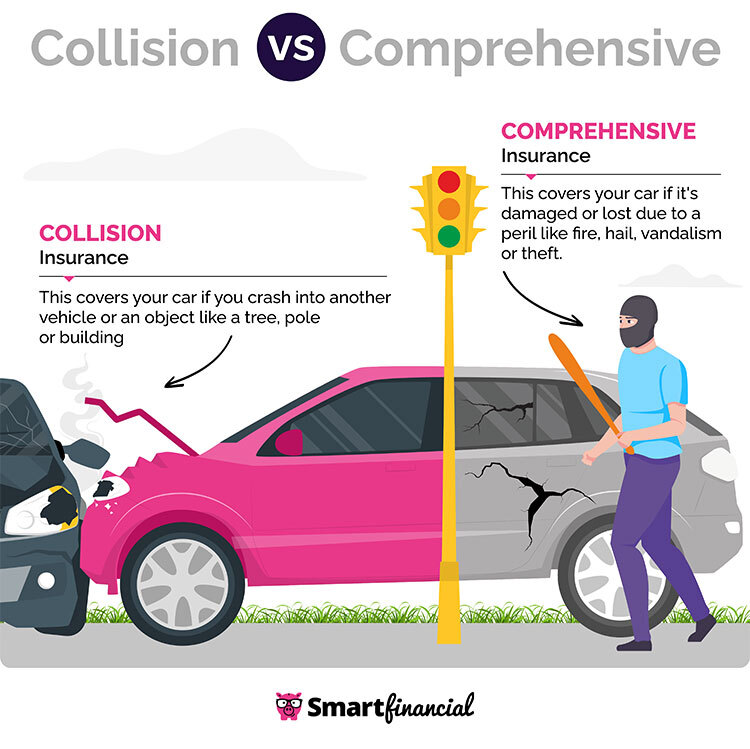
- Collision: Collision insurance can cover the costs of repairing or replacing your company’s vehicles if one of your employees collides with another vehicle, crashes into a tree or other stationary object or is involved in a single-vehicle rollover.
- Comprehensive: Comprehensive coverage insures your commercial vehicles against most external sources of damage other than collisions, including fires, floods, falling objects, explosions, earthquakes and animal strikes. It can also pay to replace a stolen vehicle if the police are unable to recover it.
- Fire and theft with CAC: Fire and theft with combined additional coverage is similar to comprehensive insurance, but it only covers perils that are specifically named in the policy documents. This type of coverage is generally recommended for heavy-duty commercial trucks.
3. Uninsured and Underinsured Motorist Coverage
Uninsured and underinsured motorist coverage can protect your business in case another driver cannot cover your expenses after causing an accident that injures someone who works for you or damages one of your commercial vehicles. If your employee is struck by someone who doesn’t have auto liability insurance at all — or if you can’t identify the at-fault driver after a hit-and-run — your medical or repair costs may be covered by uninsured motorist coverage.
Meanwhile, underinsured motorist coverage can help make up the difference in the event that the at-fault driver has car insurance but their liability coverage limits are too low to fully cover your company’s medical or repair expenses. Keep in mind that uninsured and underinsured motorist insurance may be required by law, depending on your state.[2]
4. Medical Payments Coverage (MedPay)
Bodily injury liability insurance only applies to people unaffiliated with your business when you are held liable for a crash, so you will need separate medical payments coverage to take care of hospital or funeral costs for members of your company or their passengers. MedPay may act as secondary coverage, meaning it may only apply to health care expenses that aren’t already covered by your employees’ health insurance.[4]
5. Personal Injury Protection (PIP)
A more comprehensive alternative to MedPay is personal injury protection. In addition to covering medical treatments and final expenses, PIP may also cover lost wages for an employee who must spend time away from work while recovering from a car accident.[5] Depending on your state, you may be required by law to carry either PIP or MedPay.[2]
6. Hired and Non-Owned Auto Insurance (HNOA)
Hired and non-owned auto insurance can extend your primary liability coverage to vehicles that your business uses but does not own. Hired auto coverage applies to vehicles that your business has rented, leased or borrowed, while non-owned auto coverage applies to vehicles that your employees own and use for purposes related to your business.[6] Here are examples of professions that often benefit from maintaining HNOA coverage:
- Pharmaceutical sales representatives
- Real estate agents
- Information technology service providers
- Consultants
- Nonprofits
- Transportation and logistics companies
7. Cargo Insurance
Trucking businesses may need cargo insurance to cover damage to or the loss of freight they are hauling — along with any lawsuits that may arise because of it. Motor carriers and freight forwarders that transport household goods are required by law to carry at least $5,000 worth of cargo insurance.[7] Various types of vehicles may be eligible for coverage under a typical cargo insurance policy, such as the following:[8]
- Box trucks
- Cargo vans
- Flatbeds
- Car haulers
- Tractor-trailers
- Dump trucks
- Cement mixers
- Dually pickup trucks
- Most types of trailers
8. Bobtail Insurance
Bobtail insurance is a specialized type of commercial auto insurance for truckers that provides liability and physical damage coverage while a truck does not have a trailer attached to it. Similar coverages truckers may need include deadhead insurance, which applies when the trailer attached to the truck is empty, and non-trucking liability insurance, which applies when a trucker uses their work vehicle for personal reasons.[9]
9. Fleet Insurance
Businesses with multiple commercial vehicles — usually at least five — can often secure cheaper commercial auto insurance rates by covering all of their vehicles under a single fleet insurance policy.[10][11] Fleet insurance is not its own separate coverage type, but rather a way to obtain coverage for multiple cars at the same time. This type of policy makes the most sense for businesses that own several vehicles, which is common in industries like these:[12]
- Heating, ventilation and air conditioning
- Energy
- Health care
- Law enforcement
- Education
- Food and beverage
- Pest control
- Government and municipal services
- Utilities and telecommunications
- Insurance and financial services
10. Gap Insurance
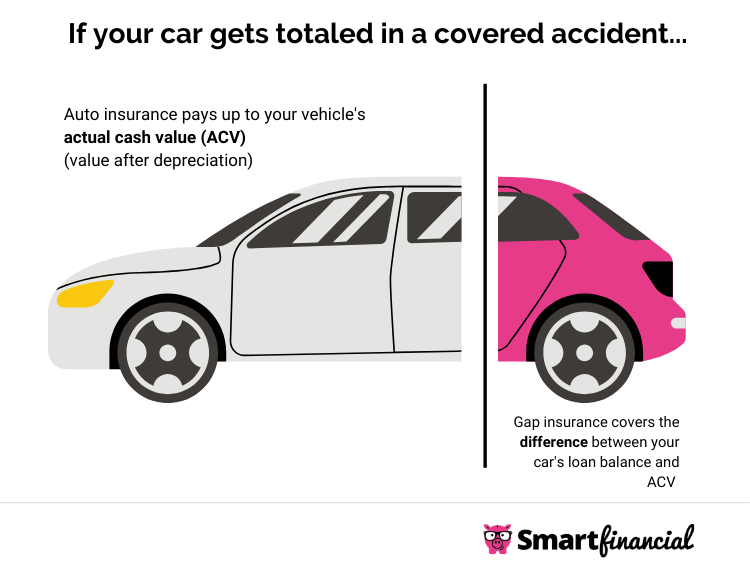
Gap insurance works with physical damage coverage to protect businesses that are still paying off the loans for their commercial vehicles. After an accident, your collision insurance will generally pay out the actual cash value of the totaled vehicle. If the car’s ACV is lower than the amount you still owe to your lender, gap insurance will cover the difference — allowing you to finish paying off your current loan before taking out another loan for a new vehicle.
Types of Commercial Auto Insurance at a Glance
- Summary: Business owners who use cars, trucks or other vehicles to conduct business activities need various types of commercial auto insurance policies to comply with state laws and protect against common driving-related risks.
- Minimum requirements: In the majority of states, businesses that use vehicles are required by law to carry commercial auto liability insurance. Depending on your state, other types of commercial auto insurance coverage may also be mandatory, such as uninsured and underinsured motorist coverage, medical payments coverage or personal injury protection.
- Physical damage protection: Though not required by law, physical damage insurance is important to help cover damage to your company’s vehicles. It includes collision insurance to cover accident-related damage and comprehensive insurance to cover damage from external perils, like fire, storms and theft.
- Loan protection: After a total loss, physical damage insurance typically pays out the actual cash value of your vehicle — which may not be enough to pay off the loan for that vehicle. In this scenario, gap insurance can step in to pay out the difference between your totaled car’s ACV and your outstanding loan balance.
- Coverage for non-owned vehicles: If you allow your employees to use their own cars to conduct commercial activities or if you borrow, rent or lease vehicles for your business, you may need hired and non-owned auto insurance to secure complete liability coverage protection.
- Trucking insurance options: Trucking companies may need various types of specialized trucking insurance policies, such as cargo insurance to cover freight in transit and bobtail insurance to cover trucks when they are driven without an attached trailer.
- Multicar coverage: Any business that owns five or more commercial vehicles may be able to cover all of them under one policy at a discounted rate by purchasing fleet insurance.
How To Get Commercial Auto Insurance for Your Business
Shopping around and comparing quotes from around three to five different insurance companies increases the odds that you will find a policy that includes all of the commercial car insurance types your business needs at an affordable rate. However, this may seem like a daunting task for business owners who already have a lot on their plates, since it can take a while to individually contact and request quotes from multiple insurance carriers.
Fortunately, SmartFinancial makes comparison shopping fast and easy. Simply fill out our online questionnaire one time to be connected with an insurance agent who can help you find the best possible deal on a commercial auto policy that matches your coverage needs. You can start the process of collecting commercial insurance quotes for free by clicking here!
- Insurance quotes /
- Commercial /
- Types Of Commercial Auto Insurance
Dylan Tate is an insurance content expert for SmartFinancial with over 300 articles about home, auto, business, health and life insurance under his belt. He has over nine years of experience writing for online publications, primarily about gaming and esports. In the process, he has become an expert in search engine optimization, news reporting, feature writing and copy editing.


Get a Free Commercial Insurance Quote.
More on Commercial Insurance

Looking for Commercial Insurance?
Compare rates from dozens of companies in less than 3 minutes.