

Fleet Insurance: Coverage, Costs and Benefits Explained
 Written by Dylan Tate Written by Dylan Tate Dylan TateDylan Tate is an insurance content expert for SmartFinancial with over 300 articles about home, auto, business, health a... Read more |  Edited by Richard Murphy Edited by Richard MurphyRichard MurphyRichard Murphy manages content on SmartFinancial's website. With a strong background in content strategy and copywriting... Read more |
 Editorial Standards
 SmartFinancial Offers Unbiased, Fact-based Information. Our fact-checked articles are intended to educate insurance shoppers so they can make the right buying decisions. Learn More
By purchasing fleet insurance, trucking businesses and other companies with multiple commercial vehicles can conveniently cover all of their business-owned vehicles under a single commercial insurance policy. A fleet insurance policy may include coverage for third-party liability claims, first-party physical damage claims and other automobile losses, and it is often cheaper to buy fleet insurance than to buy coverage individually for each vehicle.
Read below to learn more about commercial truck fleet insurance, including what factors influence how much it costs and what types of businesses may benefit from automobile fleet insurance.
|
Key Takeaways
|
On This Page

What Is Fleet Insurance?
How Does Fleet Insurance Work?
What Does Fleet Insurance Cover?
What Isn’t Covered by Fleet Insurance?
How Much Does Fleet Insurance Cost?
Who Needs Fleet Insurance?
When Is Fleet Insurance Required?
Benefits of Fleet Insurance for Business
Fleet Insurance at a Glance
How To Get Fleet Insurance for Your Business
FAQs

What Is Fleet Insurance?
Fleet insurance is a category of commercial auto insurance coverage that enables business owners to insure multiple vehicles under the same policy — rather than buying a separate policy for each vehicle. This simplifies policy management, since business owners won’t have to worry about filling out paperwork and paying premiums for several different commercial auto insurance policies.[1]
Business fleet insurance also tends to be cost-effective, with policyholders generally qualifying for discounted rates across all vehicles covered by the policy.[1] However, you may need to meet a minimum vehicle threshold to qualify for fleet coverage, depending on your insurance company. For example, Travelers offers fleet insurance to businesses with at least five covered vehicles.[2]
|
|
Commercial Fleet Insurance |
Standard Commercial Auto Insurance |
|---|---|---|
| Function | Insures a fleet of business vehicles against third-party liability claims, first-party property damage and similar losses | Insures any given business vehicle against third-party liability claims, first-party property damage and similar losses |
| Benefit | Simplifies the claims and policy management processes by condensing coverage for all vehicles under one policy | Enables smaller businesses to meet legal requirements without spending more than necessary on commercial auto coverage |
| Relative Cost | Cheaper on a per-vehicle basis | Cheaper overall because it covers fewer vehicles |
| Who Needs It | Businesses with multiple commercial vehicles (usually five or more) | Any business that uses vehicles for commercial purposes |
How Does Fleet Insurance Work?
You can file a claim on your commercial fleet insurance policy to be reimbursed after one of your drivers is involved in a commercial vehicle accident or experiences some other vehicle-related loss — as long as you keep your policy active by regularly paying your premiums on time. Fleet coverage generally extends to any type of vehicle your company uses to conduct business activities.[3] Examples of fleet vehicles that may be covered include the following:
|
Sedans, hatchbacks and other compact or midsize cars |
Motorized construction equipment, such as forklifts and cranes |
|
Pickups |
Delivery trucks |
|
SUVs |
Tractor-trailers |
|
Vans |
Box trucks |
|
Taxis |
|
|
Limousines |
Hearses |
|
Mixer trucks |
Farm vehicles, such as tractors |
|
Fire engines |
|
|
Police cars |
Utility trucks |
Types of Fleet Insurance
While you may be able to customize your fleet insurance policy to precisely match the needs of your business, commercial insurance companies often offer fleet insurance packages that are specially designed for certain types of businesses. Here are the main types of fleet insurance policies:[4]
- Haulage and courier: These policies primarily cover semi-trucks, vans and other large vehicles capable of transporting heavy freight, and they may provide specialized coverage for cargo storage, mechanical breakdowns and windshield damage.
- Minibus: If you use buses to carry passengers, you may need minibus fleet insurance. Examples of businesses and organizations that commonly need this kind of coverage include schools, airports, nursing homes and public transit services.
- Car and van: Car and van coverage may be beneficial for a wide range of businesses, such as those that transport light goods or use small to midsize vehicles for basic business operations. That said, this type of fleet insurance policy is most commonly designed for car rental companies.
- Hazardous goods: Businesses that transport radioactive materials, medical waste or toxic chemicals may need specialized fleet insurance to address the unique risks they may face in their day-to-day activities, such as the risk of causing pollution or other environmental hazards.
- Public hire: Many kinds of fleet insurance policies may require you to assign one covered driver to each commercial vehicle, but public hire fleet insurance may cover up to three drivers per vehicle — providing greater flexibility for businesses that have a rotating list of drivers using the same vehicle for different shifts, such as taxi services.
What Does Fleet Insurance Cover?
Fleet insurance can cover a variety of expenses in the event of a car accident or other vehicle-related incident, such as medical bills, property repairs and legal fees — for both you and other people or entities, depending on the coverage types included in your policy. See the following sections for more information on the various types of commercial auto insurance you may be able to add to your fleet insurance policy.
Liability Coverage
Commercial auto liability insurance provides coverage for other drivers and pedestrians if your business is liable for a collision. The auto liability insurance umbrella includes two main coverage types:[5]
- Property damage: Property damage liability coverage can pay to repair or replace cars or other types of property you have damaged in a commercial vehicle accident.
- Bodily injury: Bodily injury liability coverage can take care of medical bills and lost income for someone you injure in an accident. It also covers your legal fees if you are sued after a crash.
Physical Damage Coverage
While your auto liability insurance can cover other people’s property repairs, physical damage coverage is necessary to protect your own commercial vehicles. Commercial auto policies often break down physical damage insurance into these two coverage types:[5]
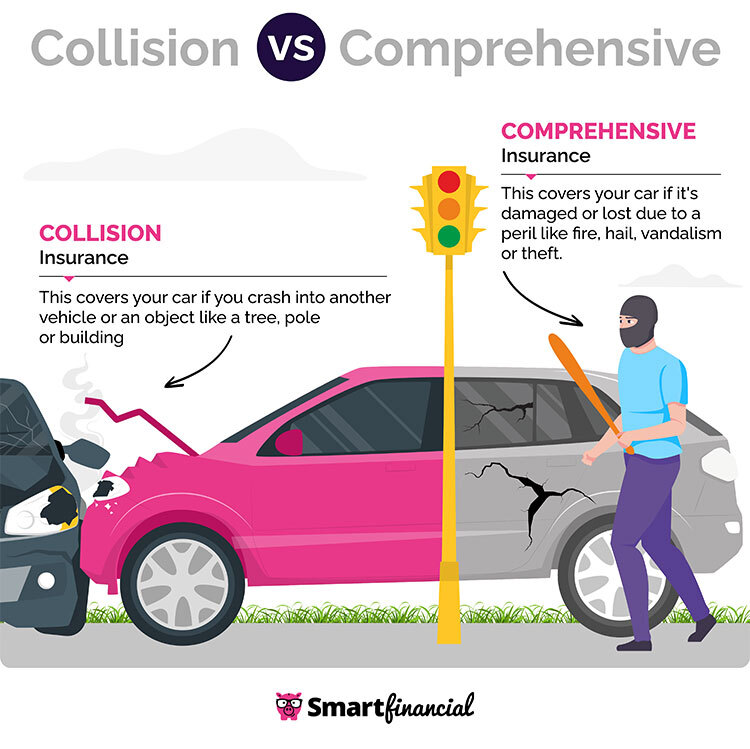
- Collision: Collision coverage can pay to repair or replace your commercial vehicles after a car wreck — even if your business is liable for the accident. Coverage may also extend to collisions that don’t involve other vehicles, such as a single-car rollover or a collision with a tree or other stationary object.
- Comprehensive: Comprehensive insurance covers vehicle-related losses stemming from noncollision perils, including fire, theft, vandalism, natural disasters and animal strikes.
Cargo Insurance
Commercial trucking fleet insurance policies often include cargo insurance.[1] This type of coverage is crucial for businesses that haul freight, as it can reimburse them or their clients if cargo placed in their care is damaged, destroyed or stolen while in transit. Cargo insurance may also cover salvage or recovery costs and financial losses caused by delivery delays.[6]
Uninsured and Underinsured Coverage
Uninsured motorist insurance covers car repairs and medical expenses for you or your drivers if you are struck by another driver who doesn’t have car insurance or you can’t identify the at-fault driver after a hit-and-run. Meanwhile, underinsured motorist coverage steps in if you are struck by a driver who doesn’t have enough insurance to fully cover your company’s hospital and repair expenses.[5]
Medpay or PIP
Since bodily injury liability insurance coverage only applies to people unaffiliated with your business, you will need medical payments coverage or personal injury protection to cover medical treatments for members of your company or their passengers after a commercial vehicle accident.[5] Both coverage types can pay for medical care, but only PIP covers lost wages while you are recovering.[7]
Roadside Assistance
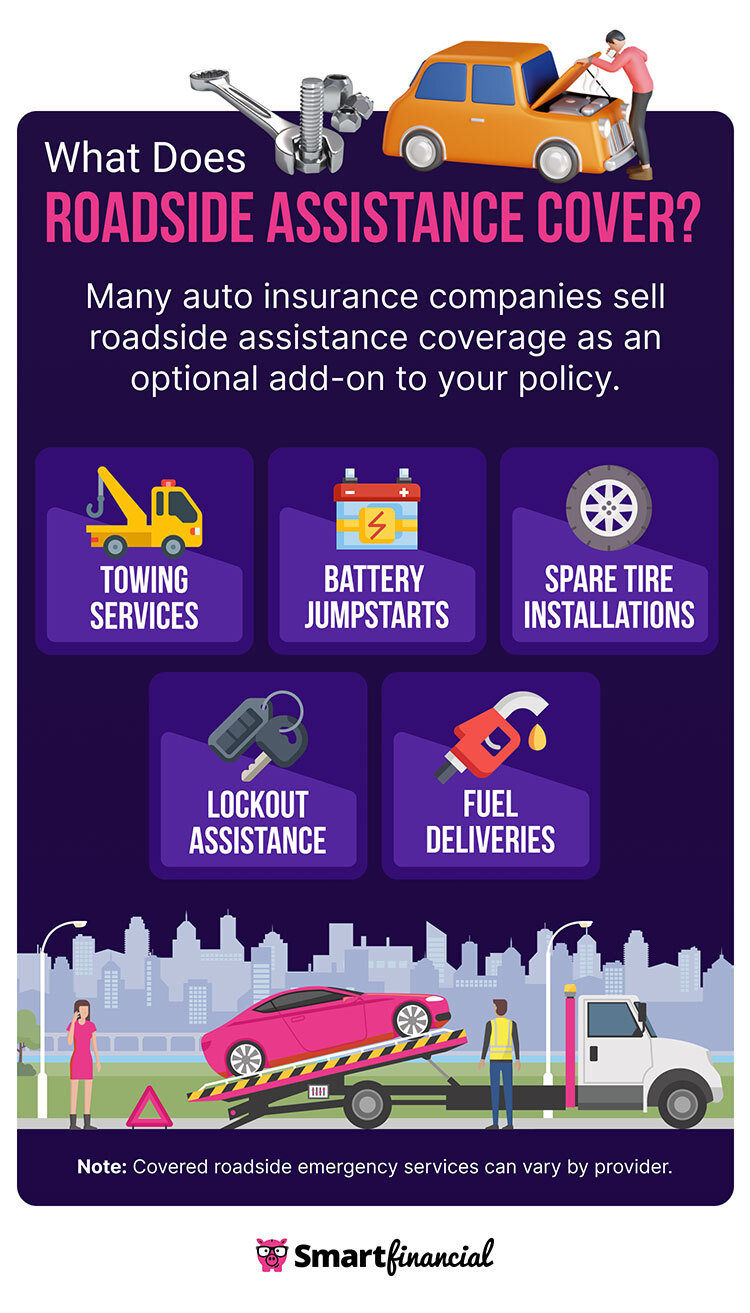
Roadside assistance coverage can step in to help cover the expenses that may arise if your commercial vehicle experiences a mechanical breakdown that leaves you stranded on the side of the road. Examples of services that may be covered by this fleet insurance policy add-on include towing, battery jumpstarts, flat tire replacements and lockout assistance.[5]
Hired and Non-Owned Auto Insurance
Hired and non-owned auto insurance can extend your auto liability coverage to vehicles your business uses for commercial purposes but does not own. For example, coverage may apply to your employees’ personal cars while they use them to conduct business activities. In addition, hired and non-owned auto insurance can cover vehicles that your company leases, rents or borrows.[8]
Fire and Theft With CAC
Fire and theft with combined additional coverage is a specialized type of comprehensive insurance designed to cover certain kinds of heavy-duty trucks. This coverage type may only cover damage from perils that are specifically named in the policy. Covered perils often include fire, theft, flooding, earthquakes, lightning, explosions, collisions with animals and damage that occurs while the truck is used by a third party.[8]
Non-Trucking Liability Insurance
Owner-operators may need non-trucking liability insurance to cover them whenever they drive a business-owned truck for noncommercial purposes. Other specialized coverages to consider include bobtail and deadhead insurance. Bobtail coverage applies when you drive your truck without a trailer attached, while deadhead coverage applies when the trailer is attached but empty — like when you are on the way back after dropping off cargo.[9]
What Isn’t Covered by Fleet Insurance?
Your commercial auto fleet policy generally won’t cover losses that are already covered by a different type of commercial insurance. See the table below for examples of situations that would not be covered by your fleet car insurance but would be covered by a typical business owners policy.
|
Situation |
Covered By |
|---|---|
|
An employee at one of your food trucks drops and breaks a customer’s phone while trying to scan a digital coupon |
|
|
An inspector trips over a misplaced pallet in your warehouse and breaks their arm |
General liability insurance |
|
You are sued after a rival trucking company accuses you of defaming it in an advertisement |
General liability insurance |
|
Tree branches crash through all of the windows in your office building amid a windstorm |
|
|
Intruders break into your garage and steal thousands of dollars' worth of equipment |
Commercial property insurance |
|
Internet and cell phone services go down in your area because of a storm, rendering your rideshare app unusable for several days |
Keep in mind that fleet insurance is designed to cover vehicles used for commercial purposes, so it may limit coverage for business-owned vehicles while they are used to run personal errands, depending on your insurance company’s requirements.[10] Also, insurance generally covers sudden losses rather than gradual or preventable damage, meaning you likely won’t be covered if one of your vehicles breaks down due to poor maintenance on your part.
How Much Does Fleet Insurance Cost?
The average annual cost of fleet insurance ranges from around $1,000 to $1,500 per vehicle on average — which is less than the $1,500 to $7,000 per-vehicle average for standard commercial auto insurance, suggesting businesses often qualify for discounted rates by buying coverage in bulk.[4][11] Continue reading to learn about some of the factors that may impact your auto fleet insurance premiums.
Industry
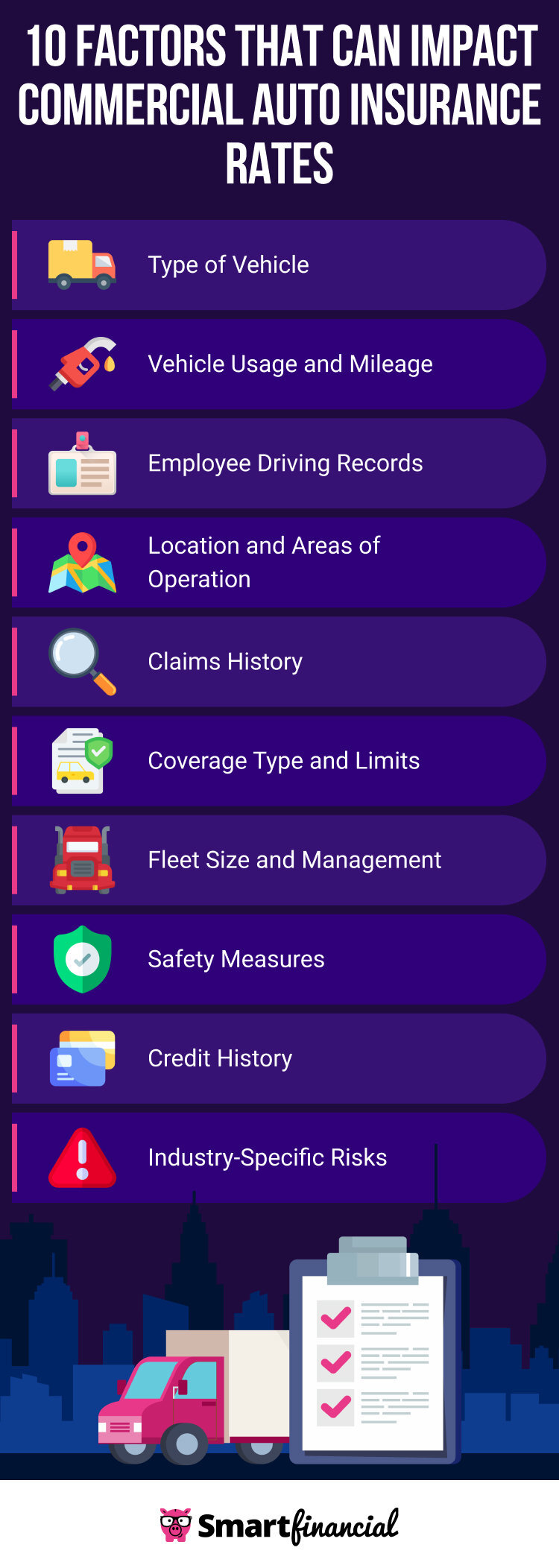
Your fleet insurance premiums will depend heavily on how you use your vehicles, including your typical mileage and whether you haul goods — meaning coverage is more expensive for certain industries than for others.[12] For example, a delivery service whose drivers are constantly driving to deliver food or packages can expect to pay more for coverage than a consulting firm whose employees only occasionally use company cars to drive to meetings with clients.
Fleet Size
Naturally, there is a higher risk of getting into commercial vehicle accidents when you have more vehicles on the road, so the number of vehicles your policy covers will influence how much your fleet insurance policy costs.[12] For example, a national trucking corporation with 100 tractor-trailers would pay much more than a small business with only 10 trucks.
Vehicle Type
Insurers will also consider the types of vehicles your business uses when setting your fleet insurance rates.[12] For example, larger vehicles can inflict more damage in accidents, so an 18-wheeler may require higher liability insurance rates than a delivery van. Physical damage coverage costs may also depend on the condition and value of your vehicles, since your insurer would have to pay more to replace a newer, more expensive car after a crash.[4]
Location
If your business is located in an area with higher population density or crime rates, you may have a higher exposure to covered car insurance claims and may need to pay more for fleet coverage.[12] In particular, you can expect your policy to be more expensive if you operate in a high-traffic urban region or transport people or freight over long distances or across state lines.[13]
Claims History
Insurance companies take your claims history into account when determining the risk associated with covering you, as business owners who have filed multiple claims in the past may be viewed as more likely to do so again.[12] As a result, you may be able to save on commercial fleet insurance by implementing safety training and protocols to reduce the likelihood of crashes and avoid filing claims more often than necessary.
Employee Driving Records
The driving records of the employees covered by your policy will also indicate your likelihood of filing claims and impact the cost of your company fleet insurance policy.[12] For this reason, it’s crucial to screen prospective drivers, since you could end up paying more for fleet coverage if you hire multiple drivers with a history of accidents, DUIs or other traffic violations.
Who Needs Fleet Insurance?
In general, any business that uses multiple vehicles for commercial purposes needs fleet insurance. Examples of private industries and public sector organizations that commonly make use of fleets include the following:[14]
|
Transportation and logistics |
Construction |
|
Oil and gas |
|
|
Health care |
Law enforcement |
|
Education |
Food and beverage |
|
Pest control |
|
|
Government and municipal services |
|
|
Utilities and telecommunications |
Insurance and financial services |
When Is Fleet Insurance Required?
While fleet insurance specifically isn’t necessarily mandatory, commercial auto liability insurance is required by law in most states, and fleet insurance can help you meet this legal requirement. Additionally, many states require uninsured and underinsured motorist coverage and Medpay or PIP.[15] Cargo insurance may also be required by law, depending on your industry.[16]
Benefits of Fleet Insurance for Business
Fleet insurance can have several benefits for businesses that use a large number of vehicles, including the following:[4]
- Convenience: Purchasing separate policies for each of your company’s commercial vehicles and/or drivers could be a logistical nightmare, but fleet insurance allows you to cut down on the paperwork and manage the coverage for all of your cars and employees through a single insurance provider.
- Reduced rates: Since insurance companies can secure more business by locking in coverage for a large number of vehicles from the same customer, they generally offer discounted premiums to policyholders who opt for fleet insurance rather than individual commercial auto insurance policies.
- Easier claims process: Filing insurance claims could get complicated if you had to submit relevant details to several different insurance carriers — fleet insurance helps simplify the process and reduce confusion by ensuring you only need to file claims with a single insurance carrier whenever a covered loss occurs.
Fleet Insurance at a Glance
- Fleet insurance is a type of business insurance that covers multiple commercial vehicles and drivers under a single commercial auto insurance policy.
- In general, fleet insurance coverage may extend to any type of vehicle used for commercial purposes, including cars, trucks, vans, limos, ambulances and even motorized construction or farming equipment.
- A fleet insurance policy may help you meet legal requirements, since many states require commercial drivers to carry auto liability, uninsured and underinsured motorist and personal injury protection or medical payments coverage.
- Most fleet insurance policies include liability, physical damage and cargo coverage, but you may also have the option to add coverages like roadside assistance, non-trucking liability and hired and non-owned auto coverage.
- Your fleet insurance generally won’t cover gradual or preventable damage or losses covered under other insurance policies, and it may limit coverage for the personal use of commercial vehicles.
- Average fleet insurance premiums generally range from $1,000 to $1,500 per vehicle per year, depending on factors like your industry, fleet size, vehicle types, location, claims history and employee driving records.
- The main benefits of fleet insurance include discounted premiums and simpler policy management and claims filing processes.
How To Get Fleet Insurance for Your Business
Shopping around for fleet insurance quotes from three to five commercial insurance companies is a great way to find out if you’re getting the best deal on the fleet coverage your business needs. To receive a quote, you’ll have to share information like your company’s industry, location, revenue and employee headcount. However, this can take quite a while if you contact each insurance company individually.
Fortunately, insurance shopping is quick and easy when you use a marketplace platform like SmartFinancial. Once you fill out a questionnaire to help us understand your insurance needs, we’ll match you up with an agent who can help you find the perfect insurance policy for your circumstances — sometimes in as little as a few minutes. For free commercial insurance quotes through SmartFinancial, click here!
- Insurance quotes /
- Commercial /
- Fleet Insurance
Dylan Tate is an insurance content expert for SmartFinancial with over 300 articles about home, auto, business, health and life insurance under his belt. He has over nine years of experience writing for online publications, primarily about gaming and esports. In the process, he has become an expert in search engine optimization, news reporting, feature writing and copy editing.


Get a Free Commercial Insurance Quote.
More on Commercial Insurance

Looking for Commercial Insurance?
Compare rates from dozens of companies in less than 3 minutes.