

New Year, New Coverage: Aligning Your 2026 Resolutions With Insurance Goals
 Written by Dylan Tate Written by Dylan Tate Dylan TateDylan Tate is an insurance content expert for SmartFinancial with over 300 articles about home, auto, business, health a... Read more |  Edited by Richard Murphy Edited by Richard MurphyRichard MurphyRichard Murphy manages content on SmartFinancial's website. With a strong background in content strategy and copywriting... Read more |
 Editorial Standards
 SmartFinancial Offers Unbiased, Fact-based Information. Our fact-checked articles are intended to educate insurance shoppers so they can make the right buying decisions. Learn More
While typical resolutions involve saving money, living a healthier lifestyle and spending more time with family and friends, it’s worth considering how insurance should factor into your New Year’s resolutions heading into 2026.[1] By shopping for the right policies with premiums that don’t break the bank, you can secure peace of mind and coverage for the most common risks you expect to face during the upcoming year.
Read below to learn about the various ways you can make sure your insurance policies are meeting your needs and how insurance can fit into your New Year’s resolution ideas for 2026.
|
Key Takeaways
|


1. Build a Better Budget
One of the best ways to combat economic uncertainty going into the new year is to reevaluate your family’s budget. An October 2025 survey found that 74% of respondents have a negative or middling view of the current state of the national economy, while 46% expect economic conditions to worsen over the course of 2026.[2] If you have similar concerns, consider taking the steps below as you set finance-related New Year’s resolutions.
Review Your Finances
It’s helpful to take a look at your spending patterns from the past year — and look ahead to the expenses you expect to incur during the upcoming year — so you can think through how much money to save up and where you may be able to cut costs. For example, you could lower your homeowners insurance premiums by raising your deductible — the amount of money you pay out of pocket whenever you file a claim.

Review Your Insurance Policies
It’s generally recommended that you review your insurance policies at least once per year or anytime you experience a major life event to confirm whether you have an appropriate amount of coverage.[3] Though you could evaluate each of your policies individually as they come up for renewal, it may be helpful to look over all of them at once prior to the new year.
Think about how your coverage needs are likely to change in 2026, and identify which of your policies may not meet those changing needs. For example, if you recently got married and your spouse has moved in with you, you may want to raise your home insurance policy’s personal property coverage limit to account for the value of their belongings.
Meanwhile, if your child will turn 16 next year, you may want to shop around to find a better deal on car insurance to account for the rising premiums you’ll encounter when you add a new car and an inexperienced driver to your policy. Keep in mind that teenage drivers have a higher crash fatality risk than other age groups, and they are expensive to insure as a result.[4]
Find Ways To Save On Insurance
Check to see if you are eligible for any discounts that can keep you from paying more for insurance than you need to. For example, if you rarely use your car and consistently drive safely when you do, you could secure lower rates by signing up for a telematics program. In addition, if you currently have home and auto insurance from different insurers, you may be able to save money by buying both policies from the same carrier to earn a bundling discount.
2. Clean Your Home
Another resolution to consider is thoroughly cleaning your home and throwing out, selling or donating clothes and other items you don’t need anymore. You may also want to run through a home maintenance checklist to ensure your home’s structures and systems are in good condition so you can avoid unnecessary damage that could lead to costly insurance claims.
Make a Home Inventory
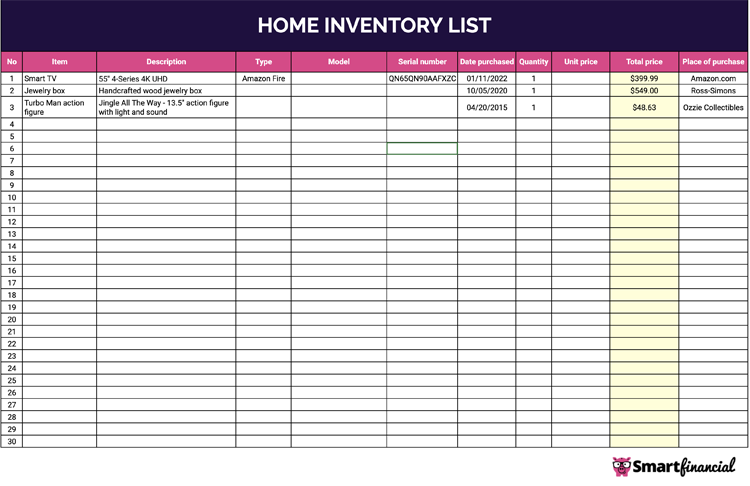
Once you’ve cleared up the clutter and settled on the possessions that are worth keeping, you may want to create a home inventory for homeowners insurance purposes. By keeping tabs on the valuable items you own, you can determine whether your current personal property coverage limit is sufficient and provide proof to support your insurance claim in the event that those belongings are destroyed.
Your home inventory should include details like what each item is, when you bought it, how much you paid for it at the time and — if it has been recently appraised — how much it is currently worth. It’s best to record this information digitally and upload it to the cloud, since you could potentially misplace a physical inventory list or lose it due to a major peril, such as a house fire.
Check the Value of Your Home
Similarly, you may want to hire an appraiser to reassess your home’s replacement cost value so you can figure out if you need more dwelling coverage for your homeowners insurance policy. It’s generally recommended that you maintain enough dwelling insurance to completely rebuild your home in case it is destroyed by a covered peril.[5]
As the costs for construction materials and labor rise over time, the replacement cost of your home may also increase steadily. For this reason, if your policy doesn’t come with an inflation guard endorsement that automatically raises your dwelling coverage limit to keep up with inflation, you could end up underinsured unless you periodically increase the coverage limit yourself.
Add Security Measures
Adding home security measures can both keep you and your family safer and result in insurance savings, since insurers may offer discounts if you take steps to lower your chances of filing a claim. For example, installing security cameras and burglar alarms can lower your home’s exposure to theft. You could also get a discount for other loss prevention measures, such as installing smoke detectors and sprinklers to mitigate the impact of fire on your home.
3. Take Care of Your Health
Many Americans become more conscious of their health around the new year, with exercising more, eating healthier, losing weight and quitting smoking ranking among the most popular New Year’s resolutions going into 2025.[1] While pursuing a healthier lifestyle may help you reduce your health care costs in 2026, it’s still important to maintain health insurance coverage to protect yourself against worst-case scenarios.
Shop for Health Insurance
Health insurance open enrollment lasts from Nov. 1 to Jan. 15 in most states, so you’ll only have a couple of weeks after New Year’s Day to settle on a Health Insurance Marketplace plan that suits your coverage needs.[6] Keep in mind that your health status and medical history don’t impact Marketplace health insurance premiums, which means it may be worth enrolling in a plan now even if you aren’t currently in good health.[7]

Enroll in Medicare
If you will turn 65 in 2026, you may want to get ready to transition from private health insurance to Medicare. Medicare Part A is free if you or your spouse paid Medicare taxes for at least 10 years, while your Part B premium depends on your income.[8] Alternatively, you could go through a private insurance company and enroll in a Medicare Advantage plan, which includes all the other parts of Medicare and often extra benefits, like vision and dental coverage.
Purchase Life Insurance
If you expect to have dependents who will rely on your income at some point, then it’s never too early to start thinking about life insurance. Age is one of the primary factors impacting life insurance rates, so it’s usually better to purchase coverage when you’re young than to wait until you’re older. That said, insurance carriers will also take your current health status into account when setting your life insurance premiums.[9]
4. Grow Your Wealth
If you are a small business owner, you could also benefit from setting New Year’s resolutions related to your company in order to grow your wealth over the course of 2026. Take a look at our suggestions below for more information on how you can protect your business financially and save more money on crucial commercial expenses throughout the upcoming year.
Start an LLC
You can protect your finances by converting your business from a sole proprietorship to a limited liability company. As its name suggests, an LLC limits your personal liability for business-related debts because the LLC is its own entity for legal purposes.[10] For example, if a disgruntled client sues your LLC, your personal assets — like your home and personal bank accounts — won’t be at risk, and any judgments or settlements will instead come out of the company’s funds.
Protect Your Business
It’s crucial to maintain an appropriate amount of commercial insurance coverage to protect your business from financial losses due to damaging perils or liability concerns. Some coverage types — such as commercial auto insurance and workers’ compensation insurance — are required by law for most businesses.[11][12] Other commercial insurance coverages worth considering include the following:
- Business owners policy insurance, which usually includes general liability, commercial property and business interruption coverage
- Professional liability insurance, also known as errors and omissions insurance
- Cyber insurance
- Commercial umbrella insurance
- Employment practices liability insurance
- Directors and officers liability insurance
- Commercial crime insurance
- Insurance quotes /
- New Year Insurance Resolutions
Dylan Tate is an insurance content expert for SmartFinancial with over 300 articles about home, auto, business, health and life insurance under his belt. He has over nine years of experience writing for online publications, primarily about gaming and esports. In the process, he has become an expert in search engine optimization, news reporting, feature writing and copy editing.


Get a Free Insurance Quote Online Now.
More on Insurance

Get a Free Insurance Quote.
Compare rates from dozens of companies in less than 3 minutes.